



Researchers from the Zhejiang Sci-Tech University and Inner Mongolia University have published a paper titled "Synaptic dynamics anisotropy in β-Ga₂O₃ artificial axon-multi-synapse for neuromorphic applications" in Journal of Materials Science & Technology.
Background
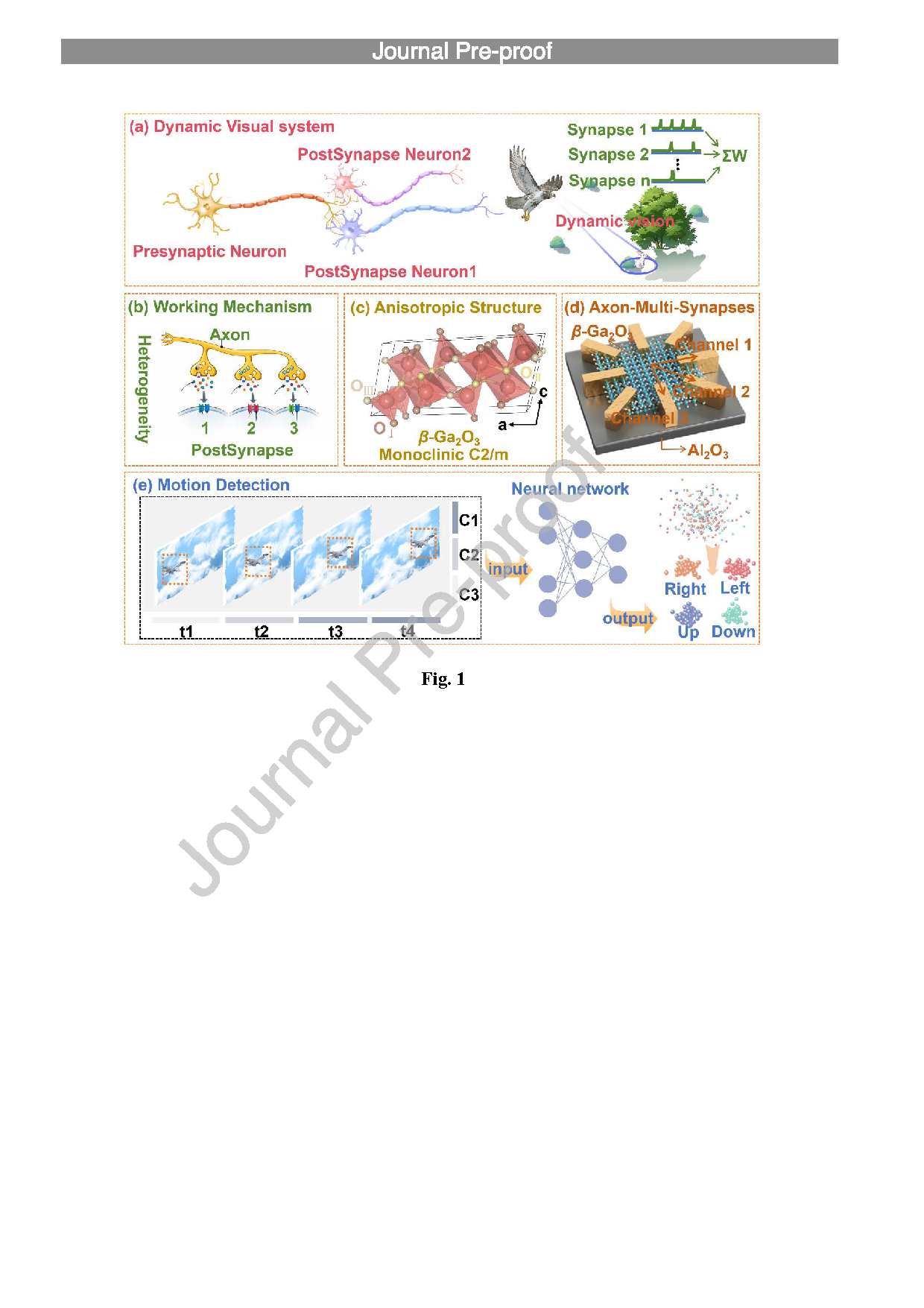
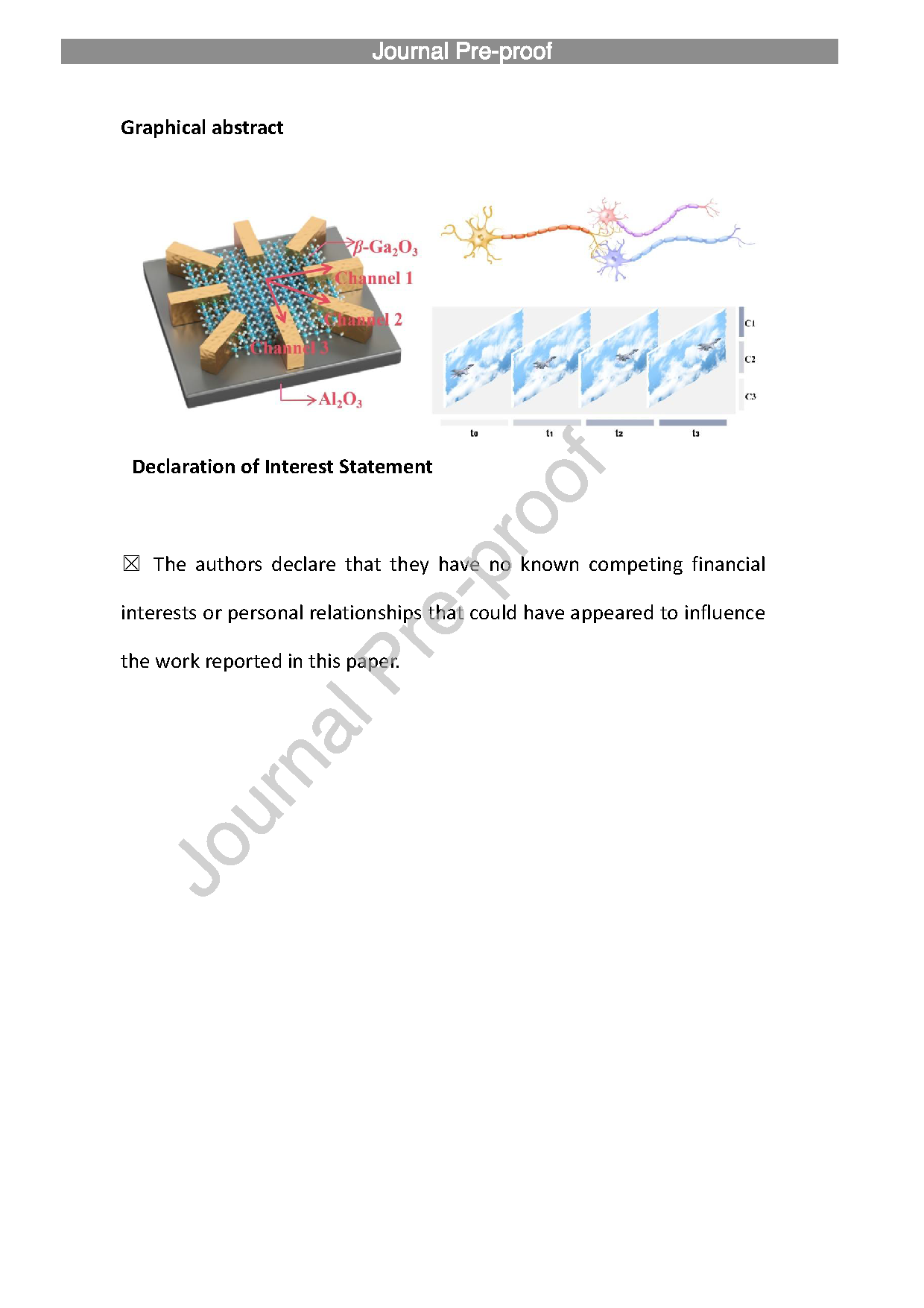
Neuromorphic computing has emerged as a highly attractive alternative computing architecture inspired by biological neural systems due to its unique advantages in low power consumption and parallel processing, in which synapses act as the fundamental functional connections between neurons and govern both the strength and temporal dynamics of signal transmission through synaptic plasticity. Biological axon-multi-synapse enables a single neuron to simultaneously receive and integrate signals from multiple pathways. However, most reported artificial synaptic devices rely on homogeneous material systems and axon-single-synapse configuration. Recent axon-multi-synapse demonstrations are mainly based on anisotropic two-dimensional materials, which suffer from complicated fabrication and poor scalability. β-Ga₂O₃ crystallizes in low-symmetry monoclinic structure, showing orientation-dependent atomic arrangement and oxygen-vacancy dynamics. Oxygen vacancies in β-Ga₂O₃ can be modulated by growth conditions, annealing and optical excitation, mimicking neurotransmitter dynamics in biological synapses. Meanwhile, β-Ga₂O₃ features an ultra-wide bandgap and intrinsic solar-blind deep-ultraviolet photoresponse. Taking advantage of its material anisotropy, monolithic integration of multiple artificial synapses on one thin-film substrate is promising for implementing axon-multi-synapse towards optoelectronic neuromorphic hardware.
Abstract
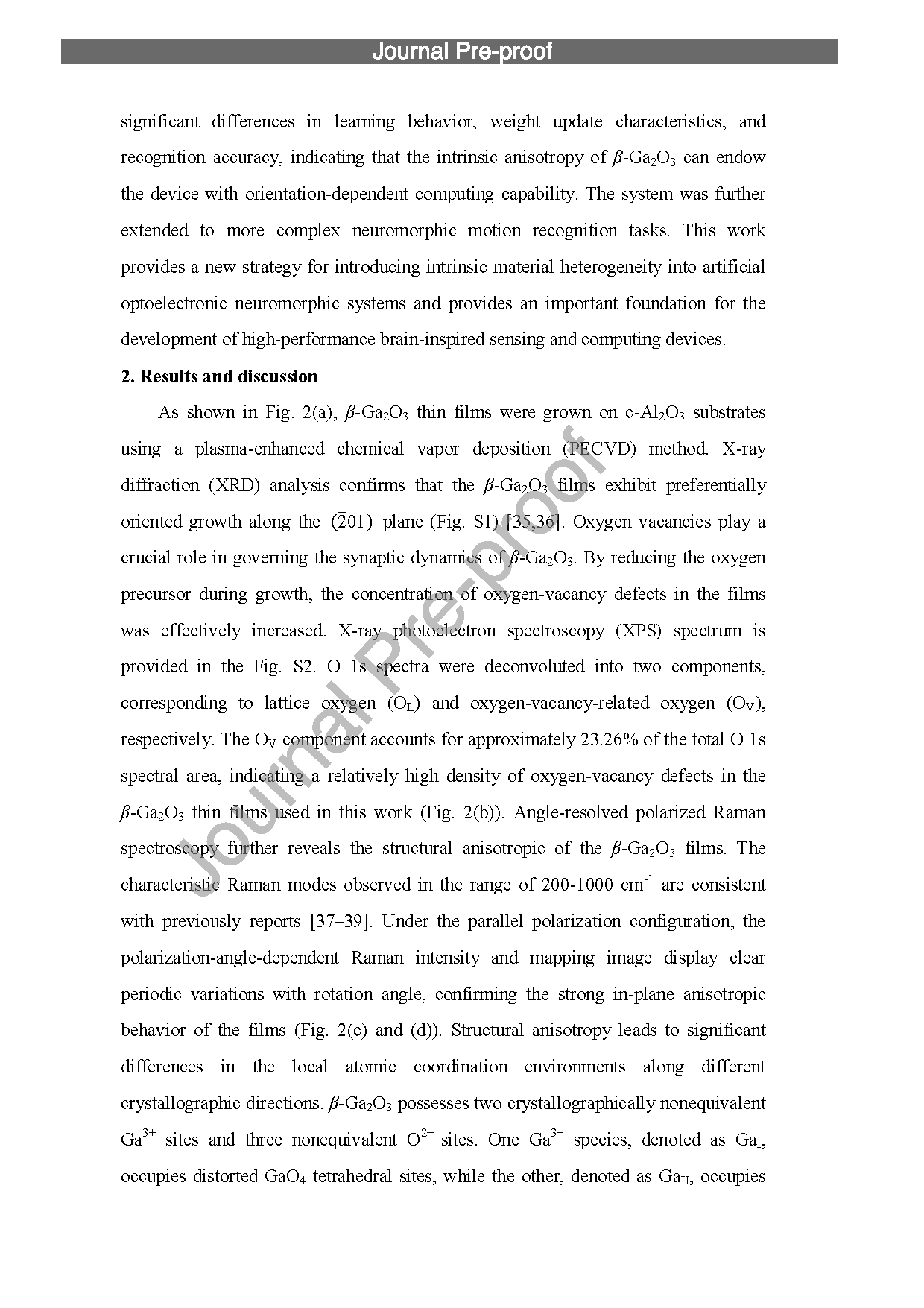
The axon-multi-synapse is a key structural of biological neural networks, enabling a single neuron to simultaneously receive, integrate, and distribute signals from multiple pathways. Reproducing such intrinsic connection heterogeneity in artificial synaptic devices is therefore crucial, yet this research is still at an early stage, with only limited reports focused on two-dimensional material systems. Here, we report the first extension of artificial axon-multi-synapse devices to oxide semiconductors by using a β-Ga₂O₃ thin film. Owing to the orientation-dependent distribution and dynamics of oxygen-vacancy-related trap states, devices fabricated along different crystallographic directions exhibit heterogeneous synaptic strengths and plasticity behaviors. Three synaptic channels were monolithically integrated on a single film, and each channel exhibited typical synaptic characteristics, including short-term plasticity (STM), paired-pulse facilitation (PPF), and learning behavior, with a current anisotropy ratio as high as 900%. Such artificial axon-multi-synapse devices enable advanced neuromorphic applications, as exemplified by the simultaneous handwritten letter recognition performed by different channels. More importantly, by integrating intensity and temporal information as well as exploiting the solar-blind photoresponse of β-Ga₂O₃ , the proposed axon-multi-synapse system realizes dynamic motion recognition, achieving accuracies above 98% without noise and above 80% even with 50% input noise. This study marks an important step toward embedding intrinsic heterogeneity into artificial optoelectronic neuromorphic systems.
Highlights
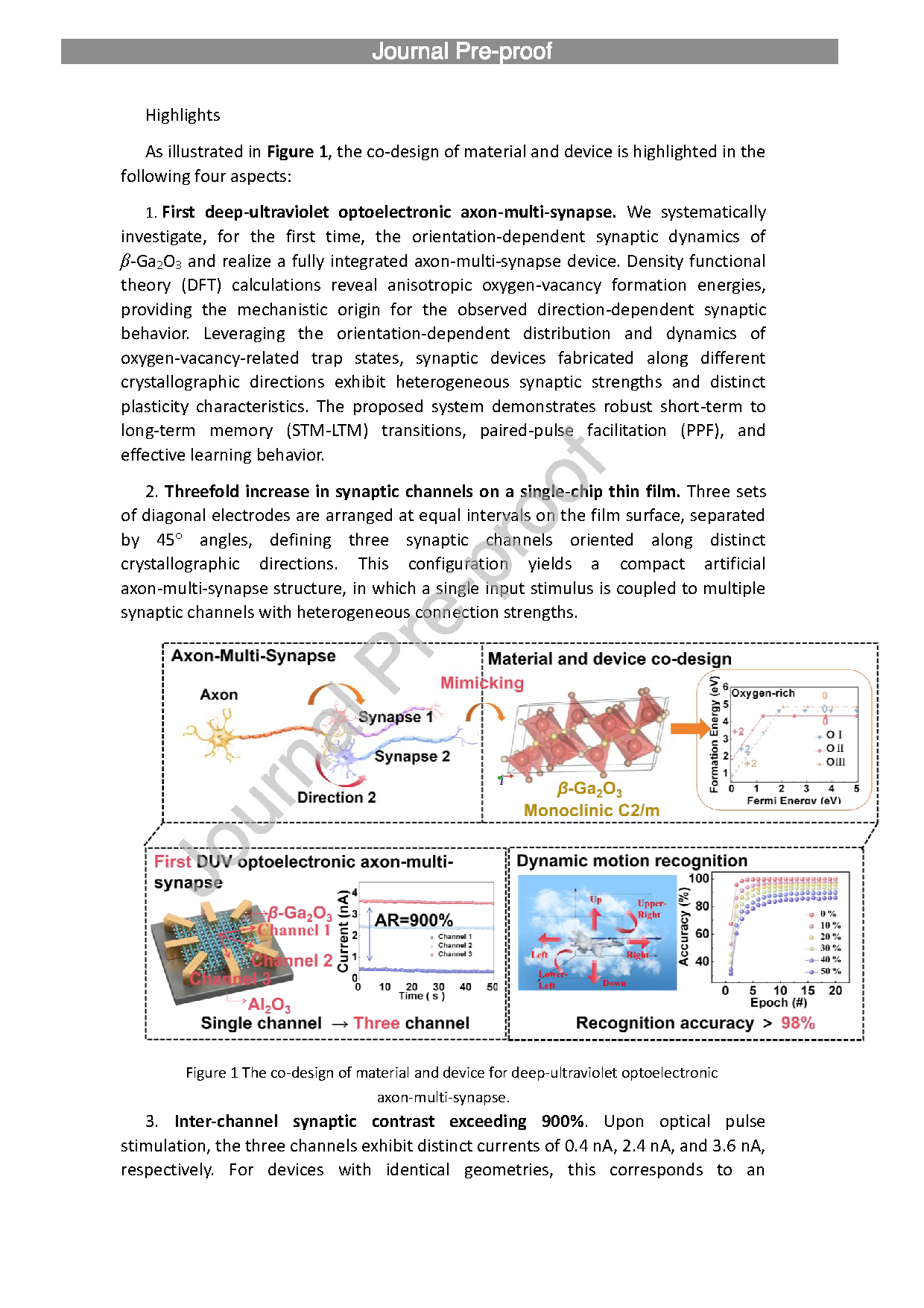
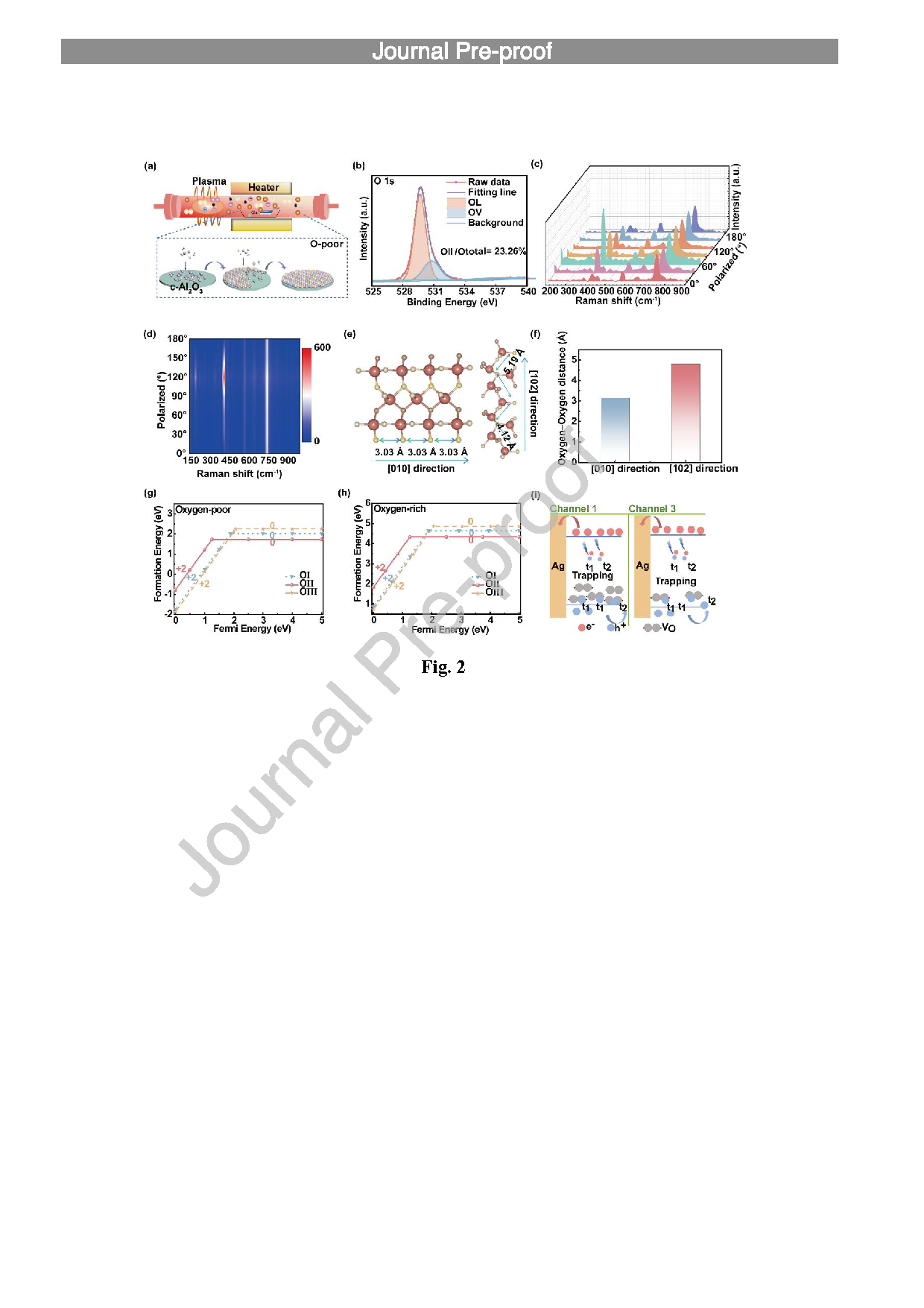
① The first deep-ultraviolet optoelectronic axon-multi-synapse based on β-Ga₂O₃ oxide semiconductor is realized. DFT calculations reveal anisotropic oxygen-vacancy formation energy, explaining the physical origin of orientation-dependent synaptic dynamics. Devices demonstrate complete synaptic behaviors including STM-LTM transition and paired-pulse facilitation.
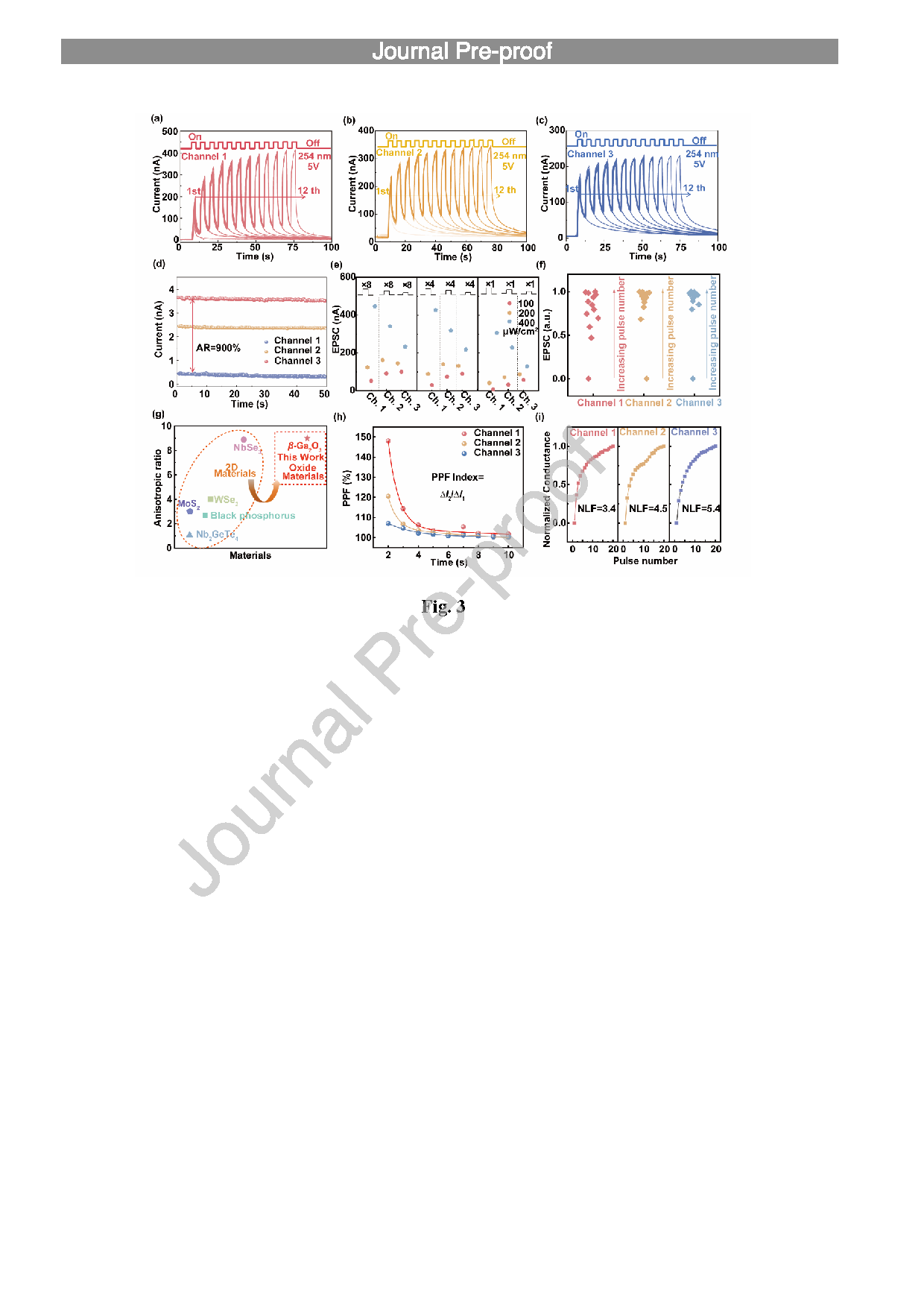
② Three synaptic channels are constructed with diagonal electrodes separated by 45 ° on single thin film. Single input stimulus is coupled to multiple synaptic channels. Inter-channel synaptic contrast exceeds 900%, and distinct pulse-dependent plasticity is observed for each channel.
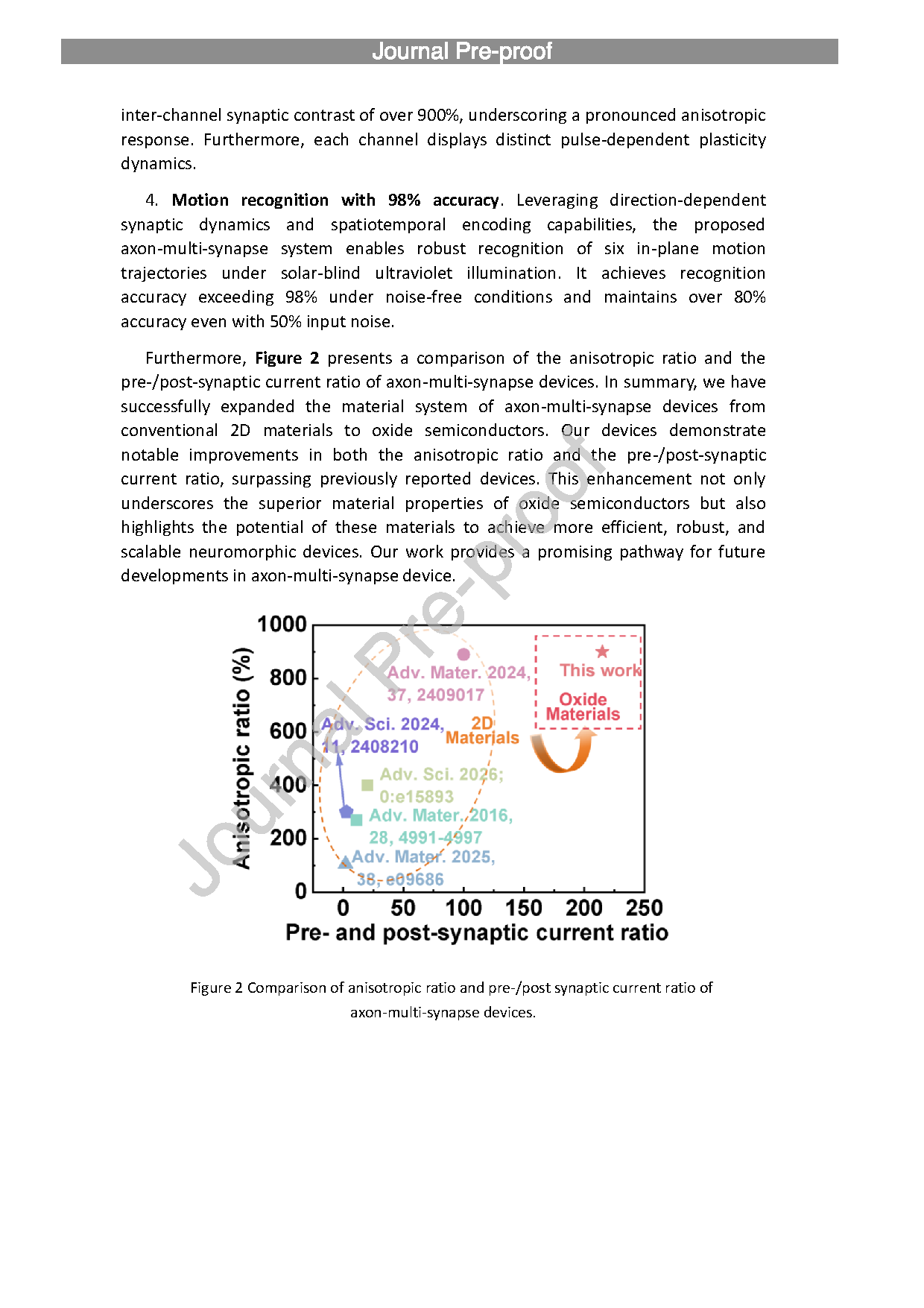
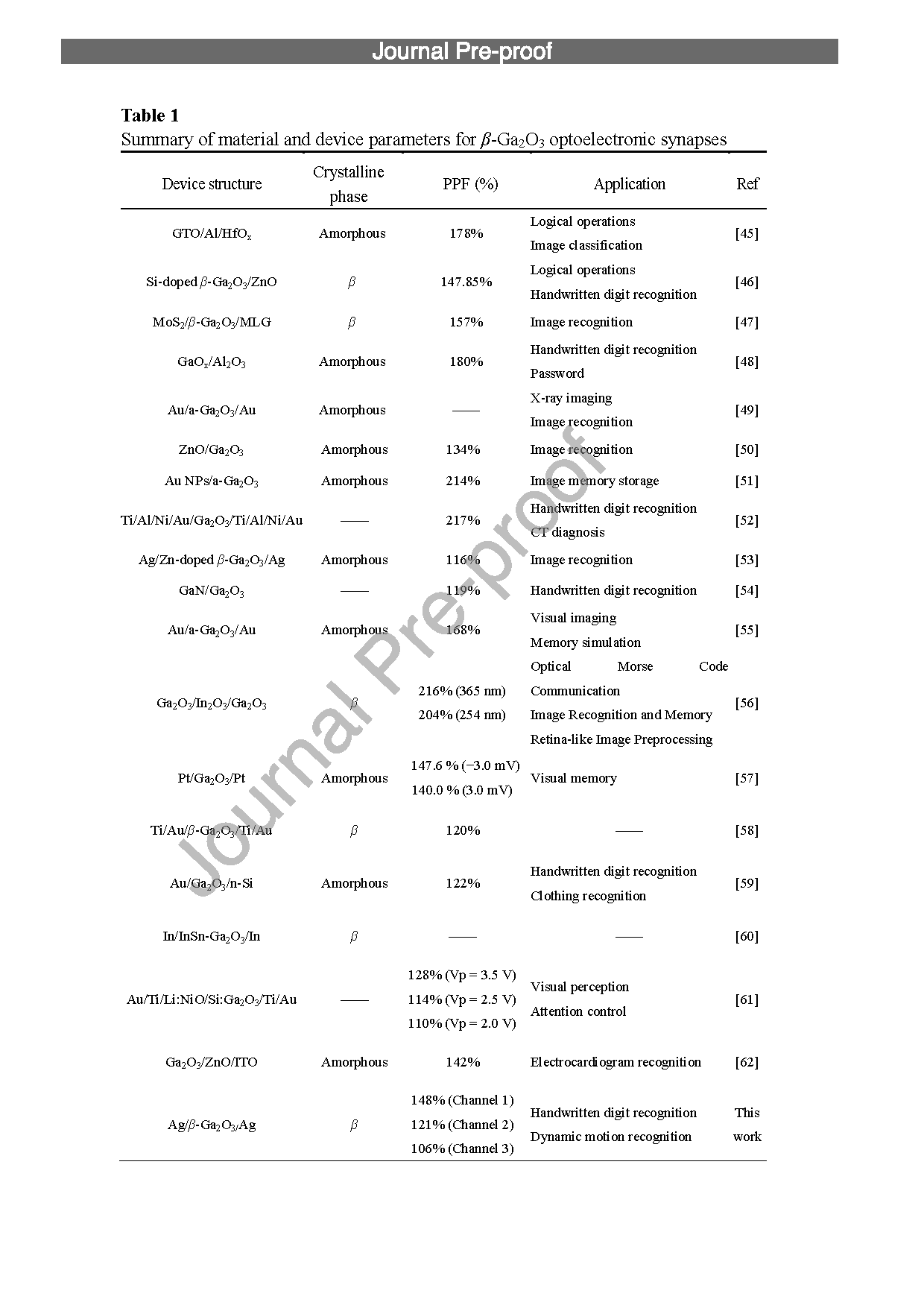
③ This work extends axon-multi-synapse device family from two-dimensional materials to oxide semiconductors, achieving better performance on anisotropic ratio and pre/post-synaptic current ratio compared with previously reported counterparts.
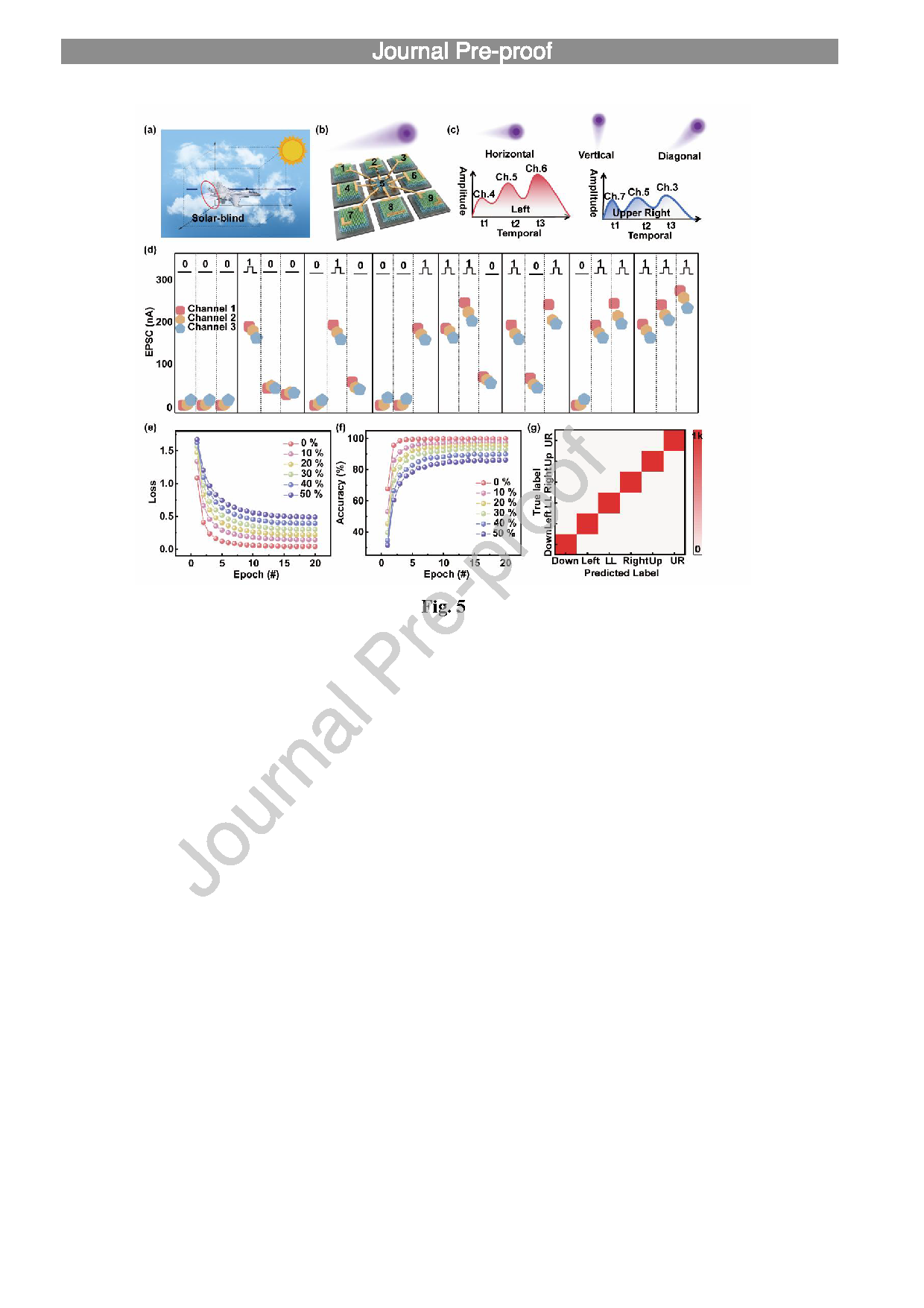
④ Taking advantage of channel-dependent synaptic dynamics and spatiotemporal encoding capability, six in-plane motion trajectories are recognized under solar-blind ultraviolet illumination. It achieves > 98% accuracy under noise-free condition and retains > 80% accuracy with 50% input noise.
⑤ It is verified that intrinsic crystallographic anisotropy of β-Ga₂O₃ can endow devices with orientation-dependent computing capability, offering a new route for optoelectronic neuromorphic sensing-computing hardware with built-in intrinsic heterogeneity.
Conclusion
In summary, we have demonstrated a axon-multi-synapse neuromorphic system based on anisotropic β-Ga₂O₃ optoelectronic synapses. By exploiting the intrinsic low-symmetry crystal structure of β-Ga₂O₃ , orientation-dependent oxygen-vacancy formation and trap dynamics were achieved, leading to heterogeneous synaptic coupling strengths within a monolithic thin-film. This work extends β-Ga₂O₃ synaptic devices beyond conventional axon-single-synapse structure and static tasks. The proposed strategy provides a scalable pathway toward multifunctional, robust, and energy-efficient neuromorphic perception systems.
Project Support
This work was supported by the National Natural Science Foundation of China (No. 62304205, 52300145, 62274148, 62374147, 62564011, U23A20349), the Zhejiang Provincial Natural Science Foundation of China (LQ24F040002, ZCLQN26F0403), the Science Foundation of Zhejiang Sci-Tech University (25062169-Y), the Natural Science Foundation of Hangzhou (No. 2024SZRZDF040001),the Young Scientists Fund (Type A) of the Natural Science Foundation of Inner Mongolia Autonomous Region of China (No. 2026QA016).
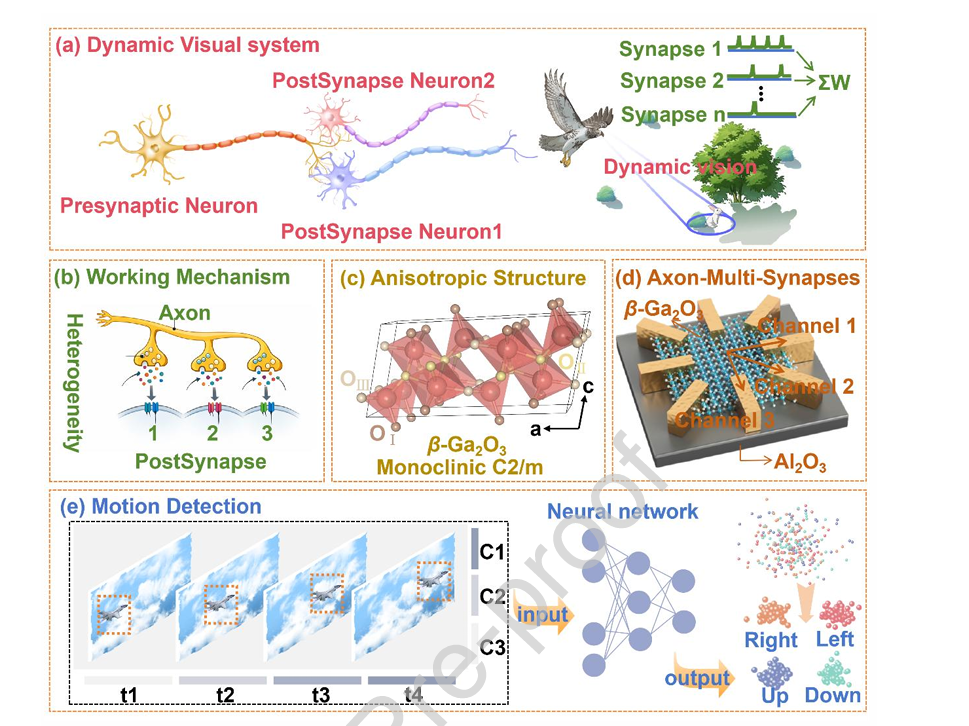
Figure 1. (a) Schematic illustration of a biological neuron featuring an axon multi synapse architecture. (b) Schematic illustration of the operating mechanism of the β-Ga₂O₃ optoelectronic synapse. (c) Crystal structure of β-Ga₂O₃. (d) Schematic of the axon multi synapse device based on β-Ga₂O₃. (e) Direction evolved neuromorphic motion recognition.
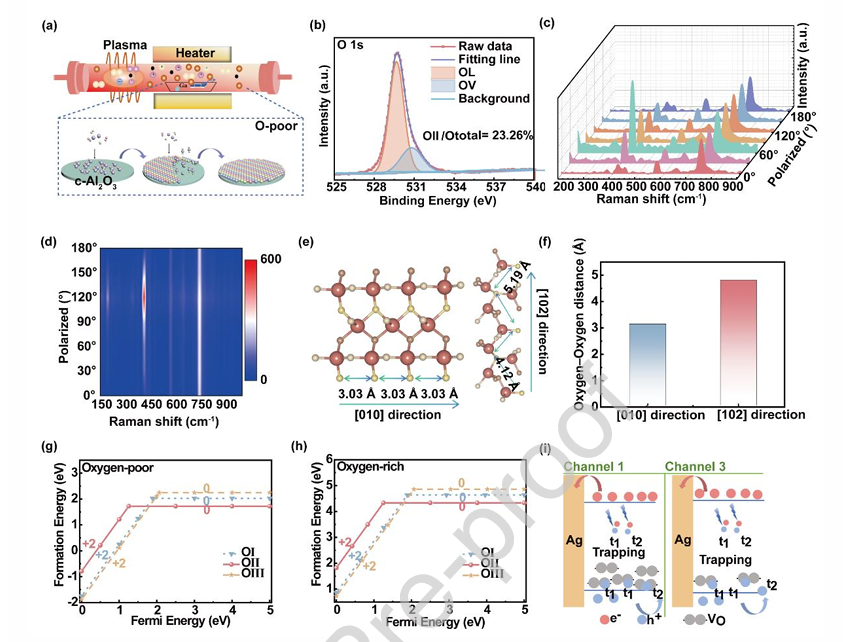
Figure 2. (a) Schematic illustration of β-Ga₂O₃ thin film growth by PECVD. (b) XPS O 1s spectrum of the β-Ga₂O₃ thin film. (c) Angle resolved Raman intensity of the β-Ga₂O₃ thin film. (d) Angle resolved Raman mapping image of the β-Ga₂O₃ thin film. (e) and (f) Atomic configurations and distance of O atoms along the [010] and [102] directions. (g) and (h) Calculated oxygen vacancy formation energies under O poor and O rich conditions. (i) Schematic illustration of the anisotropic synaptic response mechanism of the β-Ga₂O₃ device.
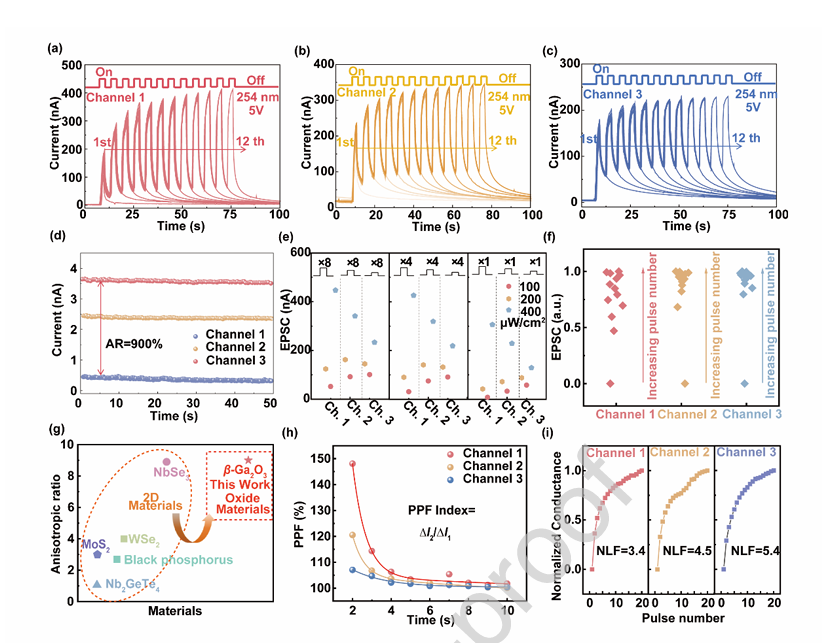
Figure 3. (a)-(c) Time dependent photocurrent responses of channel 1-3 under 1-12 consecutive optical pulses, respectively. (d) Dark Current of the channel 1-3. (e) Dependence of EPSC on optical pulse intensity and pulse number for channel 1-3. (f) EPSC as a function of pulse number for channel 1-3. (g) Performance comparison between β-Ga₂O₃ based devices and two dimensional material based devices. (h) PPF characteristics of channel 1-3. (i) Nonlinearity in the LTP for channel 1-3.
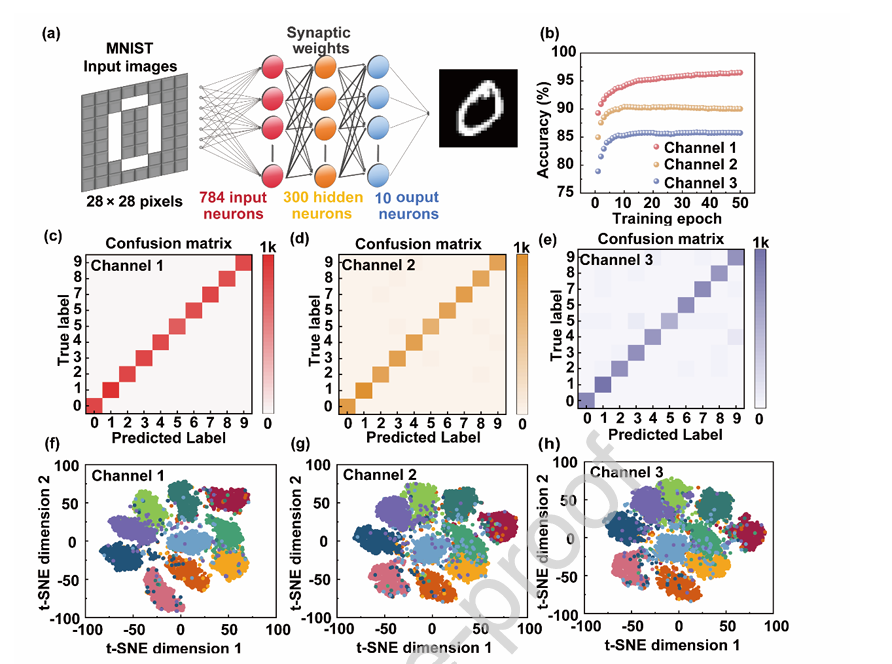
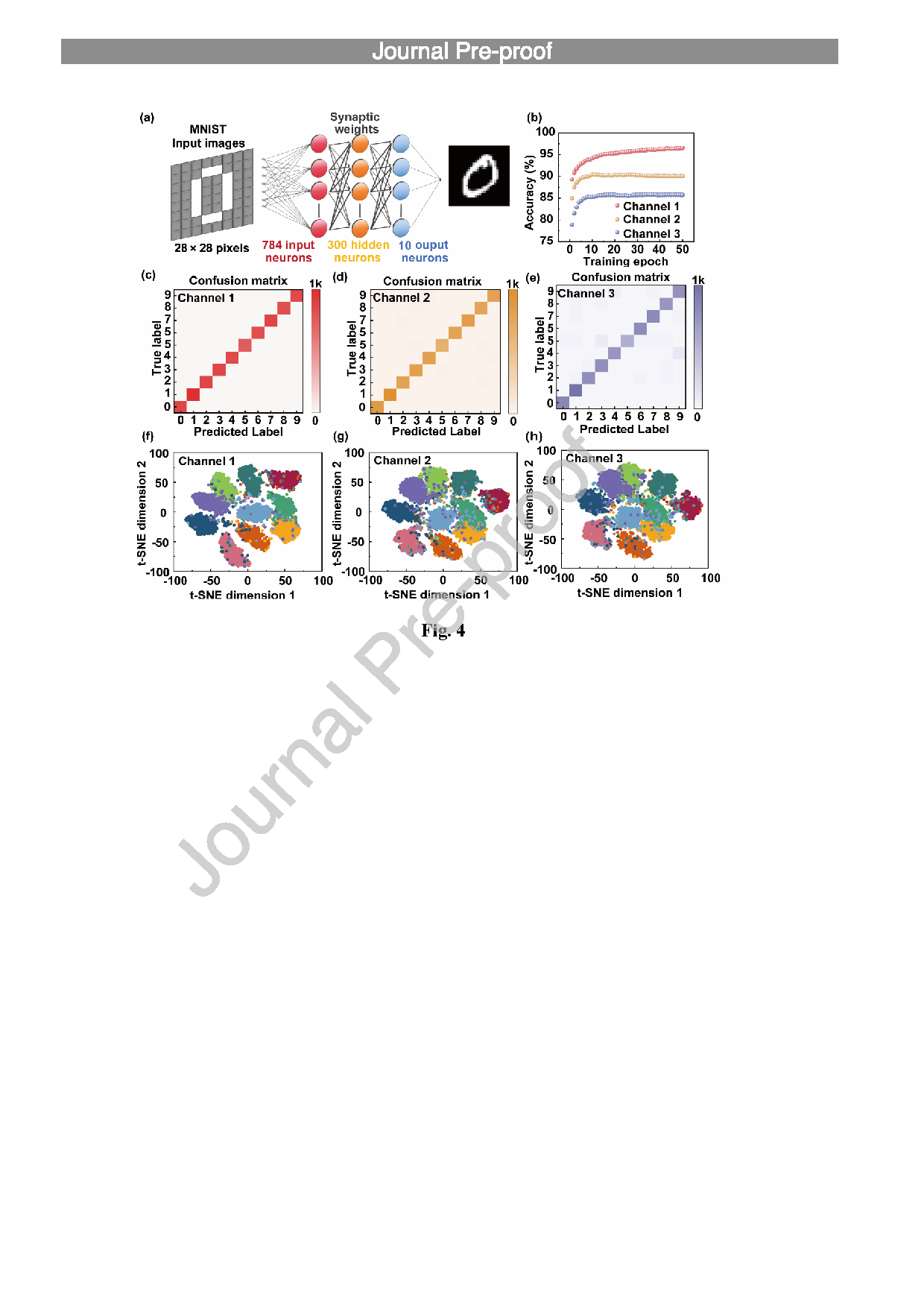
Figure 4. (a) Architecture of the three layer ANN used for handwritten digit recognition. (b) Classification accuracy of MNIST handwritten digits for channel 1-3 as a function of training epochs. (c)-(e) Confusion matrices for handwritten digit recognition using channel 1-3. (f)-(h) Clustering maps of MNIST handwritten digits based on synaptic characteristics of channel 1-3.
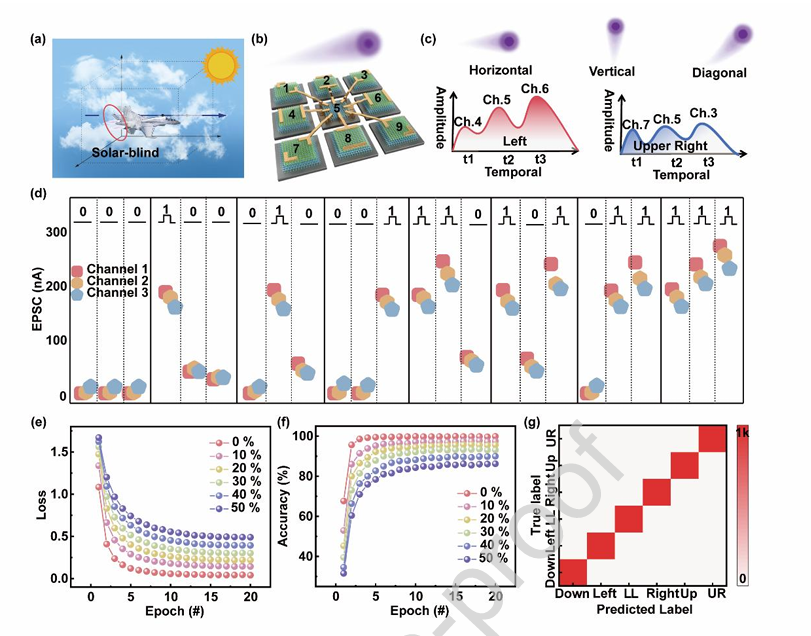
Figure 5. (a)-(c) Schematic illustration of the dynamic motion recognition. (d) Photocurrent responses of channel 1-3 under spatiotemporally encoded optical pulse inputs. (e)-(f) Motion recognition loss and accuracy under different Gaussian noise levels. (g) Confusion matrices for dynamic motion recognition.
DOI:
10.1016/j.jmst.2026.07.079
Instruction
Official Account

Cooperation
Top