


Researchers from the Huazhong University of Science and Technology and JFS Laboratory have published a paper titled "Thermodynamic Analysis and Experimental Demonstration of β-Ga₂O₃ Homoepitaxy Using GaCl₃ Precursor" in Journal of Crystal Growth.
Background
Monoclinic β-Ga₂O₃ is a promising ultra-wide-bandgap semiconductor for next-generation high-power electronics and deep-ultraviolet optoelectronics. Hydride vapor phase epitaxy (HVPE) is attractive for thick β-Ga₂O₃ drift-layer growth owing to high growth rate and scalability. Conventional GaCl-O₂ HVPE suffers from high gas-phase supersaturation, which triggers parasitic homogeneous nucleation, introduces structural defects and degrades wafer-scale electrical uniformity. Modifying precursor chemistry provides a potential route to suppress parasitic gas-phase reactions. Gallium trichloride GaCl₃ has been proposed as an alternative group-Ⅲ precursor. However, the detailed gas-phase thermodynamics, defect-suppression effect and impurity incorporation behavior in GaCl₃-O₂ system remain insufficiently understood. In this work, thermodynamic calculations and systematic experimental characterizations are carried out to investigate how precursor-chemistry engineering modifies β-Ga₂O₃ homoepitaxial quality and device electrical uniformity.
Abstract
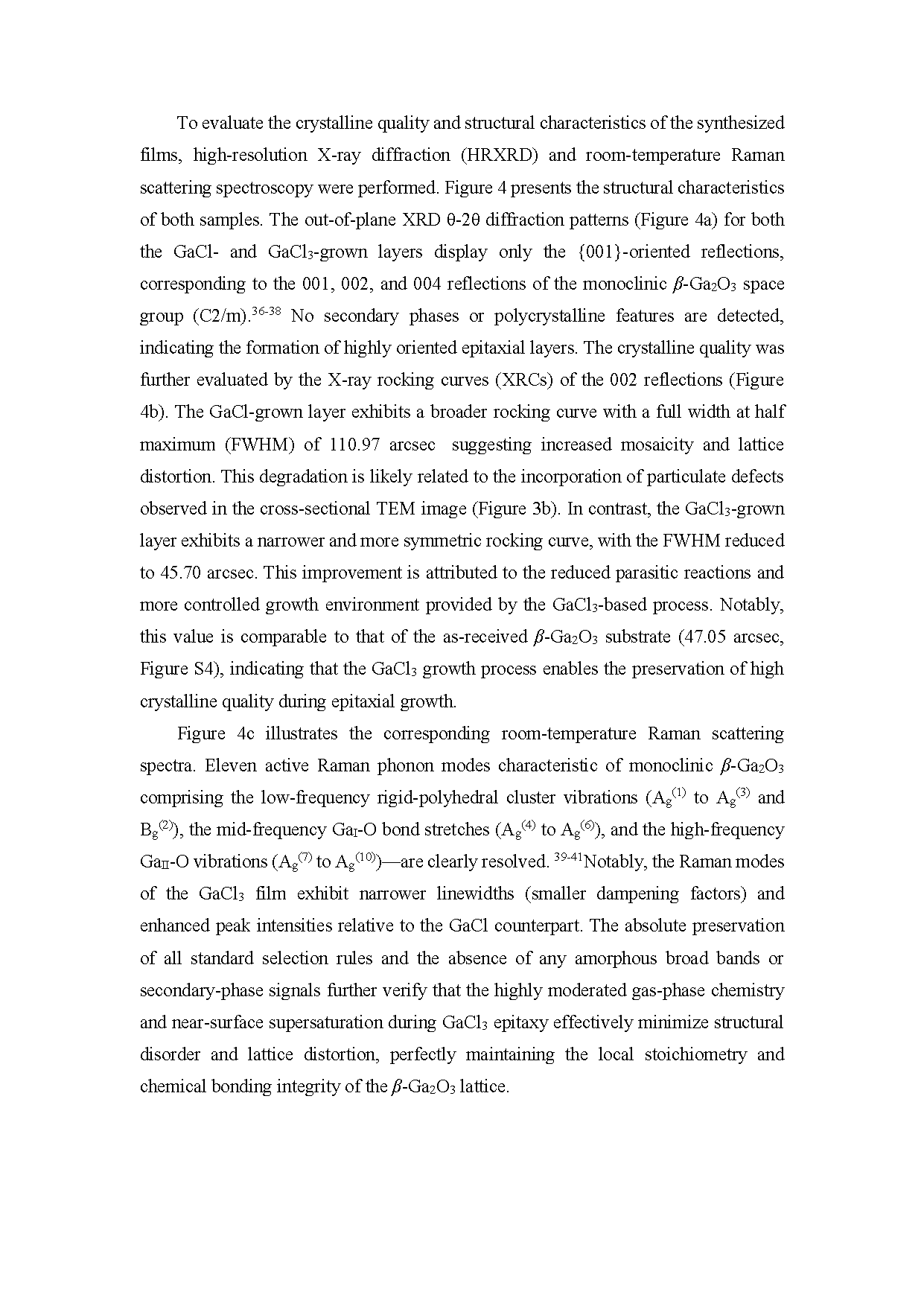
Hydride vapor phase epitaxy (HVPE) of β-Ga₂O₃ can be limited by parasitic gas-phase reactions induced by high supersaturation in the conventional GaCl-O₂ system, affecting crystalline quality and device uniformity. Here, a GaCl₃-O₂ precursor system is investigated to regulate the vapor-phase growth environment. Thermodynamic analysis indicates that β-Ga₂O₃ formation in GaCl₃-O₂ system mainly proceeds through the reaction of byproduct GaCl with O₂. Meanwhile, the accumulation of byproduct Cl₂ shifts the GaCl-O₂ reaction equilibrium toward the reactants, reducing the thermodynamic driving force. This effect may moderate gas-phase supersaturation and reduce parasitic gas-phase reactions. Compared with the conventional GaCl-O₂ process, the GaCl₃-based growth improves the crystalline quality of β-Ga₂O₃ epilayers, reducing the (002) X-ray diffraction rocking curve full width at half maximum (FWHM) from 110.97 to 45.70 arcsec. Raman spectroscopy and secondary ion mass spectrometry (SIMS) confirm reduced structural disorder and limited bulk chlorine incorporation. Furthermore, vertical Schottky barrier diodes fabricated across the wafers exhibit improved electrical uniformity, with reverse leakage current densities below 10⁻⁸ A/cm² at −50 V. This work suggests precursor chemistry engineering as an effective approach for controlling supersaturation and improving the quality and uniformity of β-Ga₂O₃ epitaxial layers.
Highlights
① Complete thermodynamic equilibrium calculations are performed for GaCl₃-O₂ HVPE system. A cascade reaction mechanism is clarified: GaCl₃ decomposes into GaCl, and accumulated product Cl₂ inversely suppresses reaction driving force to actively tune gas-phase supersaturation.
② Comparative experiments between GaCl-O₂ and GaCl₃-O₂ systems are carried out. The GaCl₃ process reduces (002) rocking-curve FWHM from 110.97 arcsec to 45.70 arcsec and obtains high-quality β-Ga₂O₃ homoepitaxial layers.
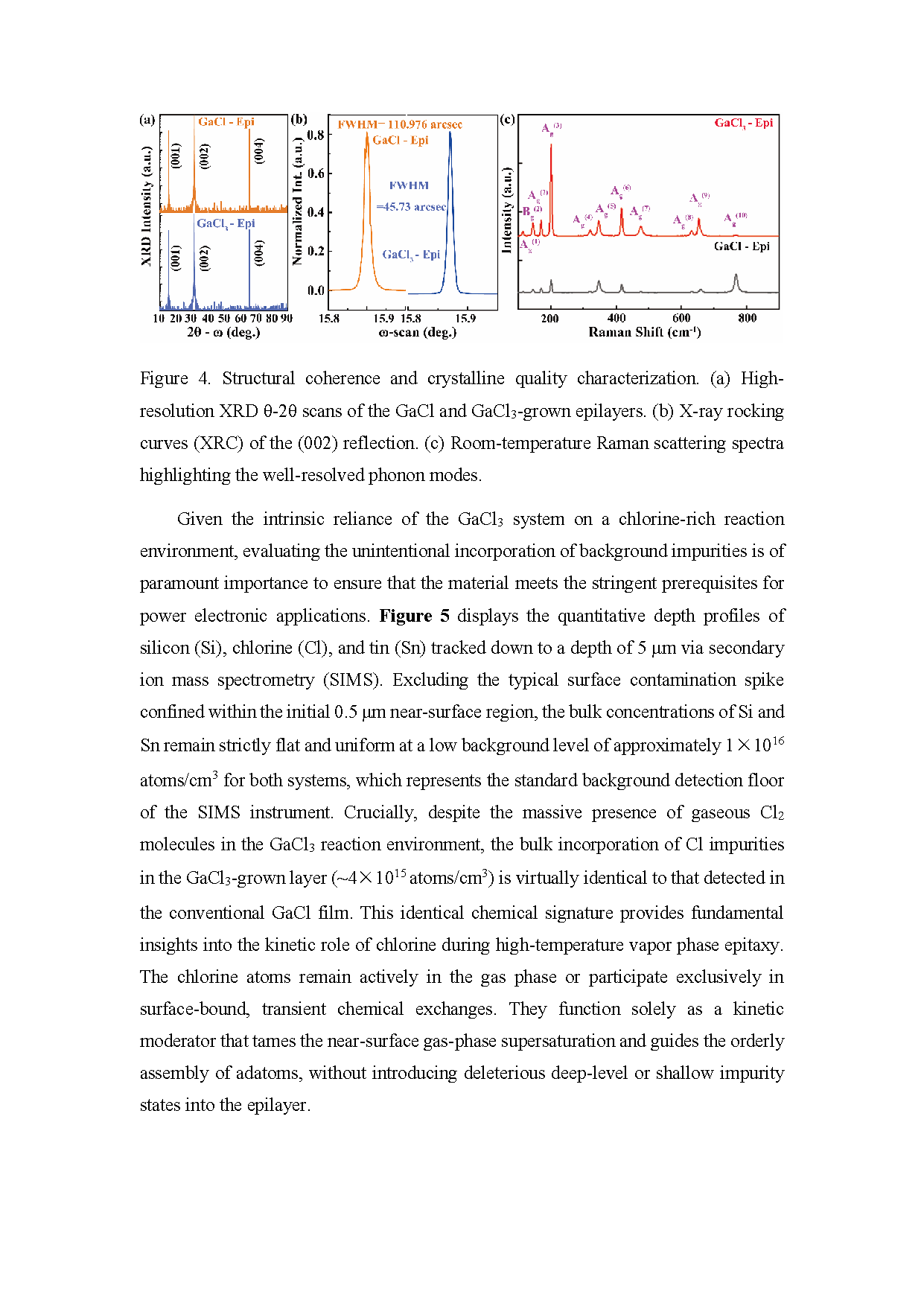
③ SIMS characterizations verify that despite chlorine-rich ambient, bulk chlorine impurity concentration remains low in GaCl₃-grown epilayers. Chlorine mainly participates in gas-phase and transient surface exchange instead of heavy bulk incorporation.
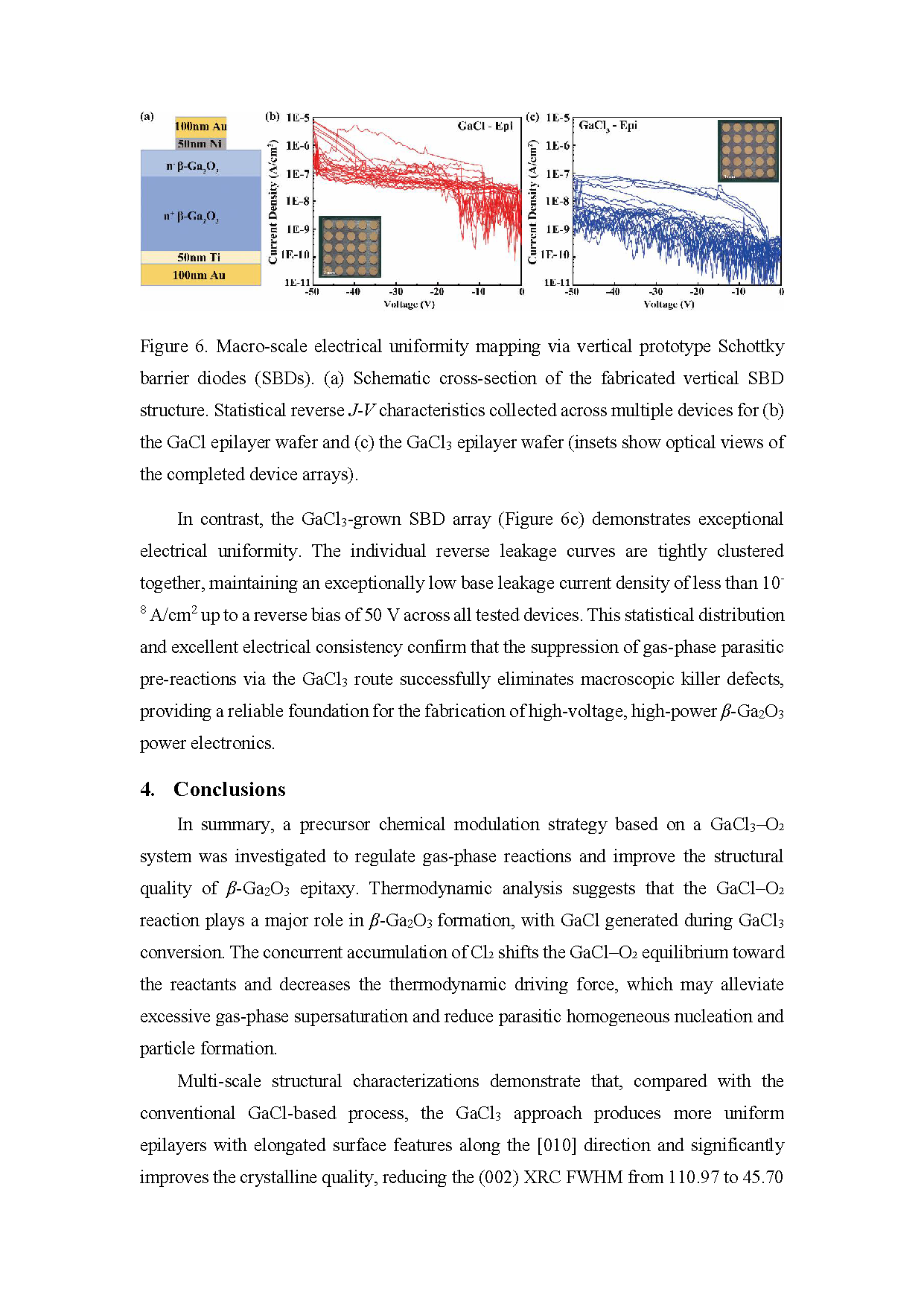
④ Arrayed Schottky barrier diodes fabricated on GaCl₃-grown wafer exhibit excellent electrical uniformity. All devices achieve reverse leakage current density below 10⁻⁸ A/cm² at −50 V, and leakage paths originating from particulate defects are suppressed.
⑤ It is demonstrated that precursor-chemistry-engineering strategy can optimize gas-phase environment without hardware modification, offering a feasible route for high-quality and high-uniformity β-Ga₂O₃ HVPE epitaxy.
Conclusion
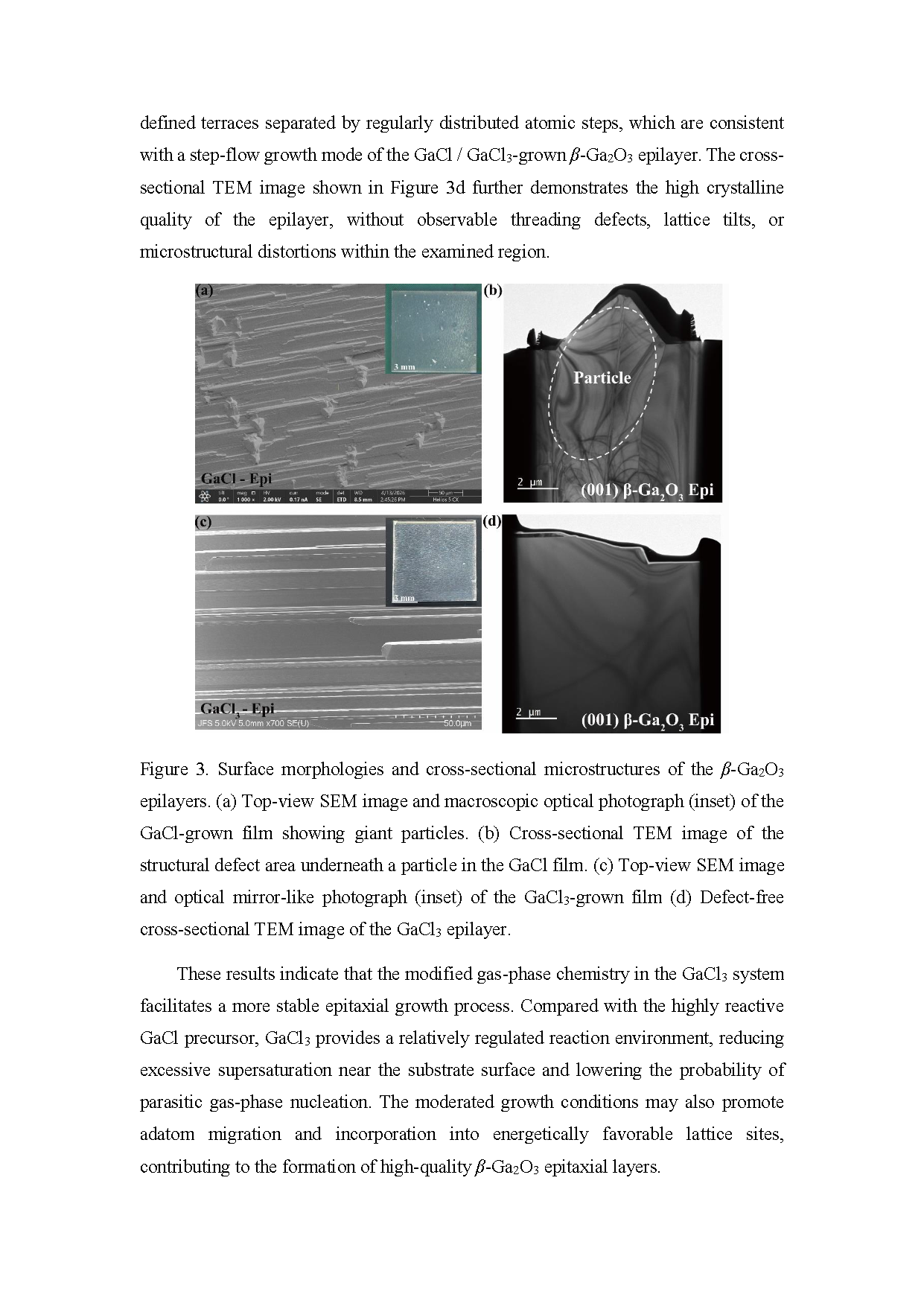
In summary, a precursor chemical modulation strategy based on a GaCl₃-O₂ system was investigated to regulate gas-phase reactions and improve the structural quality of β-Ga₂O₃ epitaxy. Thermodynamic analysis suggests that the GaCl-O₂ reaction plays a major role in β-Ga₂O₃ formation, with GaCl generated during GaCl₃ conversion. The concurrent accumulation of Cl₂ shifts the GaCl-O₂ equilibrium toward the reactants and decreases the thermodynamic driving force, which may alleviate excessive gas-phase supersaturation and reduce parasitic homogeneous nucleation and particle formation. Multi-scale structural characterizations demonstrate that, compared with the conventional GaCl-based process, the GaCl₃ approach produces more uniform epilayers with elongated surface features along the [010] direction and significantly improves the crystalline quality, reducing the (002) XRC FWHM from 110.97 to 45.70 arcsec. SIMS analysis reveals limited bulk chlorine incorporation (~ 4 ×10¹⁵ atoms/cm³), suggesting that chlorine species mainly participate in transient gas-phase and surface reactions during growth without substantially affecting the bulk composition of the epilayers. Furthermore, vertical prototype Schottky barrier diodes fabricated across the wafers exhibit improved electrical uniformity, with reverse leakage current densities below 10⁻⁸ A/cm² at -50 V. These results demonstrate that precursor chemistry engineering provides an effective approach for controlling supersaturation and improving the morphological, structural, and electrical uniformity of β-Ga₂O₃ epitaxial layers.
Project Support
The authors thank the financial support of Major Program (JD) of Hubei Province (2023BAA009), and JFS Laboratory.
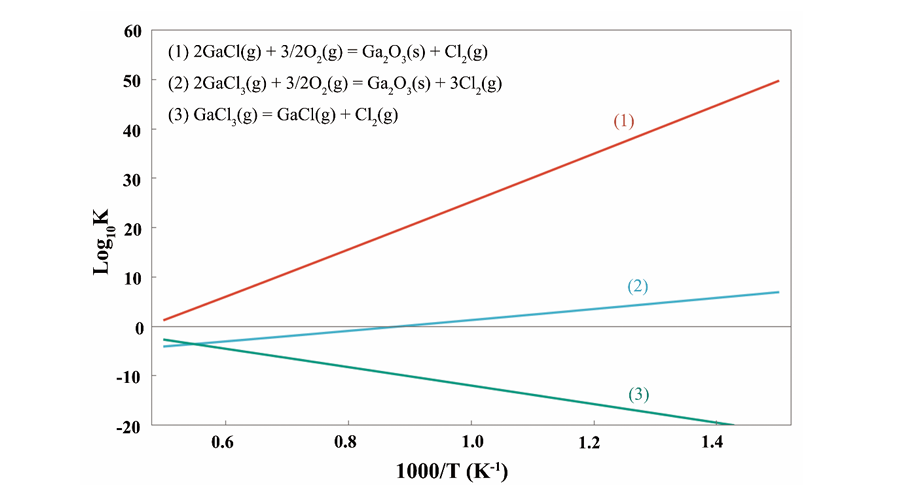
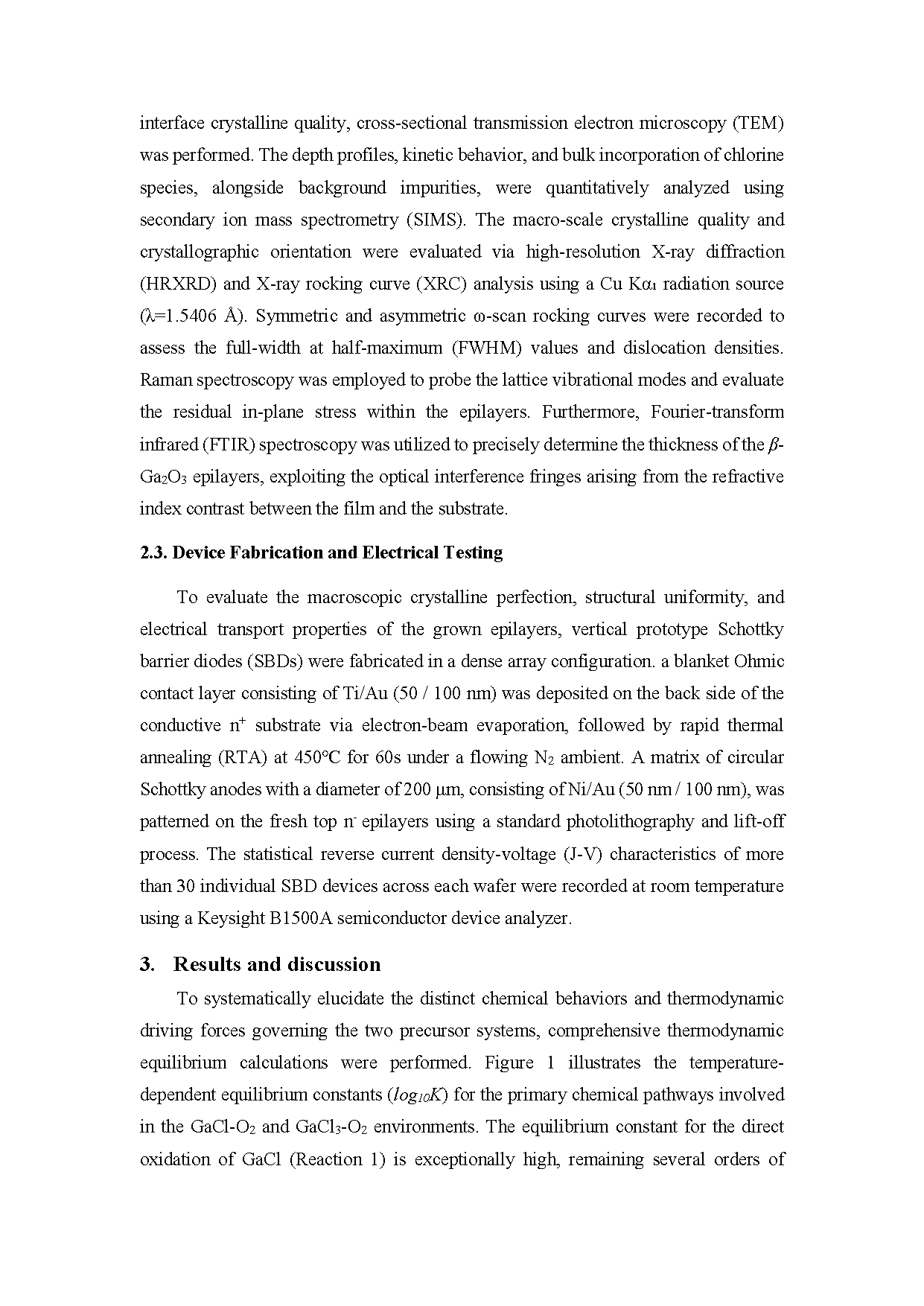
Figure 1. Temperature-dependent equilibrium constants (log₁₀ K) for the key chemical reactions in the GaCl and GaCl₃ systems.
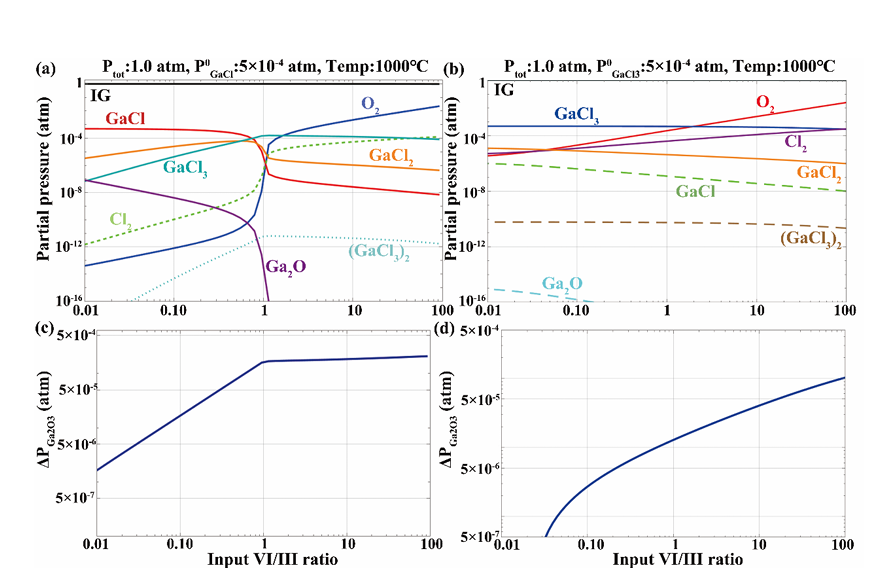
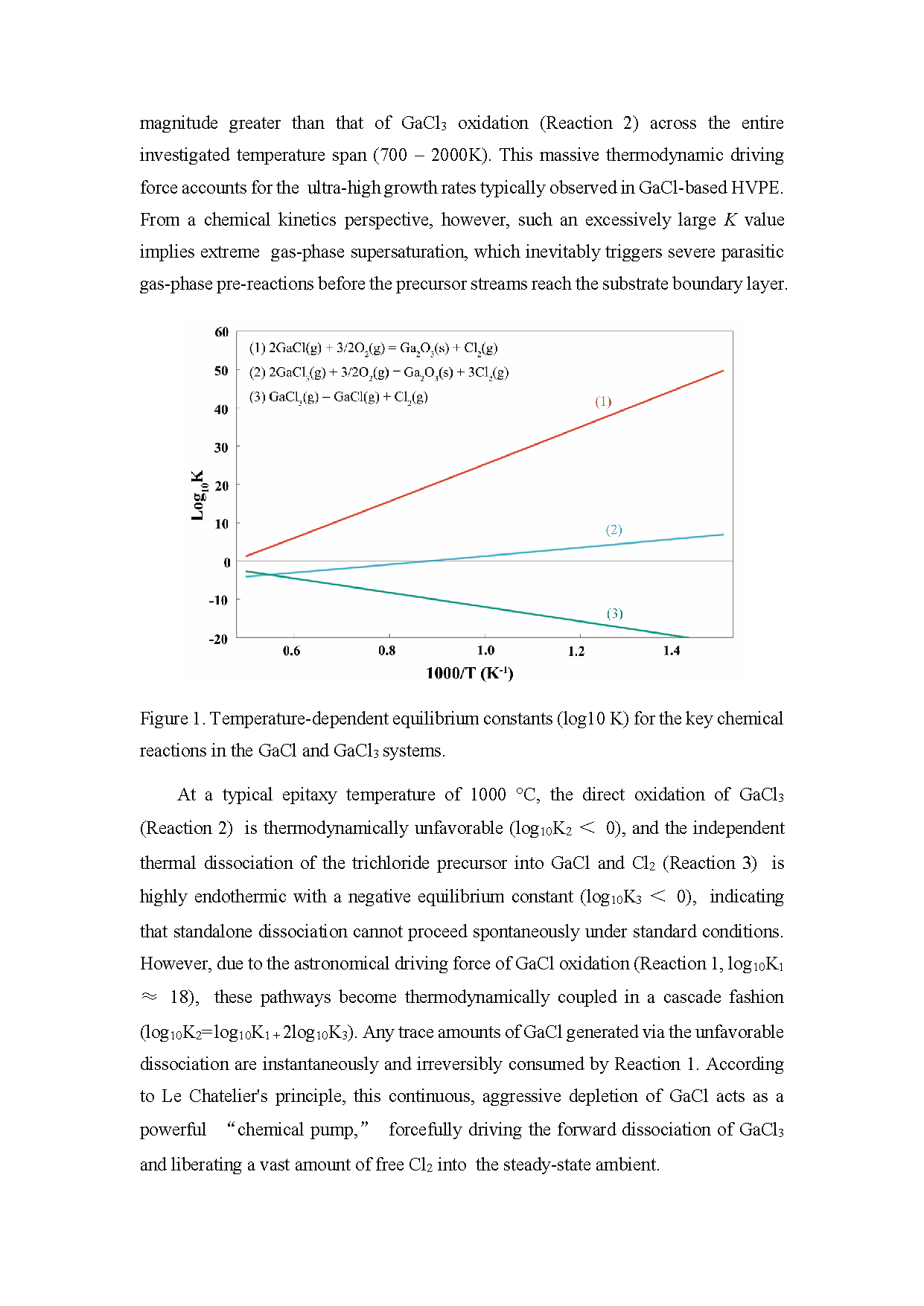
Figure 2. Simulated equilibrium partial pressures of gaseous species at 1000 ℃ as a function of the input VI/III ratio for (a) the GaCl-O₂ system and (b) the GaCl₃-O₂ system. Corresponding theoretical growth yields (ΔPGa₂O₃) for (c) the GaCl system and (d) the GaCl₃ system.
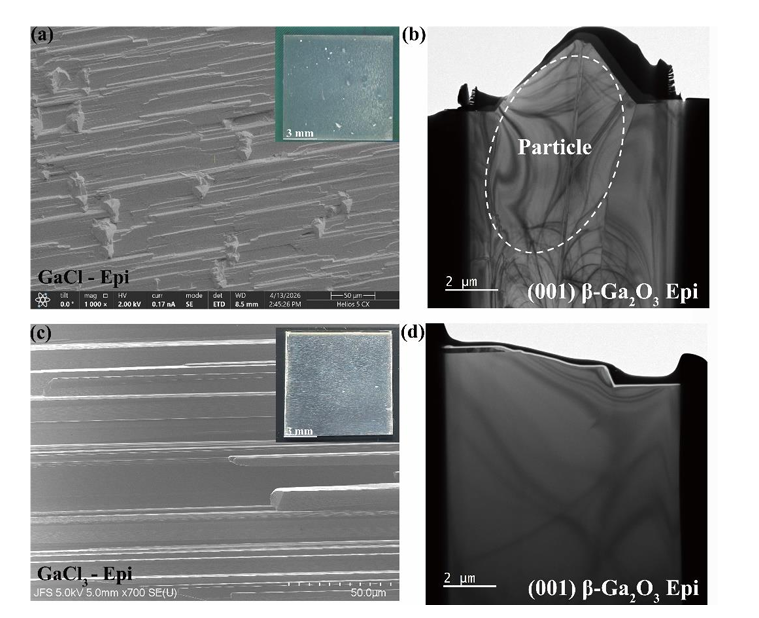
Figure 3. Surface morphologies and cross-sectional microstructures of the β-Ga₂O₃ epilayers. (a) Top-view SEM image and macroscopic optical photograph (inset) of the GaCl-grown film showing giant particles. (b) Cross-sectional TEM image of the structural defect area underneath a particle in the GaCl film. (c) Top-view SEM image and optical mirror-like photograph (inset) of the GaCl₃-grown film. (d) Defect-free cross-sectional TEM image of the GaCl₃ epilayer.
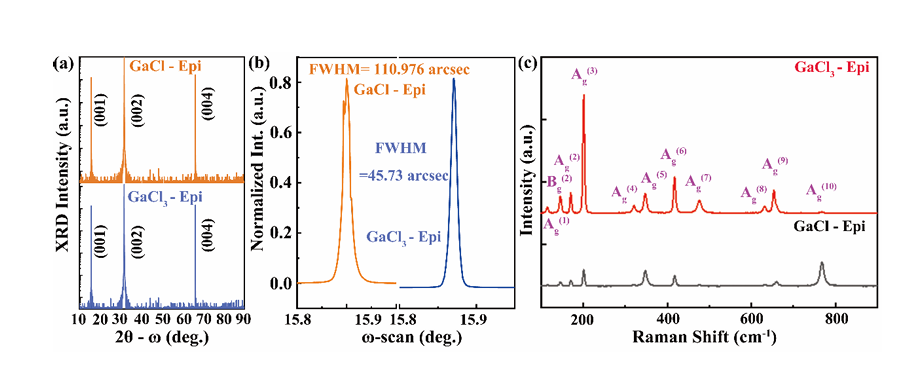
Figure 4. Structural coherence and crystalline quality characterization. (a) High-resolution XRD θ-2θ scans of the GaCl and GaCl₃-grown epilayers. (b) X-ray rocking curves (XRC) of the (002) reflection. (c) Room-temperature Raman scattering spectra highlighting the well-resolved phonon modes.
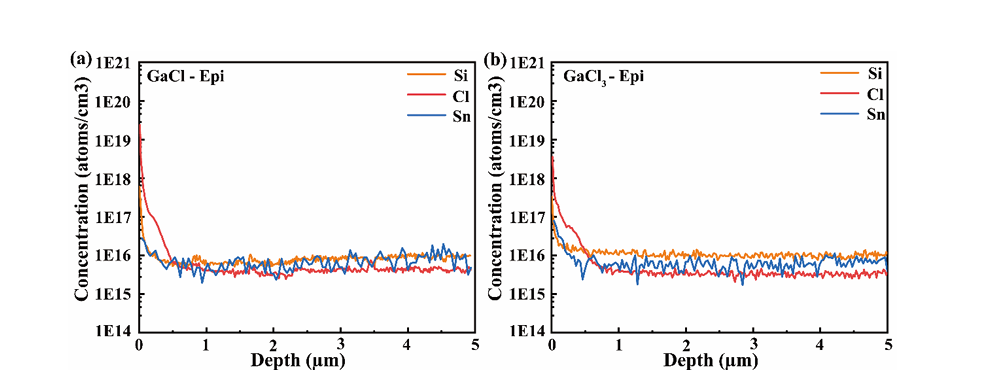
Figure 5. SIMS depth profiles of background impurities (Si, Cl, Sn) within (a) the GaCl-grown epilayer and (b) the GaCl₃-grown epilayer.
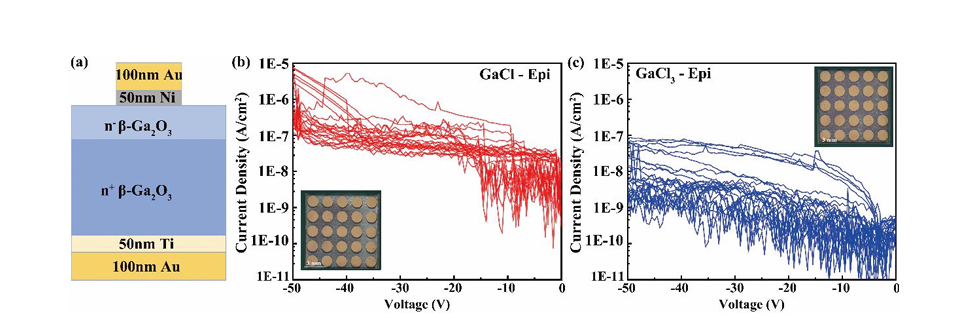
Figure 6. Macro-scale electrical uniformity mapping via vertical prototype Schottky barrier diodes (SBDs). (a) Schematic cross-section of the fabricated vertical SBD structure. Statistical reverse J-V characteristics collected across multiple devices for (b) the GaCl epilayer wafer and (c) the GaCl₃ epilayer wafer (insets show optical views of the completed device arrays).
DOI:
doi.org/10.1016/j.jcrysgro.2026.128798

Instruction
Official Account

Cooperation
Top