

In August 2026, experts, researchers, corporate representatives, and industry professionals from across the global gallium oxide community gathered in Maryland, USA, for the 6th International Workshop on Gallium Oxide and Related Materials (IWGO-6).
From crystal growth and epitaxy to device development and industrialization, the five-day conference brought together the latest advances from different regions around the world, offering a clear view of how gallium oxide is gradually moving beyond cutting-edge laboratory research toward a more defined path to commercialization.
But what a conference leaves behind is far more than presentations, posters, and data.
At IWGO-6, we spoke with experts, researchers, and industry representatives from different countries and regions, hearing their perspectives on technological progress, industrialization, and the future of the industry. These voices from the front lines of the field may offer a deeper understanding than technical performance metrics alone: Where does the global Ga₂O₃ industry stand today, and where is it heading next?
We have captured these perspectives as a snapshot of an industry entering its next stage of development.
Let’s start from IWGO-6 and hear the voices of the global Ga₂O₃ industry.
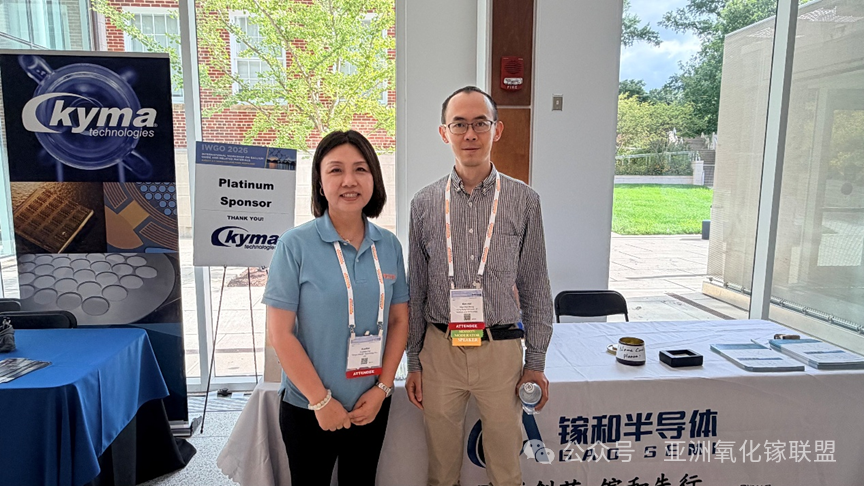
In this issue, we invited Associate Professor Man Hoi Wong from the Hong Kong University of Science and Technology to share his insights into the future of gallium oxide, focusing on technological advances, device application exploration, and pathways toward commercialization.
Biography
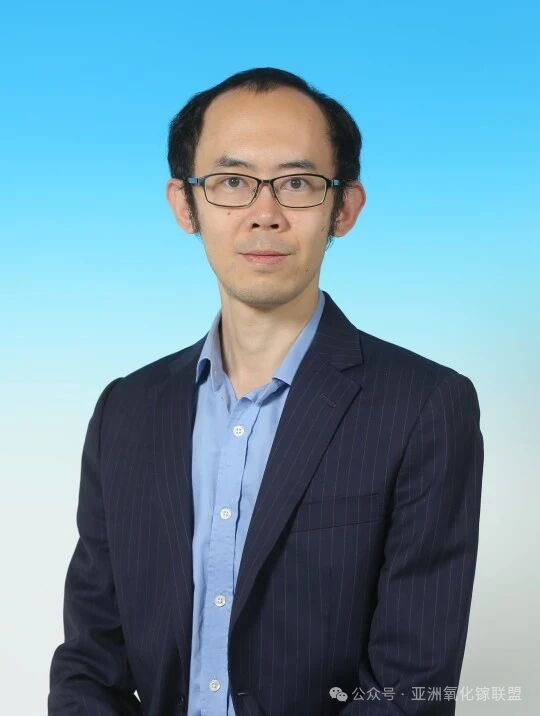
Professor Man Hoi Wong is an Associate Professor in the Department of Electronic and Computer Engineering at The Hong Kong University of Science and Technology (HKUST). He received dual bachelor’s degrees in Electrical Engineering and Materials Science from Cornell University in 2004 and a Ph.D. in Electrical Engineering from the University of California, Santa Barbara (UCSB) in 2009.
Professor Wong was among the first researchers to investigate N-polar GaN RF devices. From 2011 to 2013, he worked at SEMATECH in the United States, where he developed molecular beam epitaxy (MBE) technologies for large-area monolithic integration of III-V materials on silicon. From 2013 to 2019, he conducted research on Ga₂O₃ power devices at Japan’s National Institute of Information and Communications Technology (NICT). From 2019 to 2022, he served as an Assistant Professor at the University of Massachusetts Lowell before joining HKUST in 2022.
Professor Wong has authored numerous invited review articles on GaN and Ga₂O₃ device technologies and has delivered more than 30 invited talks at academic conferences and forums. His research has received several awards, including the 2012 SEMATECH Excellence Award and the 2019 NICT Individual Achievement Award. He currently serves as an editor for Journal of Materials Research (Springer) and IEEE Transactions on Electron Devices.
Q You were deeply involved in this conference—giving a presentation, serving as a poster judge, participating in the panel discussion, and contributing to the organization and preparation of the next conference. From your perspective, how would you assess the research progress presented at this conference, the future direction of gallium oxide, and your overall impressions of the event?
There has been significant technical progress, with many new insights emerging:
AlGaO:Progress has been made in crystal growth, defect control, phase transitions, phase stability, Al composition control, epitaxy, and related areas.
Ge₂O₃:Research has advanced from epitaxial growth to bulk single-crystal growth.
Materials:The past one to two years have brought substantial advances and accumulated a wealth of technical knowledge.
Devices:Some emerging Ga₂O₃ devices have begun to attract international attention, and researchers are expected to push these technologies forward with greater efforts, particularly in the field of power devices.
Overall, the conference showcased substantial technical progress across the field.
Q Everyone is actively exploring new possibilities and working to further improve gallium oxide. What are your expectations for the future of the field?
Gallium oxide holds great promise for high-power and high-voltage applications, which is a broad consensus across the field. This was evident not only from the views expressed by the panelists during the roundtable discussion, but also from the research directions highlighted throughout the presentations. Ultimately, these efforts are all driven by the vision of making a meaningful contribution to future power applications.
Q How did participating in this IWGO conference contribute to your own research?
My research mainly focuses on devices. One of the most valuable aspects of attending a conference like IWGO is the opportunity to exchange ideas with researchers working on materials and theory:
From their findings, I can better understand the factors that limit device performance.
Theoretical researcherscan help analyze the properties and formation mechanisms of new types of defects.
Researchers working on materials characterizationcan use new characterization techniques, such as optical methods, to observe new physical phenomena.
I can bring these insights togetherto develop a more comprehensive and deeper understanding of device performance from different perspectives.
When researchers from different areas come together in the same place at the same time, they can exchange a great deal of valuable information.
Q What do you think is currently missing in the gallium oxide field? What new directions is your research group exploring?
Our community is relatively lacking in experts with an application-oriented background. Many researchers are working on theory, materials, epitaxy, crystal growth, and devices, but there are very few people with an electronics and application background—almost none. We hope that more electrical and electronics engineers will participate in future discussions and exchanges, bringing the power device engineering community into the field.
My own research group has also begun to move gradually toward applications:
I have not previously worked on circuits, but I will start paying more attention to them.
Our group is conducting some basic circuit-level validation, rather than focusing solely on the performance of individual devices.
We are beginning to examine devices in circuits relevant to real-world applications, looking at how their performance can be characterized and how they actually behave beyond the scope of individual device-level measurements.
Q So, as gallium oxide technology continues to advance, are you now placing greater emphasis on practical implementation and applications, moving beyond your initial focus on device structures toward real-world applications?
Yes, I am beginning to do more work in this area. However, my primary focus remains on devices; I have not shifted completely toward applications. My goal is to use circuit-level approaches to validate devices, as this is more closely aligned with real-world application scenarios. Engineers working on systems and circuits can provide a better assessment of the current level of semiconductor technology.
Different fields have their own technical language:
Device researchershave their own way of evaluating and discussing performance.
Materials researchershave their own set of technical considerations.
Circuit engineers, however, are not necessarily concerned with how exceptional the performance of an individual device is. They care more about the overall performance and reliability of multiple devices operating together under actual circuit conditions.
Q You mentioned reliability. Could you elaborate on this?
Reliability is certainly very important. At the same time, I hope the field can gradually reach some consensus on the technology routes it chooses to pursue. Otherwise, everyone ends up working on very different approaches. Many of these ideas are good and innovative, but if the ultimate goal is practical application, the field may need to concentrate its efforts on a smaller number of promising directions. We cannot have every research group focusing only on devices that are highly specialized or novel. There needs to be a process of convergence.
Take GaN power devices as an example. There is already a broad consensus on the basic technology route:
Most devices are based on silicon substrates and lateral structures;
The epitaxial structure is typically a heterostructure (AlGaN/GaN);
Gate designs commonly use junction gates, while most metal contacts are Schottky contacts;
Surface passivation also follows several established mainstream approaches.
When researchers study reliability, they generally understand that reliability is closely related to the PN junction gate. Because researchers are looking at similar structures and mechanisms, efforts can be concentrated in the same direction, making the underlying physical mechanisms clearer. As a result, when we read the literature, the findings overlap more, and the field can gradually establish common standards.
Ga₂O₃ is still far from reaching this level of consensus. Of course, it is valuable for different groups to independently investigate the reliability of the devices or materials they are interested in. These findings provide important information. But as the field develops, I hope that, over time, these efforts will gradually converge toward device designs and technology routes that are meaningful for industrialization.
For example, there are currently many different ideas regarding the selection of p-type materials, p-type doping methods, and p-type applications. This is also one of the directions that researchers are still actively working to resolve.
Q So, at present, researchers in the Ga₂O₃ field are still largely pursuing their own approaches without much convergence. In the future, you hope for greater integration and, like GaN, the field can develop some common technology standards—so that people immediately know what kind of heterostructure is being used, what substrate it is grown on, and how it is fabricated. In this way, efforts can be concentrated around promising directions and ultimately move toward industrialization. Is that what you mean?
Yes. Conferences like this can help facilitate the dialogue needed to achieve that. When researchers come together in one place and see each other’s ideas, it becomes much easier for different perspectives to interact and spark new insights.
Q Do you think there was a greater level of integration at this conference compared with previous ones, such as the conference held in Berlin two years ago?
Both this conference and the one held in Berlin two years ago provided valuable opportunities for experts from within and outside the field to exchange ideas. I would say the overall level of integration was about the same. However, it was probably easier for researchers from mainland China to travel to Berlin, so there were more mainland Chinese representatives at that conference.
This year, there were almost no representatives from mainland China, as traveling to the United States remains relatively difficult. As a result, at least at this conference, the work being carried out in mainland China did not receive as much exposure and recognition among international peers as it otherwise might have.
Q The Ga₂O₃ conference is now in its sixth edition, spanning 12 years and witnessing a great deal of development. Is there any experience you would like to share with your fellow researchers?
I think scientific research requires patience and time. My PhD advisor used to tell us:
“Don't run, but walk fast.”
So, we should not rush. We need to be meticulous and remain faithful to science. At the same time, we need to work efficiently so that, with a reasonable allocation of resources, we can achieve the greatest possible results.
Instruction
Official Account

Cooperation
Top