

The inflection point has yet to arrive, but Shanghai has already been laying the groundwork a decade ahead of time. This is taking place in the fourth-generation semiconductor sector, which remains in the early stages of commercialization.
Since taking the lead in the sector in 2024, Shanghai has continued to refine a systematic approach, building a system for entrepreneurship support and industrial cultivation. At the Lingang Fourth-Generation Semiconductor Future Industry Cluster, R&D on key materials including gallium oxide, diamond, and aluminum nitride has achieved phased breakthroughs, while a number of devices have moved into application verification. In just a few years, Shanghai has rapidly established a leading level of industrial concentration and innovation intensity in a field that the industry has described as “an industry ten years from now.”
Why anchor early in an industry whose landscape is still taking shape and whose inflection point remains years away? From Shanghai’s perspective, rather than simply “waiting for the wind to come,” it is better to take proactive steps, accelerate the emergence of breakthrough moments, and cross the threshold to commercialization ahead of time—thereby proactively “drawing the wind in.”
This approach to exploring new ground may offer fresh ideas for how to build core competitiveness and secure greater initiative in science, technology, and industry over the next decade.
Targeting the “Industry of the Next Decade”
In China, what is commonly referred to as fourth-generation semiconductors (colloquially known in China as “四代半”) is represented primarily by materials such as gallium oxide (Ga₂O₃), diamond, aluminum nitride (AlN), and antimonides. Despite being called “fourth-generation,” these materials are not intended to replace conventional silicon-based chips. Instead, they are expected to enable the next generation of critical devices for applications involving ultra-high voltage, ultra-high temperature, and harsh radiation, including new-energy vehicles, 6G terahertz communications, commercial spaceflight, and high-computing-power chips.
Globally, fourth-generation semiconductors are now at a critical stage of advancing from scientific research toward engineering validation. Shanghai has made a clear assessment of this development trajectory. In March 2024, Shanghai took the lead in China by becoming the first city to identify fourth-generation semiconductors as a key direction for future-industry development. In May 2025, Shanghai launched construction of China’s first future-industry cluster dedicated to fourth-generation semiconductors in Lingang.
Behind this early investment lies Shanghai’s willingness to take a long-term view. Xu Jinxu, project manager for fourth-generation semiconductor programs at the Shanghai Municipal Commission of Science and Technology, told reporters that research on third-generation semiconductors began in the 1980s, and it was not until 2018, when Tesla began large-scale deployment of silicon carbide (SiC) power modules in vehicles, that the technology reached a major commercialization milestone. In other words, the journey from “0 to 1 and then to 100” took more than three decades to mature. By this logic, fourth-generation semiconductors, whose laboratory research began around 2010, may not reach their major commercialization inflection point until after 2040.
Opportunities do not simply appear out of nowhere. Looking back at the development of third-generation semiconductors, it was not a single technological breakthrough that triggered rapid commercialization, but Tesla’s procurement decision, which suddenly opened the floodgates of demand. Xu referred to this moment as the “vehicle onboarding moment”. What Shanghai hopes to achieve in the fourth-generation semiconductor sector is to create the right conditions early and guide resources toward the field, bringing forward the moment when broader market and social resources begin to flow in.
Shanghai’s early-mover strategy is already showing initial results. Xu revealed that, on the technology front, after two years of rapid development, Shanghai is steadily narrowing the gap with the international frontier, with some areas achieving parallel progress with global leaders. On the product side, device development in relevant subfields is progressing at the fastest pace in China, with several areas expected to achieve commercialization ahead of others. On the industrial front, the Lingang cluster has attracted more than 10 materials and device companies across key fourth-generation semiconductor areas including Ga₂O₃, diamond, AlN, and antimonides. It is currently one of China’s most concentrated and comprehensive hubs for fourth-generation semiconductor companies, with the largest number of companies, highest concentration, and broadest range of technology directions in the field.
Building the Platform for Tomorrow’s Winners
Looking ahead to the next decade from the vantage point of the technology sector, no one can say with certainty who will emerge as the winners. Shanghai’s forward-looking approach to cultivating fourth-generation semiconductors is not about betting on a particular technology or research team. What truly matters is getting ahead of the curve by building the system that connects technology with industry.
“Before Shanghai began investing in the sector, fourth-generation semiconductors were largely still at the laboratory research stage, with very few companies involved,” said Xu Jinxu. The Shanghai Municipal Commission of Science and Technology and the Lingang Special Area Administration have worked together to implement a “four-in-one” mechanism for cultivating future industries: project manager teams taking primary responsibility, key-task lists driving breakthroughs, future-industry funds providing support, and future-industry clusters serving as the physical platform. Focusing on two major technology tracks — ultra-wide-bandgap and ultra-narrow-bandgap semiconductors — the initiative is bringing innovation resources and capital into the cluster, with a goal of achieving the “Dual-50” target over the next three years: at least 50 companies and an industrial scale exceeding RMB 50 billion.
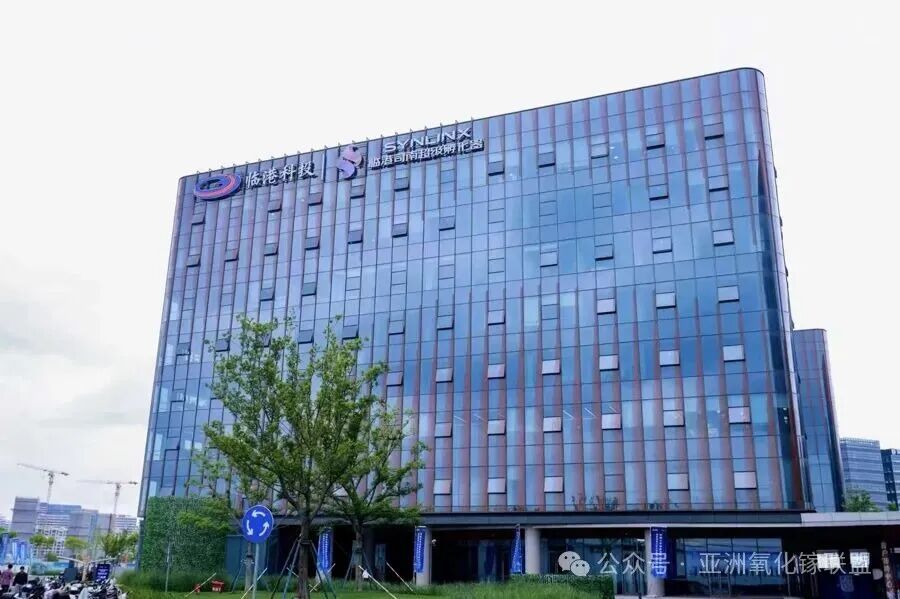
Early investment is about using public-sector support to address a range of challenges that the market is not yet ready to handle and that individual entrepreneurs would struggle to tackle on their own. Take the SYNLINX Semiconductor Incubator in the cluster as an example. One of its key functions is to provide proof-of-concept for early-stage projects. A laboratory result may have already demonstrated that a principle is feasible, but whether it can be turned into a stable device, whether the cost is commercially viable, and whether there is actual customer demand are questions that are better addressed before a company is established and substantial capital is committed. This helps reduce the cost of trial and error and improve the overall efficiency of technology incubation.
The mechanism is already beginning to operate. Li Sihua, general manager of the SYNLINX Semiconductor Incubator, said that the incubator currently has more than 10 projects in its pipeline. In the first half of this year, four projects were selected, two underwent application verification, and one was successfully commercialized. The incubator has also established connections with dozens of service providers, bringing in specialized capabilities in areas such as EDA, wafer fabrication, packaging and testing, and certification. Together, these efforts have created a relay mechanism spanning project discovery → technology verification → investment and incubation → industrialization and site deployment.
On the financing side, Lingang has developed an approach tailored to the needs of fourth-generation semiconductors, rather than simply replicating the model used for mature technology sectors. During the early stages of R&D and commercialization, public funding steps in first to provide support. Once a project has established a foundation for market-oriented and corporate operations, the baton is passed to angel investors and other private capital. This “grant-to-equity” mechanism enables public and private capital to support projects in stages, ensuring access to funding even during the highest-risk phase, when market investors are typically the least willing to commit.
This year, Shanghai also held its first innovation and entrepreneurship competition dedicated to fourth-generation semiconductors, bringing promising technologies from universities and research institutes into the industrial spotlight at an earlier stage and further broadening the pipeline of potential projects. The newly crowned winning project has already expressed a clear intention to establish operations in Lingang.
Bringing the “First Users” Onboard Early
One of the biggest hurdles for a future industry is not simply making a technology work, but finding who will be the first to use it. To bridge the gap between technology and the market, Shanghai is experimenting with bringing supply-demand matching forward, enabling users and R&D teams to work together and participate in product definition even before products reach the market. As Xu Jinxu put it, the aim is to “actively create new application scenarios that do not yet exist.” This is precisely where the appeal of future industries lies.
Founded last November, Xinqing Yuneng has already found such a testing ground. The company’s core technology has been developed in university laboratories for around 20 years. Its micro-nano thermoelectric chips can generate electricity reliably from an extremely small temperature difference of just 0.001°C. But how can such cutting-edge technology be translated smoothly into practical applications? The industrial cluster quickly provided an answer. Through its matchmaking efforts, Baosteel and Xinqing Yuneng reached a cooperation agreement to pilot the use of the technology to convert low-grade waste heat from hot-rolling production lines — heat that is otherwise difficult to utilize — into green electricity, while also reducing carbon emissions. For the company, this represents both a real-world product validation opportunity in an industrial environment and a potential gateway to a much larger market. Statistics show that the amount of waste heat dissipated without being utilized by China’s industrial sector each year is equivalent to the annual electricity generation of more than 100 Three Gorges hydropower plants, suggesting significant potential economic and environmental benefits for thermoelectric chips.
A satellite filter team formed around a key laboratory of the Chinese Academy of Sciences has also benefited from this support. The team is developing single-crystal AlN filters that are expected to deliver substantial improvements in size, cost, and interference resistance. Although the team has not yet established a company, the industrial cluster has already helped connect it with potential customers in the field of low-Earth-orbit satellite constellations.
Similarly, Jiachi Power, which focuses on power-device development, is working on Ga₂O₃ technologies that are naturally suited to medium- and high-voltage applications. Its substrates can be grown using melt-based methods, offering significant cost advantages. Although the company was only established in January this year and its first commercial product has not yet been officially launched, the incubator has already connected it with a leading automaker. Zhang Guangyin, general manager of Jiachi Power, said that the strong support from the industrial cluster has given the management team “a great deal of confidence.”
No one can select the future winners for the market, nor can an industrial “breakthrough moment” be created out of thin air. But before the “wind” arrives, Shanghai is working to move the starting line forward in the fourth-generation semiconductor sector through sustained, forward-looking investment, bringing together high-quality innovation resources and building the support platforms needed by emerging technologies.
Instruction
Official Account

Cooperation
Top