

15th Five-Year Plan for the Development of the Electronic Information Manufacturing Industry
Recently, the “15th Five-Year Plan for the Development of the Electronic Information Manufacturing Industry” was officially released.
The Plan proposes that by 2030, China’s electronic information manufacturing industry will achieve significant progress in high-quality development, with the operating revenue of above-designated-size enterprises exceeding RMB 30 trillion. The Plan also highlights major breakthroughs in industrial chain security, with a number of leading technologies and products emerging in fields including integrated circuits, advanced computing, consumer electronics, basic electronics, and energy electronics.
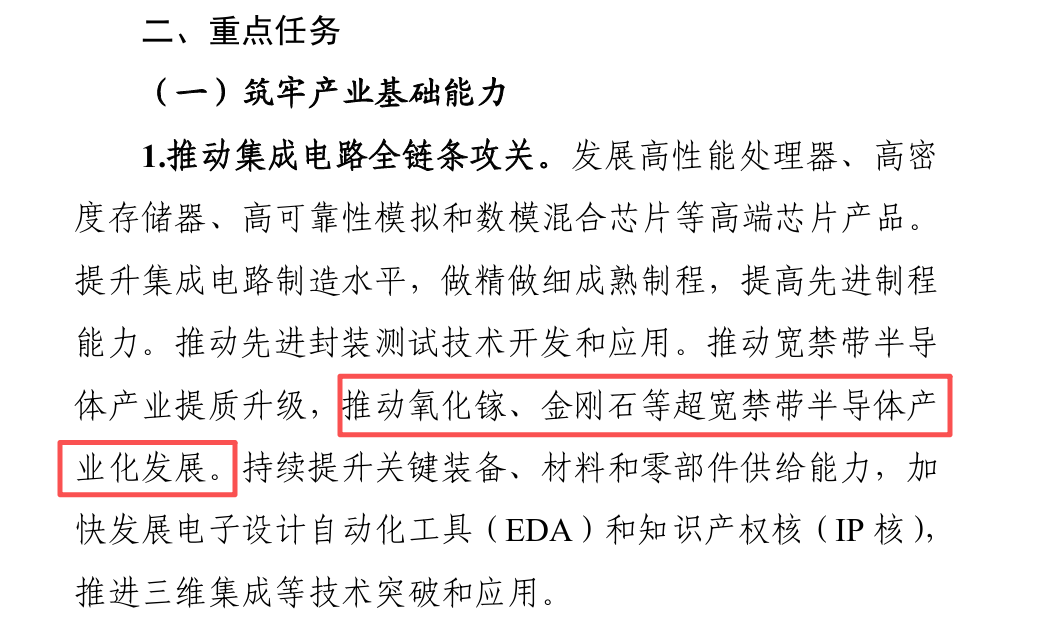
In the section on “Strengthening Fundamental Industrial Capabilities,” the Plan explicitly states:
“Promote the upgrading and development of wide-bandgap semiconductors, and advance the industrialization of ultra-wide-bandgap semiconductors such as gallium oxide and diamond.”
This marks the first clear and direct policy statement in the Plan specifically naming Ga₂O₃ industrial development, representing one of the most significant top-level policy signals supporting the ultra-wide-bandgap semiconductor sector.
Beyond directly naming Ga₂O₃, the Plan also outlines supporting measures across key foundational links of the semiconductor industry, including semiconductor materials and specialized electronic equipment, forming a comprehensive support framework.
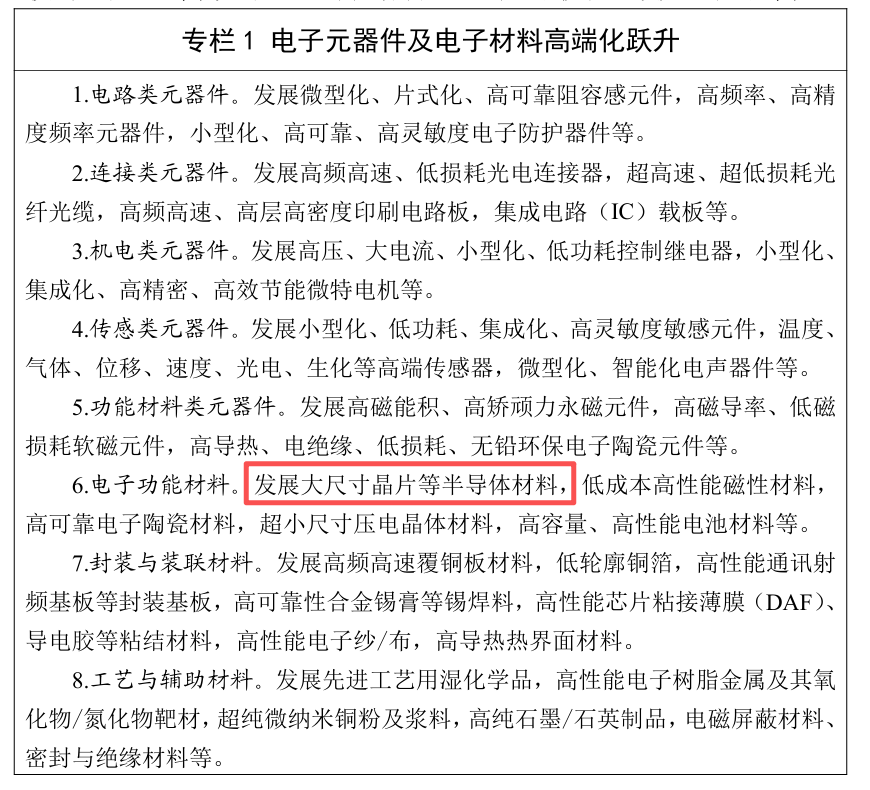
In the field of electronic components and electronic materials, the Plan proposes advancing the development of high-performance electronic functional materials, packaging and interconnection materials, process materials, and auxiliary materials. Under the dedicated section “High-End Upgrading of Electronic Components and Electronic Materials,” it further highlights the need to “develop semiconductor materials such as large-size wafers.”
The Plan also emphasizes improving the stability, reliability, and consistency of electronic components and material products, directly addressing key industrialization challenges for Ga₂O₃, including large-size substrate development and material performance enhancement.
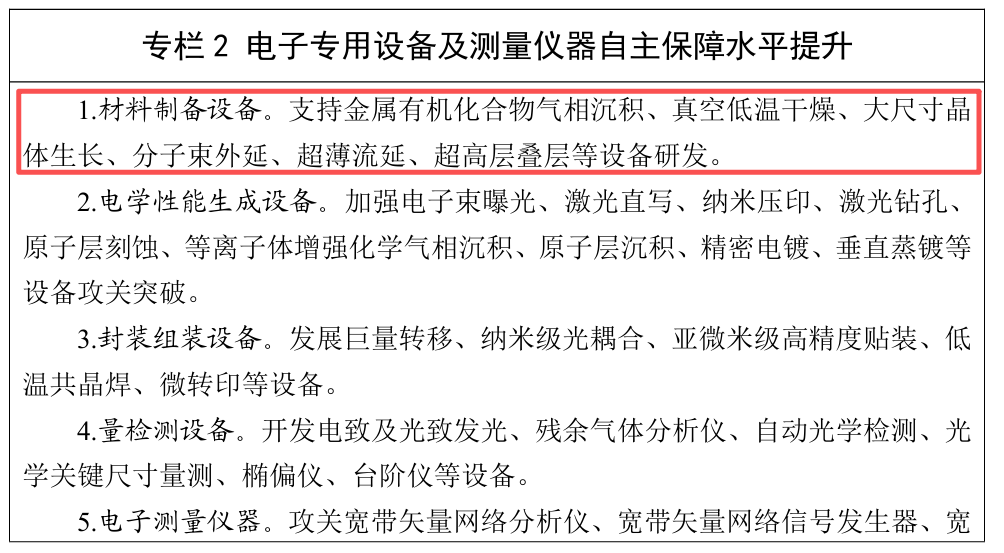

Meanwhile, in the field of energy electronics, the Plan proposes continued coordinated development of technologies across “photovoltaics, energy storage, terminals, and information systems”. In the dedicated section “Industrialization Enhancement of the Energy Electronics Industry,” it explicitly calls for the “development of advanced power semiconductors, smart sensors, power management and other chips, high-power high-efficiency converters, and other power electronic products.”
Power semiconductors represent one of the most critical downstream application areas for Ga₂O₃. This strategic deployment provides broad market opportunities for the commercialization and large-scale adoption of Ga₂O₃-based devices.
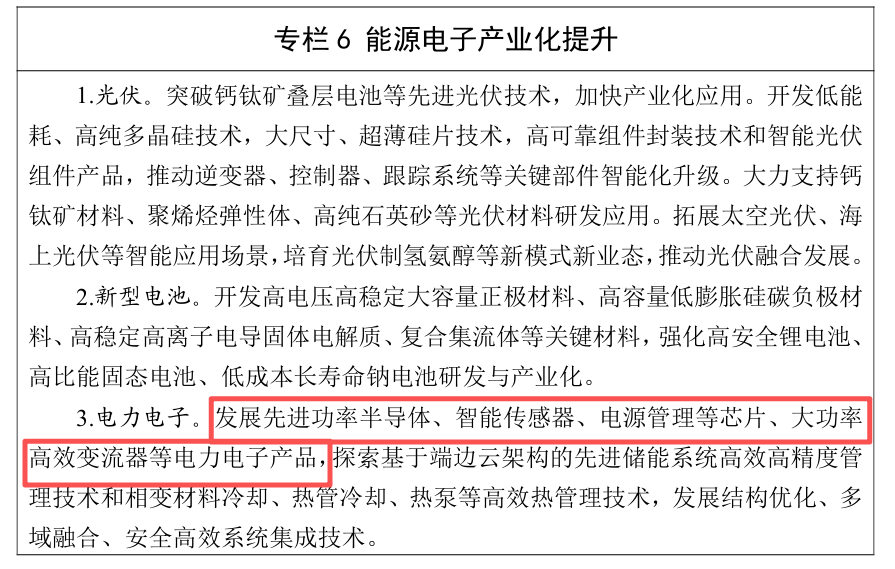
Taken together, these policy measures show that the Plan’s strategy for strengthening the foundation of the electronic information manufacturing industry covers multiple critical areas, including integrated circuits, semiconductor materials, specialized electronic equipment, wide-bandgap and ultra-wide-bandgap semiconductors, and power semiconductors. For the first time, Ga₂O₃ and diamond are explicitly included in the priority areas for advancing the industrialization of ultra-wide-bandgap semiconductors, further establishing the strategic positioning of this emerging sector at the national policy level.
For the Ga₂O₃ industry itself, the statement to “advance the industrialization of ultra-wide-bandgap semiconductors such as gallium oxide” represents the most direct and central policy guidance in the Plan. Meanwhile, the Plan’s emphasis on large-size wafers, large-size crystal growth, and advanced power semiconductors provides essential indirect support for the development of the Ga₂O₃ ecosystem, forming a complete policy framework of “top-level sector positioning + upstream material support + core equipment advancement + downstream application expansion.”
Entering the 15th Five-Year Plan period, China’s electronic information manufacturing industry is expected to further advance toward strengthening industrial and supply chain security, enhancing the supply of critical materials and equipment, and accelerating the commercialization of technological achievements.
With the combined momentum of clear policy recognition, supporting material and equipment capabilities, and expanding downstream application scenarios, the Ga₂O₃ industry is poised to move beyond the technology validation stage and enter a critical commercialization window, characterized by coordinated progress in material iteration, equipment breakthroughs, and large-scale device deployment.
Instruction
Official Account

Cooperation
Top