


Researchers from the Zhejiang Sci-Tech University have published a dissertation titled "Tuning photo-induced hole transport dynamics in Ga₂O₃ photoelectrodes for ultra-stable underwater solar-blind UV detection and communication" in Materials Today Physics.
Background
With the continuous development of underwater tactical operations, rescue missions, and resource exploration, underwater optical communication (UOC) have attracted widespread attention. Photoelectrochemical (PEC) photodetectors are highly suitable for UOC due to their unique advantages of being self‑powered and adaptable to liquid environments. However, visible light PEC devices suffer from issues such as poor anti‑interference capability and high bit error rate. Meanwhile, solar‑blind PEC devices operating in the 200‑280 nm wavelength have emerged as a current research hotspot due to high‑fidelity communication advantage stemming from low background noise.Currently, common materials for solar‑blind PEC devices are diamond, AlGaN, and gallium oxide Ga₂O₃ . Diamond is expensive and difficult to fabricate, AlGaN requires high vacuum and precise elemental control, while Ga₂O₃ with 3.9‑4.9 eV band gap can achieve solar‑blind spectral response without elemental regulation and has high possess compatibility. However, Ga₂O₃ ‑based PEC devices still suffer from poor stability due to the limitations of solid‑liquid interface photocorrosion. To solve it, researchers reported that Mg, Zn divalent cations doping with Ga₂O₃ has been shown to enhance electrical conductivity and optical response of Ga₂O₃ . Similarly, heterojunctions can assist in charge separation via internal potentials. Despite these advantages, such modifications frequently involve a compromise where high dopant concentrations or the presence of narrow band gap phases cause a red‑shift, which degrades the characteristic solar‑blind selectivity of the Ga₂O₃ host.
At present, photodeposition modification of nanoparticles is considered an effective method to improve material stability. Among them, Co₃O₄ ,as a p‑type semiconductor, serves as an efficient co‑catalyst, facilitating carrier transport at the solid‑liquid interface and enhancing the interface reaction rate. Here, Co₃O₄ nanoparticles are combined with a high specific surface area of(Ga₂O₃)nanopillar arrays to construct a heterojunction with type‑II band alignment, which is expected to accelerate the transfer of photogenerated holes at the solid‑liquid interface and reduce interfacial lattice damage. The team prepared Co₃O₄ @ Ga₂O₃ photoelectrodes with varying degrees of modification using a simple photodeposition method, and investigated the impact of Co₃O₄ modification density on the photoelectrical performance of corresponding PEC devices. An appropriate degree of modification can significantly enhance the light responsivity and long‑term operational stability without affecting its solar blind spectral selectivity. Constructing a UOC system based on the optimized Co₃O₄@ Ga₂O₃ device is expected to achieve high‑stability and high‑quality signal transmission.
Abstract
Self‑powered solar‑blind ultraviolet (UV) photoelectrochemical (PEC) devices have great potential in underwater optical communication (UOC) due to their resistance to visible light interference. Gallium oxide(Ga₂O₃)with extremely wide band gap is a natural solar‑blind photosensitive material and has been widely used in PEC devices. However, Ga₂O₃‑based PEC devices suffer from low responsivity and poor stability due to photocorrosion at the solid‑liquid interface. Particle modification techniques are considered an effective measure to improve the transport path of photogenerated charge carriers and mitigate negative reactions. Here, we constructed a uniformly distributed cobalt tetroxide(Co₃O₄)nanoparticle modification layer on a Ga₂O₃ nanopillar arrays via in‑situ photodeposition. Beyond serving as a protective layer that shields Ga₂O₃ from liquid contact and suppresses lattice degradation, Co₃O₄ nanoparticles also form a staggered type‑II heterojunction with Ga₂O₃ ,which promotes the extraction of photogenerated holes for redox reactions and thus enhances carrier separation kinetics. The response rise time and responsivity of the optimized PEC device are 34.6 ms and 17.27 mA W −1 which are 4.3 and 1.6 times higher than the original ones. Notably, in a continuous 7200s optical switching test, the photocurrent attenuation degree improved from 67% to 0.3%, exhibits significantly enhanced long‑term stability. This significantly outperforms existing reports on Ga‑based solar‑blind UOC devices. Stimulatingly, a UOC system based on Co₃O₄ @ Ga₂O₃ photoanode achieves high‑fidelity, self‑powered signal transmission and real‑time decoding even in long‑term liquid operating environments, providing a foundation for achieving high‑performance solar‑blind systems.
Highlights
The team constructed a Co₃O₄@Ga₂O₃ composite structure by uniformly modifying Co₃O₄ nanoparticles on Ga₂O₃ nanopillar arrays via in-situ photodeposition, forming a type-II heterojunction that promotes the extraction of photogenerated holes.
The optimized Co₃O₄@Ga₂O₃PEC device achieved a response time of 34.6 ms and a responsivity of 17.27 mA W⁻¹, which are 4.3 and 1.6 times higher than those of the bare Ga₂O₃ device, respectively.
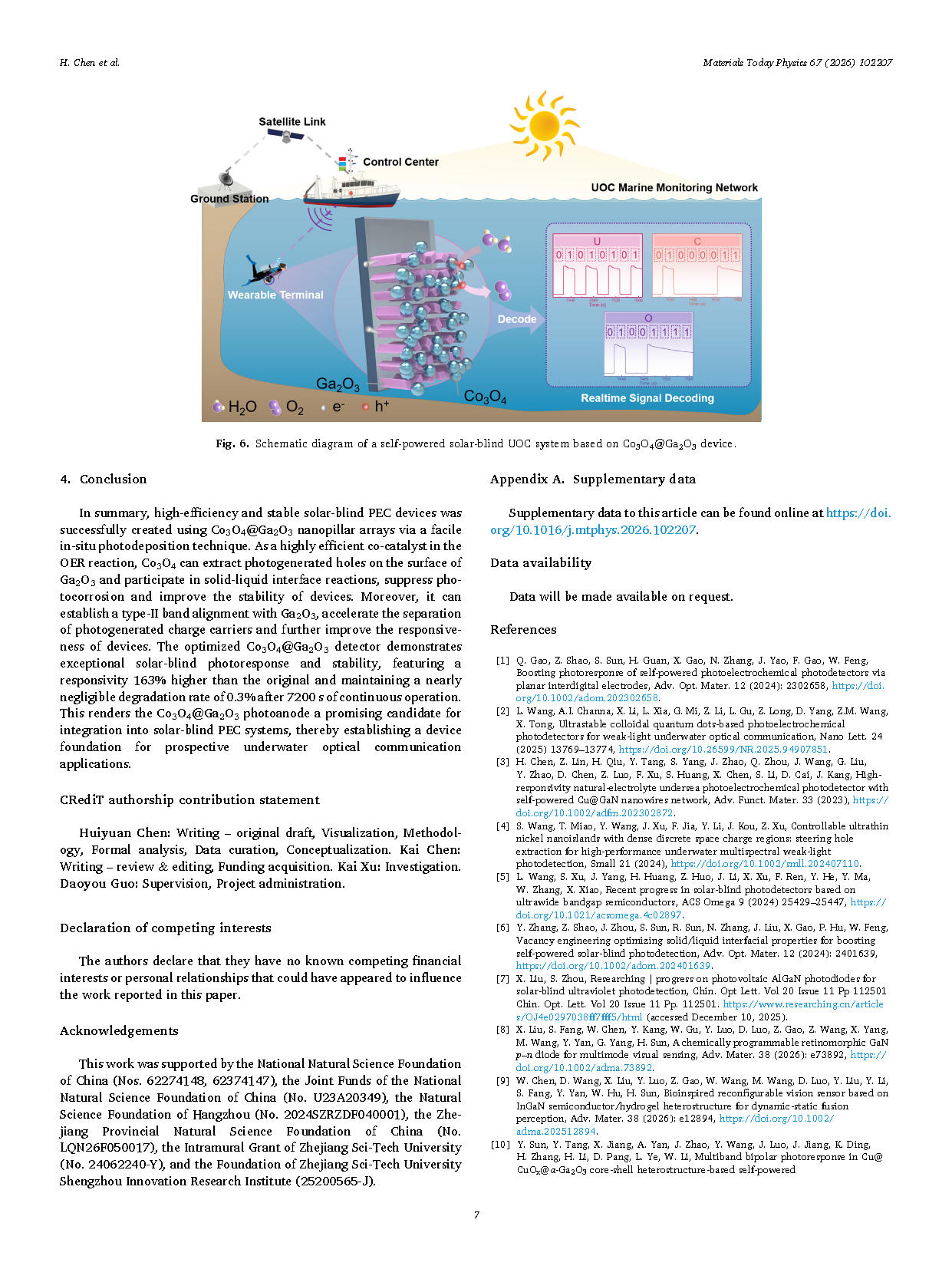
In a continuous 7200-second optical switching test, the photocurrent attenuation rate of the device prepared by the team was only 0.3%, far superior to the 67% of the bare Ga₂O₃ device, demonstrating excellent long-term operational stability.
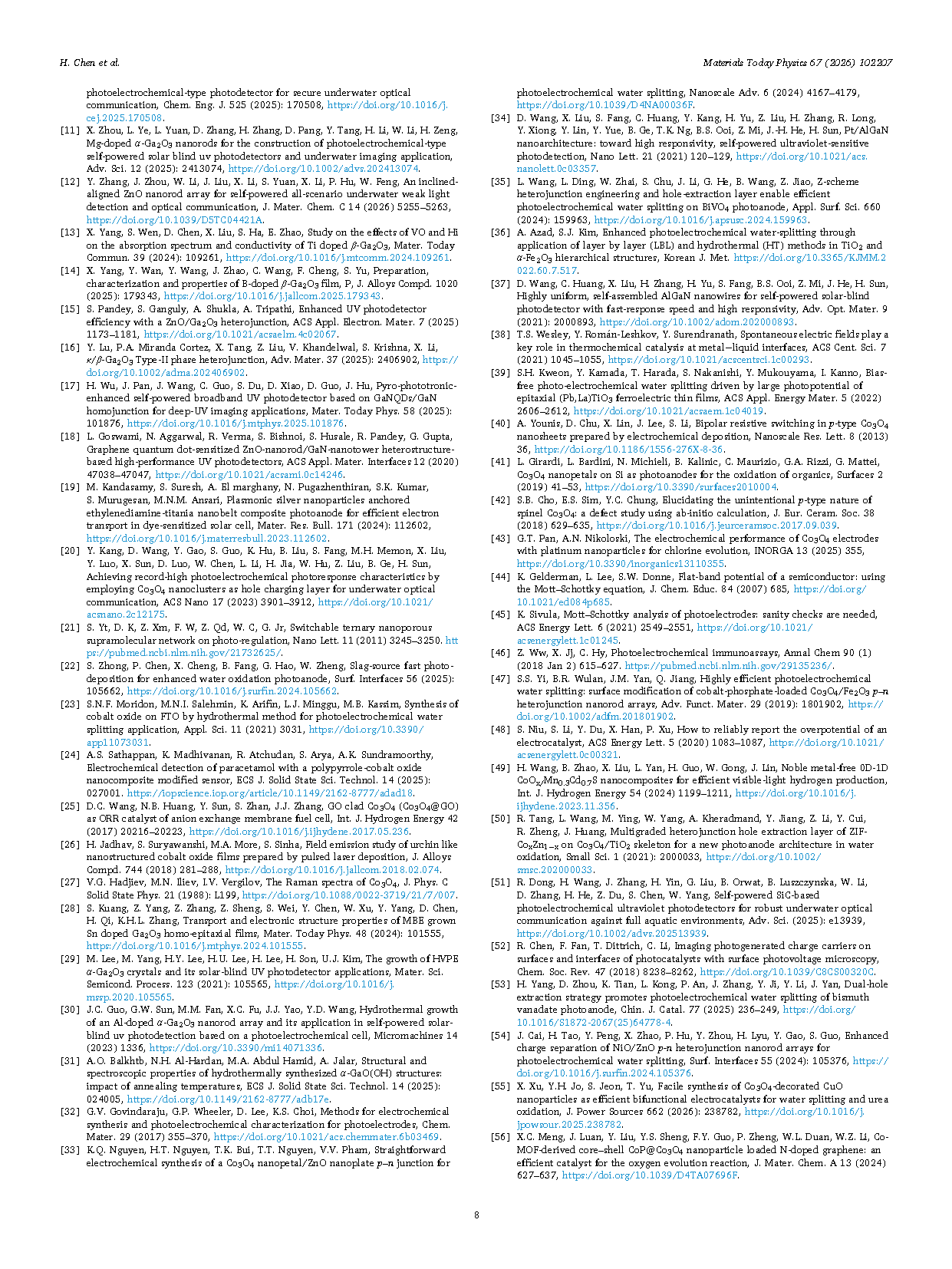
The underwater optical communication system based on the Co₃O₄@Ga₂O₃ photoanode, constructed by the team, achieved high-fidelity, self-powered signal transmission and real-time decoding, laying the foundation for constructing high-performance solar-blind underwater communication systems.
Conclusion
In summary, high‑efficiency and stable solar‑blind PEC devices was successfully created using Co₃O₄@Ga₂O₃ nanopillar arrays via a facile in‑situ photodeposition technique. As a highly efficient co‑catalyst in the OER reaction, Co₃O₄ can extract photogenerated holes on the surface of Ga₂O₃ and participate in solid‑liquid interface reactions, suppress photocorrosion and improve the stability of devices. Moreover, it can establish a type‑ll band alignment with Ga₂O₃, accelerate the separation of photogenerated charge carriers and further improve the responsiveness of devices. The optimized Co₃O₄@Ga₂O₃ detector demonstrates exceptional solar‑blind photoresponse and stability, featuring a responsivity 163 % higher than the original and maintaining a nearly negligible degradation rate of 0.3 % after 7200 s of continuous operation. This renders the Co₃O₄@Ga₂O₃ photoanode a promising candidate for integration into solar‑blind PEC systems, thereby establishing a device foundation for prospective underwater optical communication applications.
Project Support
This work was supported by the National Natural Science Foundation of China (Nos. 62274148, 62374147), the Joint Funds of the National Natural Science Foundation of China (No. U23A20349), the Natural Science Foundation of Hangzhou (No. 2024SZZRDF040001), the Zhejiang Provincial Natural Science Foundation of China (No. LQN26F050017), the Intramural Grant of Zhejiang Sci-Tech University (No. 24062240-Y), and the Foundation of Zhejiang Sci-Tech University Shengzhou Innovation Research Institute (25200565-J).
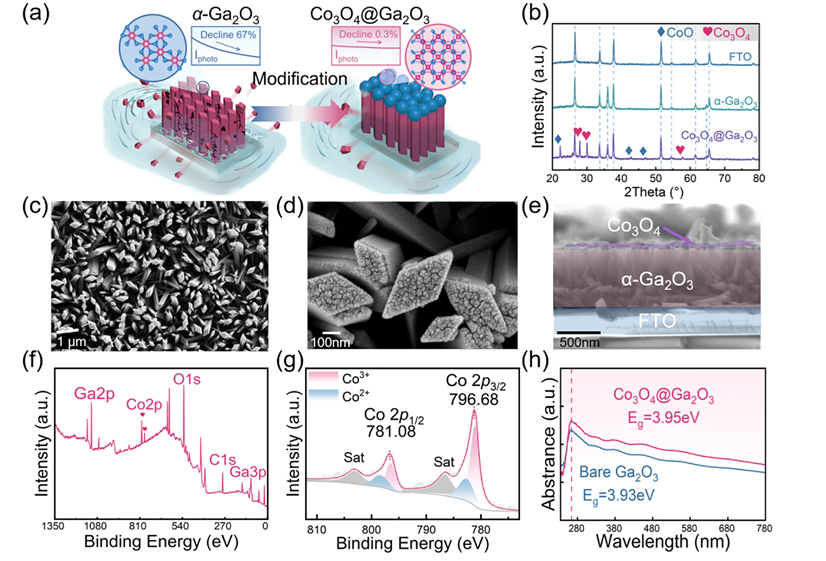
Fig. 1. (a) Schematic diagram of photodeposition. (b) XRD spectra, (c-d) SEM surface morphology, (e) cross section morphology, (f) XPS full spectrum, (g) Co2p fine spectrum, and (h) UV-vis spectrum of Co₃O₄@Ga₂O₃ nanopillar arrays.
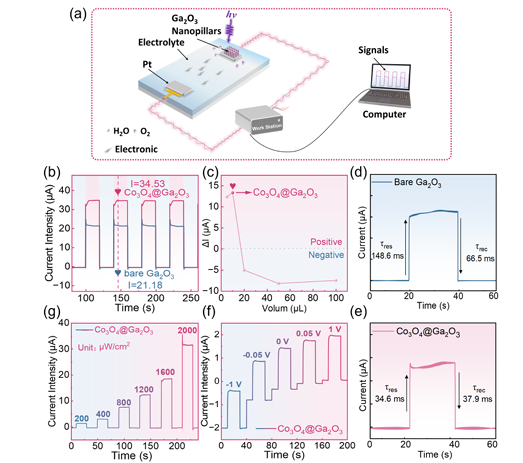
Fig. 2. (a) Schematic diagram of the operating principle for the Co₃O₄@Ga₂O₃ PEC device. (b) Comparison of photoresponse before and after photodeposition. (c) Photocurrent increment before and after modification (ΔI) vs varying contents of modified precursors. Response time of (d) bare Ga₂O₃ and (e) Co₃O₄@Ga₂O₃ devices. The photoresponse characteristic of Co₃O₄@Ga₂O₃ device under different (f) bias voltages and (g) light intensities.
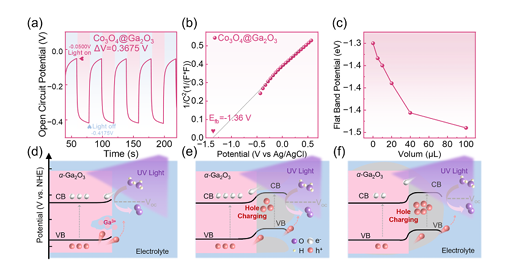
Fig.3. Co₃O₄@Ga₂O₃ device: (a) OCPT, (b) Mott-Schottky, (c) Efb vs volume of Co₃O₄@Ga₂O₃ precursor solution. The effect of Co₃O₄ modification degree on the photocorrosion phenomenon: (d) unmodified, (e) appropriately modified, (f) excessively modified.
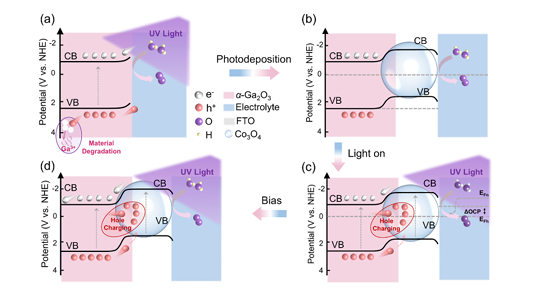
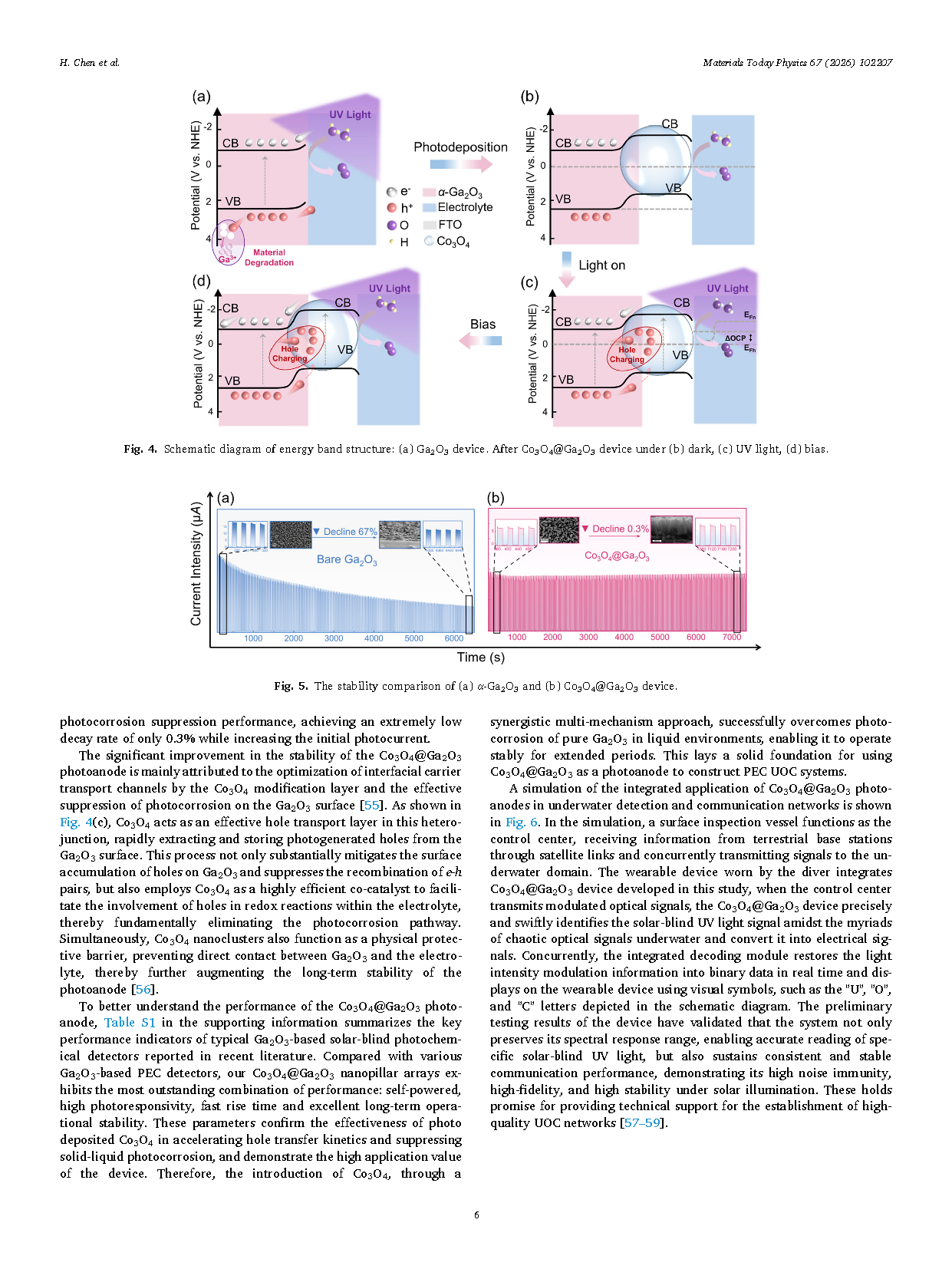
Fig. 4. Schematic diagram of energy band structure: (a) Ga₂O₃ device. After Co₃O₄@Ga₂O₃ device under (b) dark, (c) UV light, (d) bias.
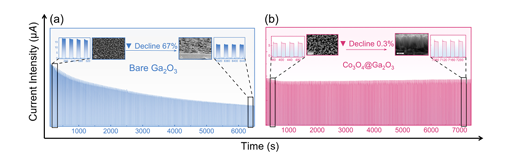
Fig. 5. The stability comparison of (a) α‑Ga₂O₃ and (b) Co₃O₄@ Ga₂O₃ device.
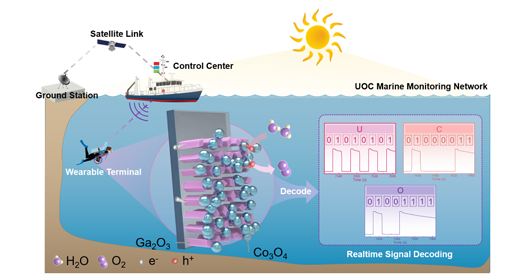
Fig. 6. Schematic diagram of a self-powered solar-blind UOC system based on Co₃O₄@Ga₂O₃ device.
DOI:
10.1016/j.mtphys.2026.102207

Instruction
Official Account

Cooperation
Top