


Researchers from Southwest Petroleum University have published a dissertation titled " Influence of Lu-, Cr- single doping and Lu-Cr co-doping on the electronic and optical properties of β-Ga₂O₃ " in Journal of Alloys and Compounds.
Background
Since the successful fabrication of graphene, 2D materials have received great attention. In recent years, besides natural layered crystals, researchers have exfoliated non-layered semiconductor mate rials into ultrathin 2D flakes, enabling effective regulation and expansion of their electronic and optical properties. For example, when black phosphorus transition from a multi layered structure to monolayer phosphorene, its band structure transforms from an indirect band gap to a direct band gap, accompanied by an increase in band gap width, which effectively enhances the material's light absorption capacity and photoelectric response. As a typical group III metal oxide semiconductor, Ga₂O₃ exhibits ultrawide band gap, high breakdown electric field strength, excellent chemical and thermal stability. Furthermore, they have found that β-Ga₂O₃ can be controllably exfoliated from bulk crystal along specific crystal direction to obtain 2D structure with tunable thickness. However, the excessively wide band structure of 2D β-Ga₂O₃ limits the ultraviolet (UV) light absorption efficiency and carrier application rate to a certain extent. To solve this problem, numerous works have shown that while alloy doping reduces the band gap of 2D β-Ga₂O₃, it also introduces deep level defect and extends light absorption to the infrared region, which compromises the specificity of UV absorption and carrier efficiency. Therefore, how to enhance UV light absorption without extending it to the infrared region while reducing the band gap remains an urgent problem to be solved.
Abstract
As a typical wide band gap semiconductor, two-dimensional (2D) β-Ga₂O₃ has promising application in solar- blind ultraviolet photodetector and spintronics. However, its large band gap and extended infrared absorption after alloying limit its ultraviolet absorption range and intensity. To solve these problems, we apply the first- principles calculations to study the influence of Lu-doping, Cr-doping, and Lu-Cr co-doping on the structural stability, electronic and optical properties of 2D β-Ga₂O₃. The calculated result indicates that Lu-doped and Lu-Cr co-doped β-Ga₂O₃ show excellent thermodynamic stability in comparison to Cr-doping. Importantly, Lu-doping reduces the band gap of β-Ga₂O₃. However, Cr-doping induces impurity level and obvious spin splitting. In particular, it is found that Lu-Cr co-doping enables synergistic tuning of the band gap and spin-polarized band structure due to the f-d orbital coupling. Furthermore, Lu-doping enhances the static dielectric constant and deep-ultraviolet absorption, while Lu-Cr co-doping further increases absorption intensity and results in a blue shift of the absorption peak while retaining strong spin polarization. Therefore, we believe that this work pro vides a possible strategy for optimizing the electronic and optical properties of 2D β-Ga₂O₃ for ultraviolet detection and related electronic and optical applications.
Conclusion
In summary, we apply the first-principles calculations to investigate the influence of Cr/Lu single doping and Lu-Cr co-doping on the structural stability, electronic and optical properties of 2D β-Ga₂O₃. The results shows that both Lu-doped and Cr-Lu co-doped Ga₂O₃ exhibit excellent thermodynamic stability. The introduction of Lu can mitigate the structural instability caused by Cr-doping. The calculated band structure reveals that Lu-doping can narrow the band gap width of 2D β-Ga₂O₃. On the contrary, Cr-doping introduces spin related impurity level with the band gap due to the strong spin polarization effect of Cr-3d state. The synergistic effect of f-d states in Lu-Cr co-doping achieves more band gap narrowing and exhibits obvious asymmetric regulation features in different spin channels. The asymmetric band gap regulation is most significant when both dopant atoms occupy the Ga2 site.
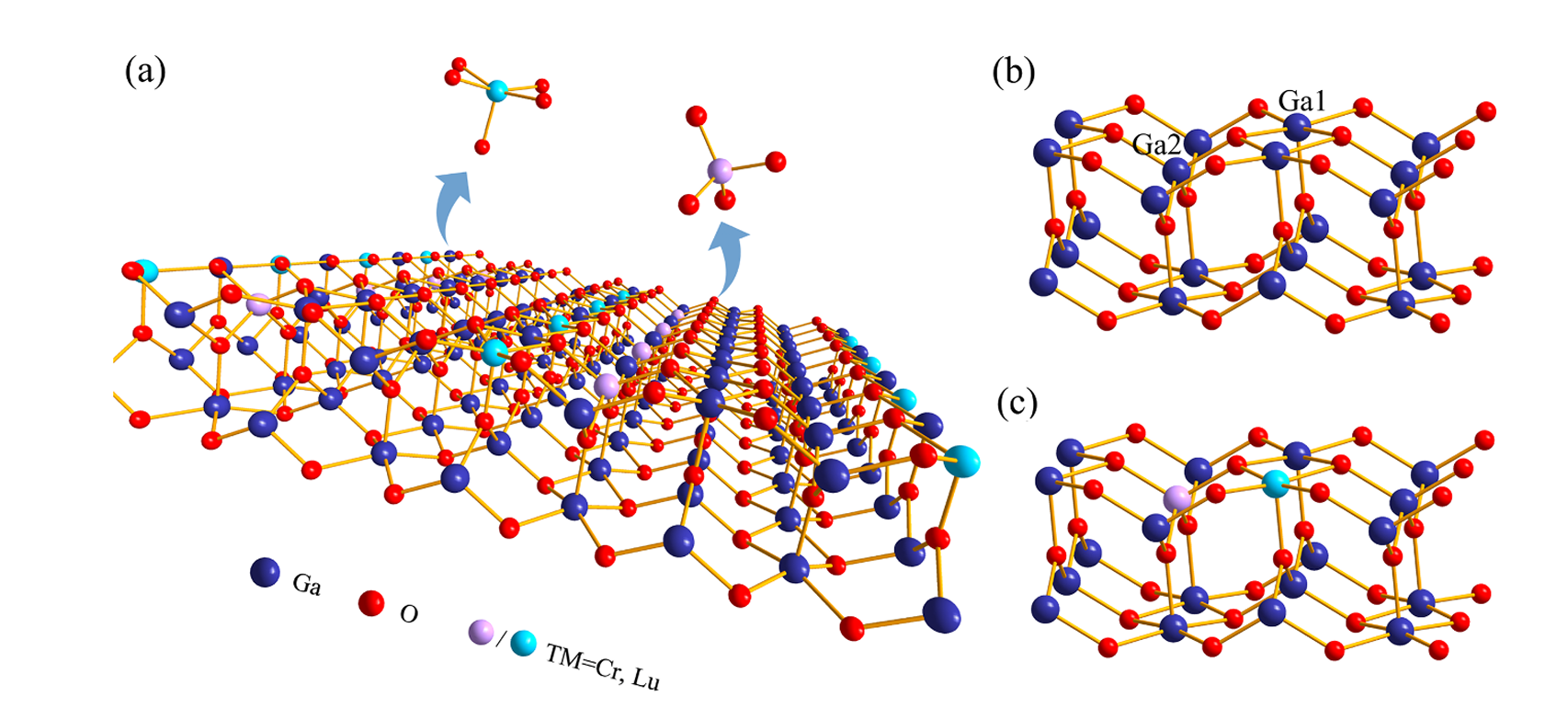
Fig. 1. Schematic diagram of 2D β-Ga₂O₃, (a) Co-doping mechanism diagram, (b) 2D β-Ga₂O₃, (c) Lu-Cr co-doped 2D β-Ga₂O₃.
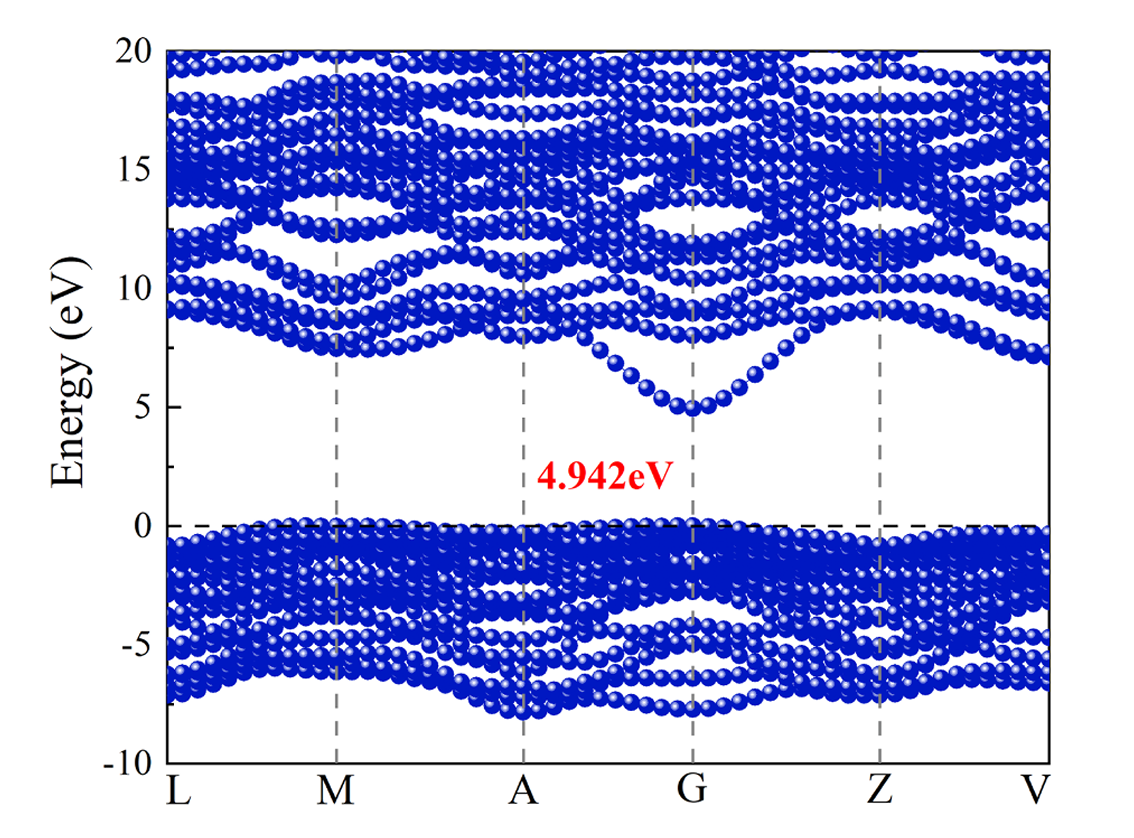
Fig. 2. Schematic band structure diagram of parent β-Ga₂O₃.
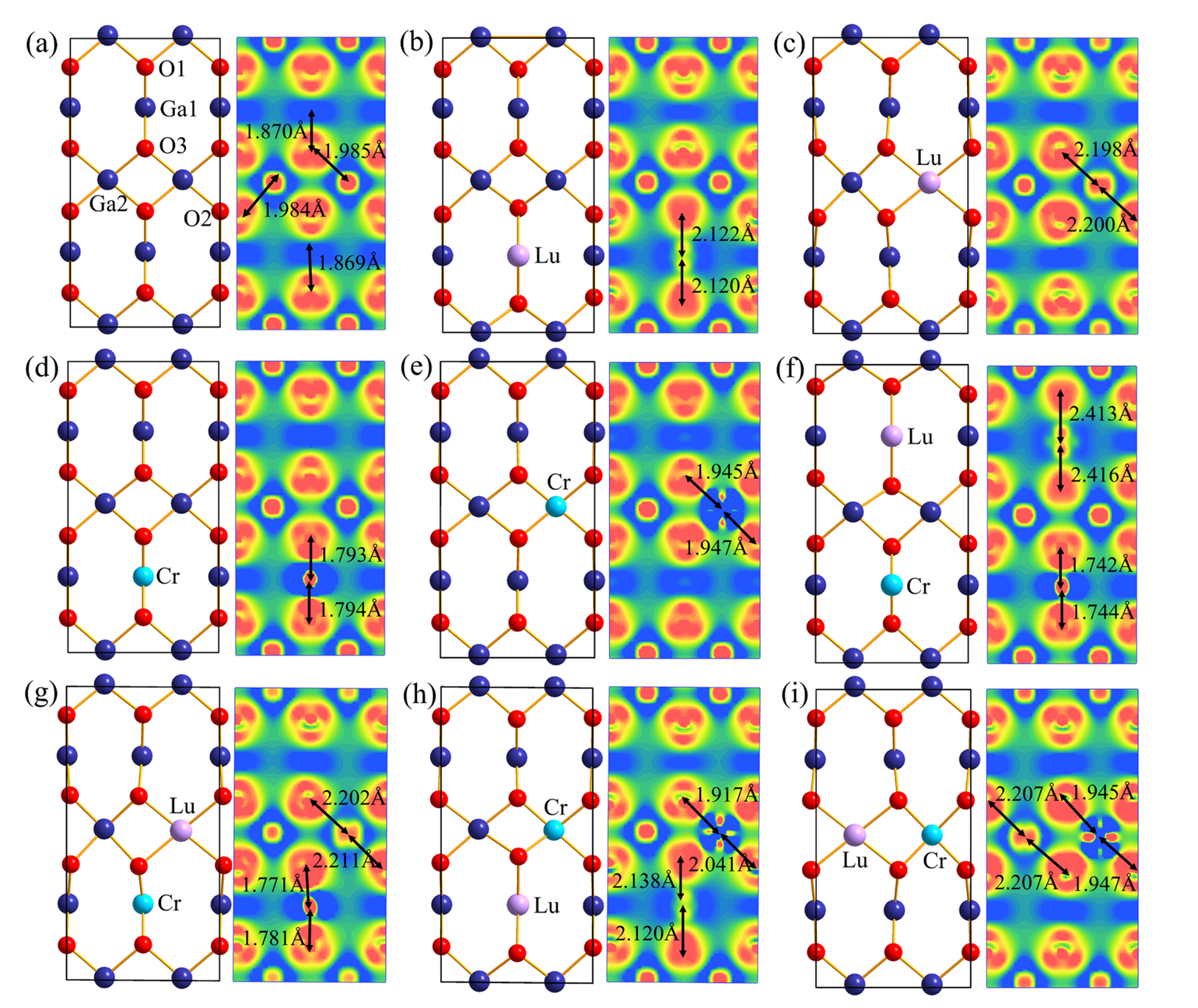
Fig. 3. Top view structural diagram (left) and differential charge density distribution diagram (right) of the 2D β-Ga₂O₃ supercell, (a) 2D β-Ga₂O₃, (b) Lu doped Ga1, (c) Lu doped Ga2, (d) Cr doped Ga1, (e) Cr doped Ga2, (f) Lu-Ga1 Cr-Ga1, (g) Lu-Ga2 Cr-Ga1, (h) Lu-Ga1 Cr-Ga2, (i) Lu-Ga2 Cr-Ga2.
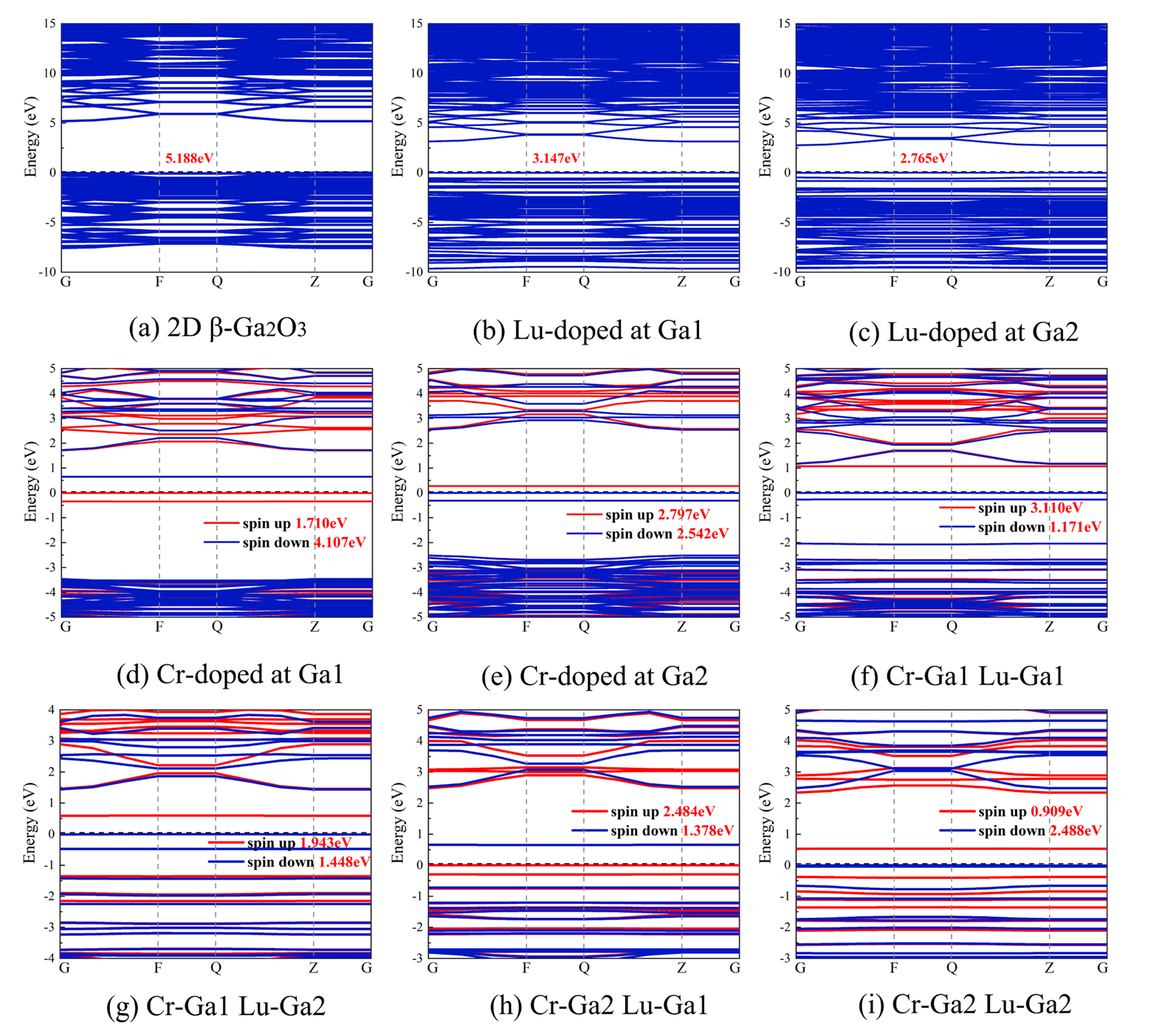
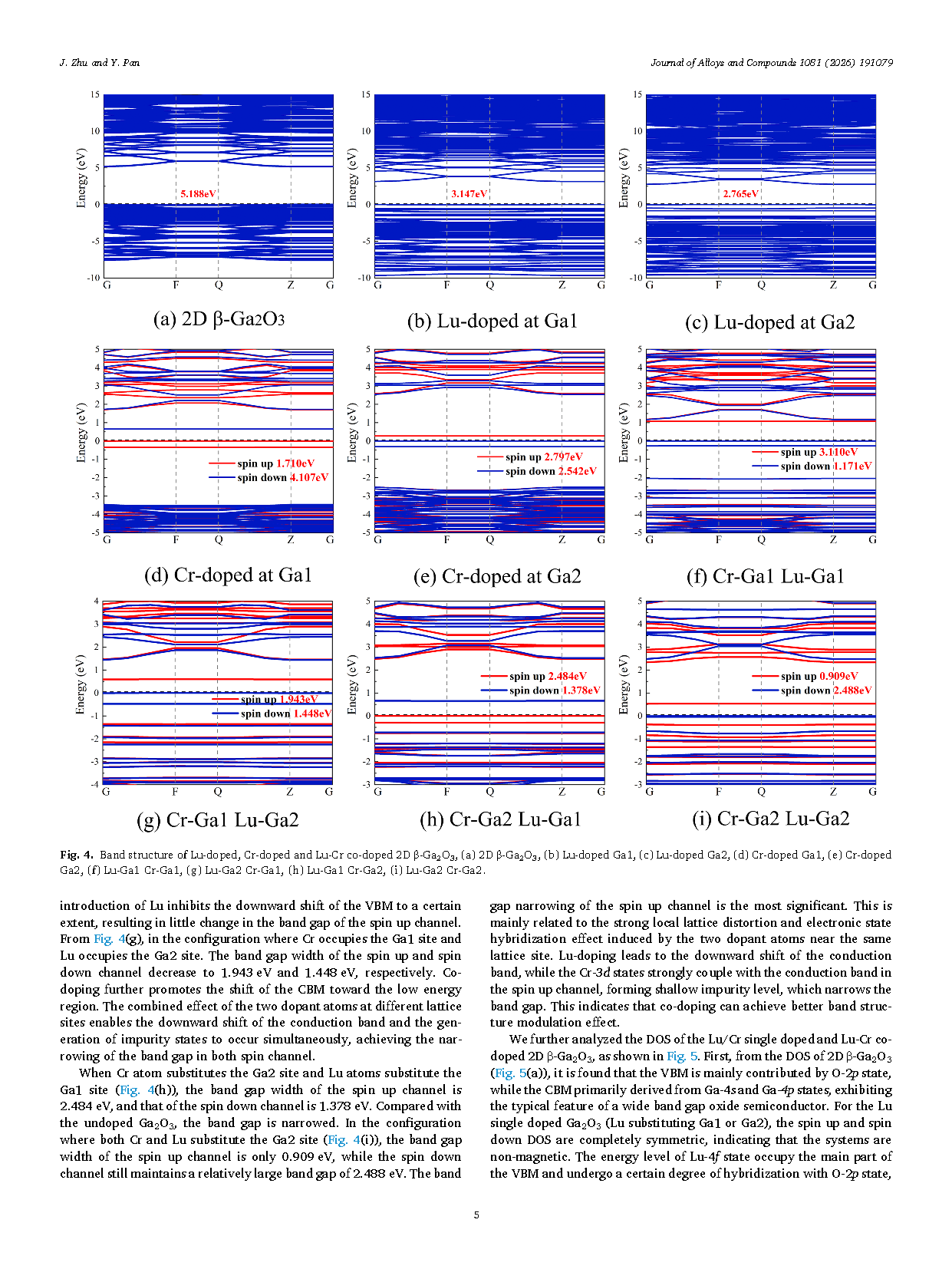
Fig. 4. Band structure of Lu-doped, Cr-doped and Lu-Cr co-doped 2D β-Ga₂O₃ , (a) 2D β-Ga₂O₃ , (b) Lu-doped Ga1, (c) Lu-doped Ga2, (d) Cr-doped Ga1, (e) Cr-doped.
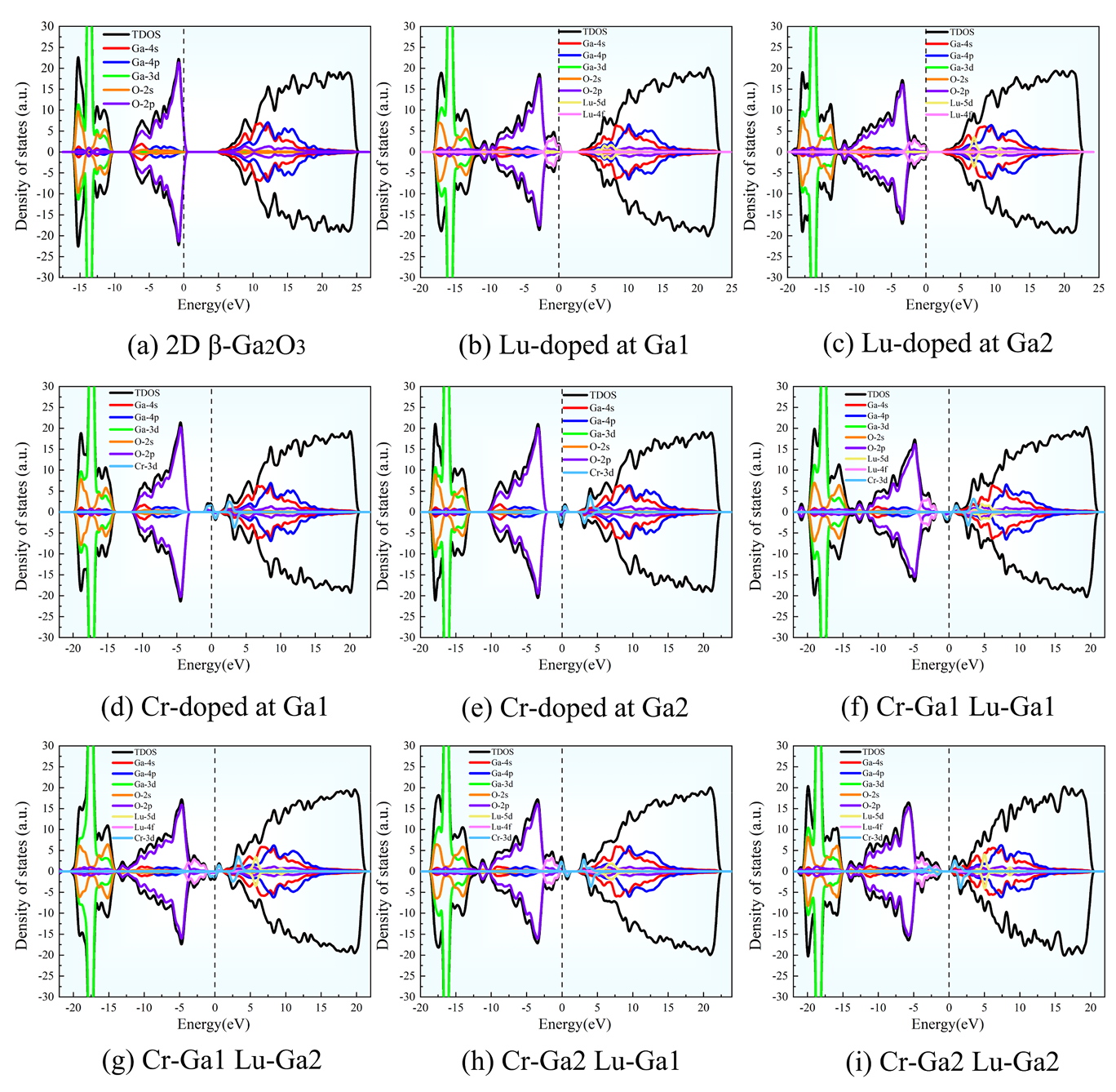
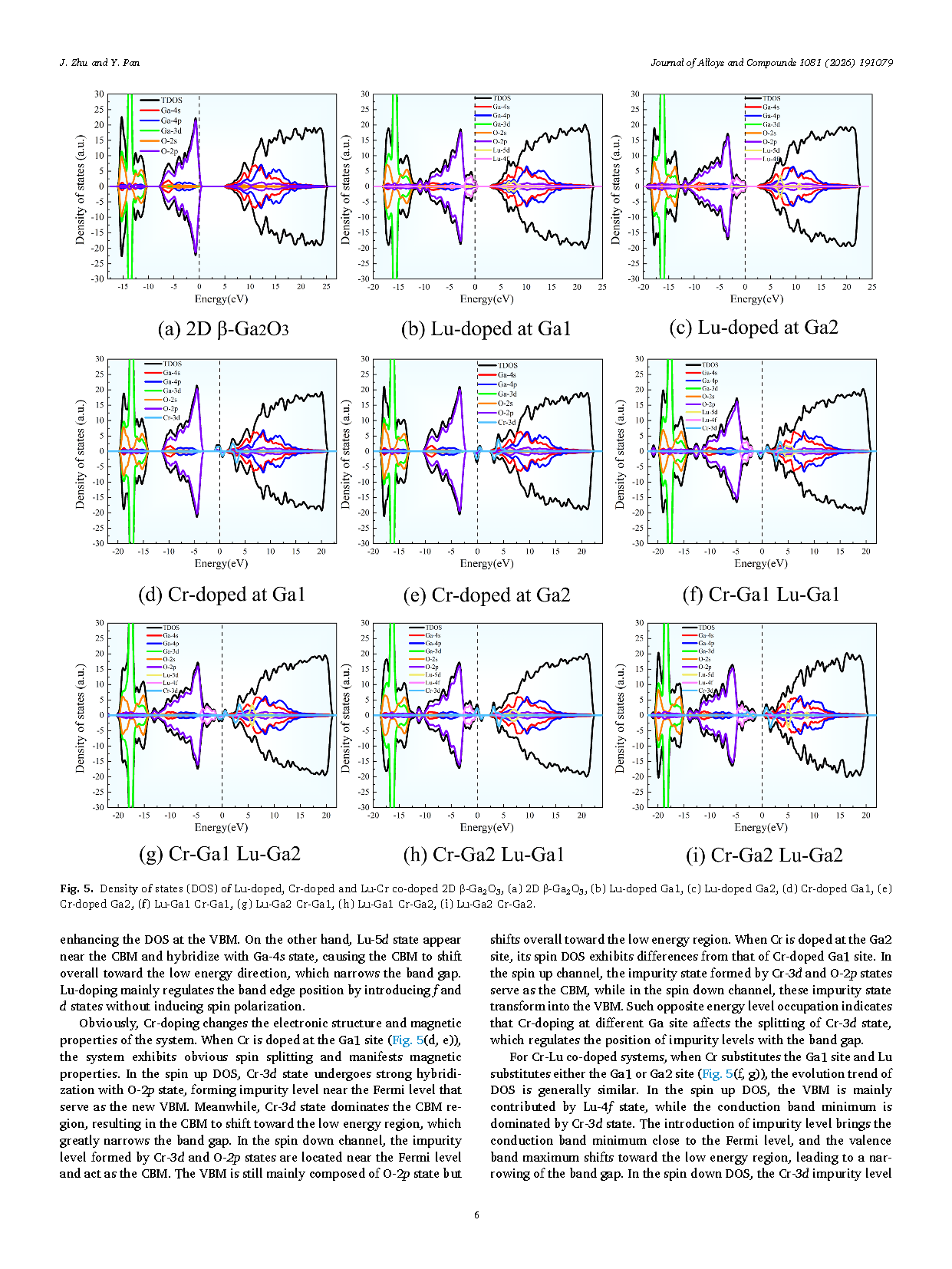
Fig. 5. Density of states (DOS) of Lu-doped, Cr-doped and Lu-Cr co-doped 2D β-Ga₂O₃, (a) 2D β-Ga₂O₃, (b) Lu-doped Ga1, (c) Lu-doped Ga2, (d) Cr-doped Ga1, (e) Cr-doped Ga2, (f) Lu-Ga1 Cr-Ga1, (g) Lu-Ga2 Cr-Ga1, (h) Lu-Ga1 Cr-Ga2, (i) Lu-Ga2 Cr-Ga2.
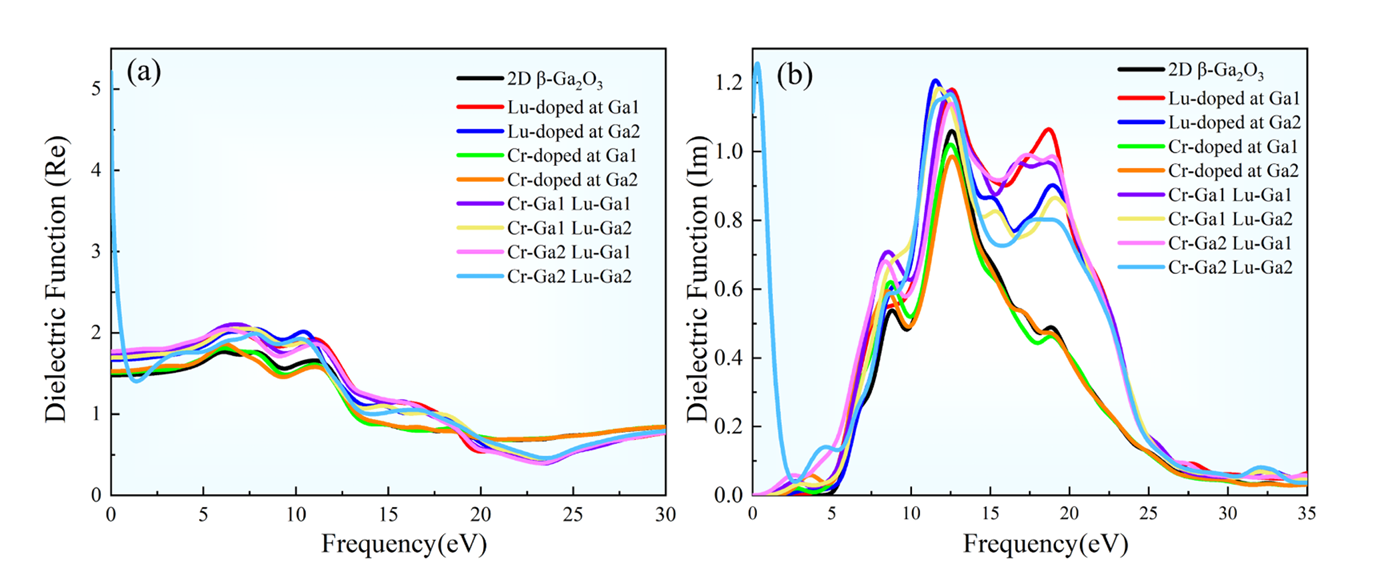
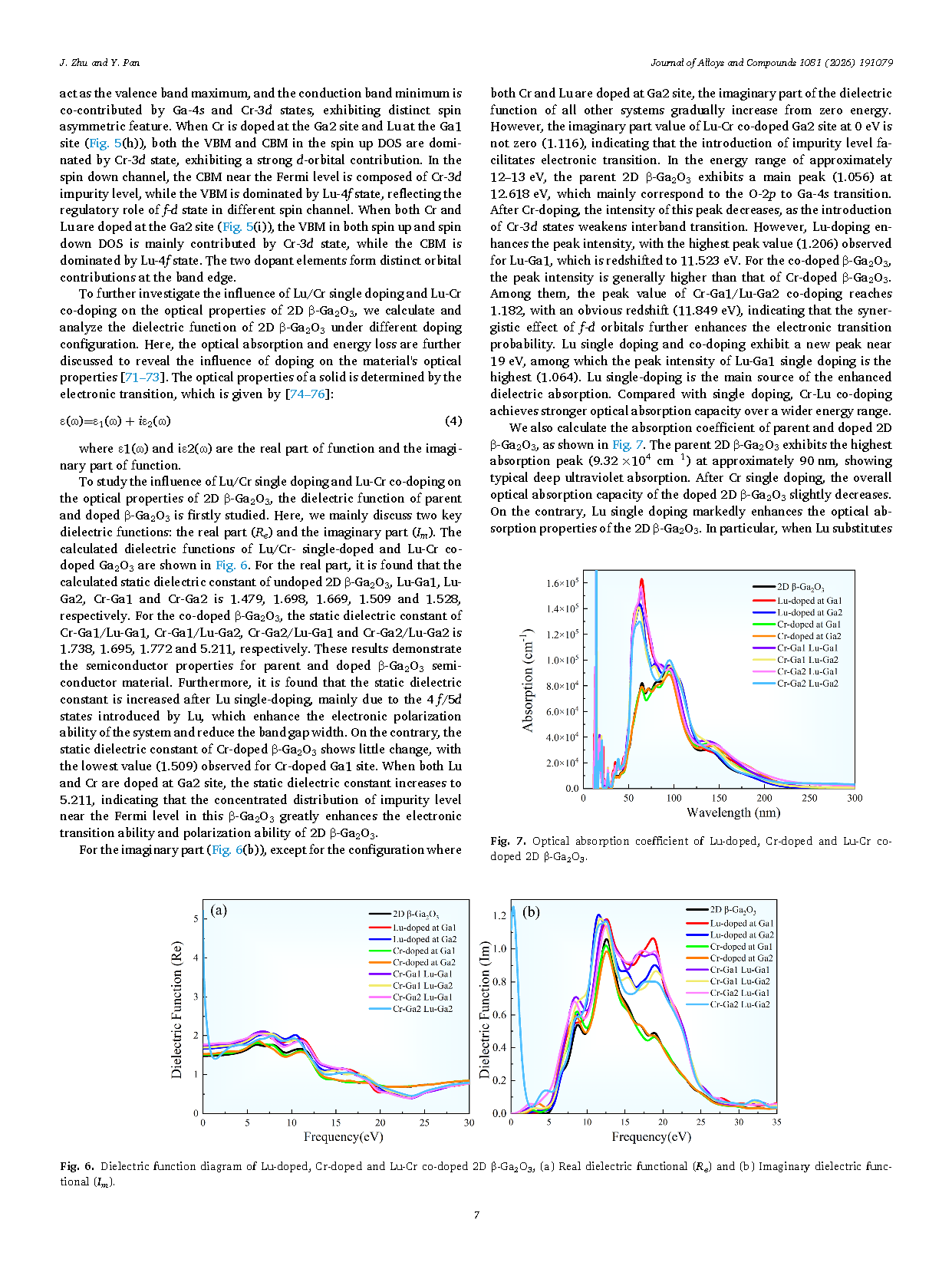
Fig. 6. Dielectric function diagram of Lu-doped, Cr-doped and Lu-Cr co-doped 2D β-Ga₂O₃, (a) Real dielectric functional (Re) and (b) Imaginary dielectric functional (Im).
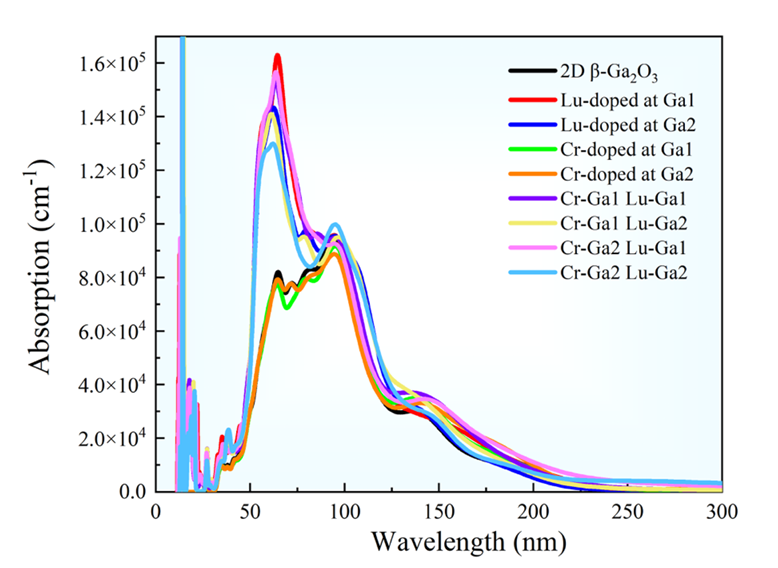
Fig. 7. Optical absorption coefficient of Lu-doped, Cr-doped and Lu-Cr co-doped 2D β-Ga₂O₃.
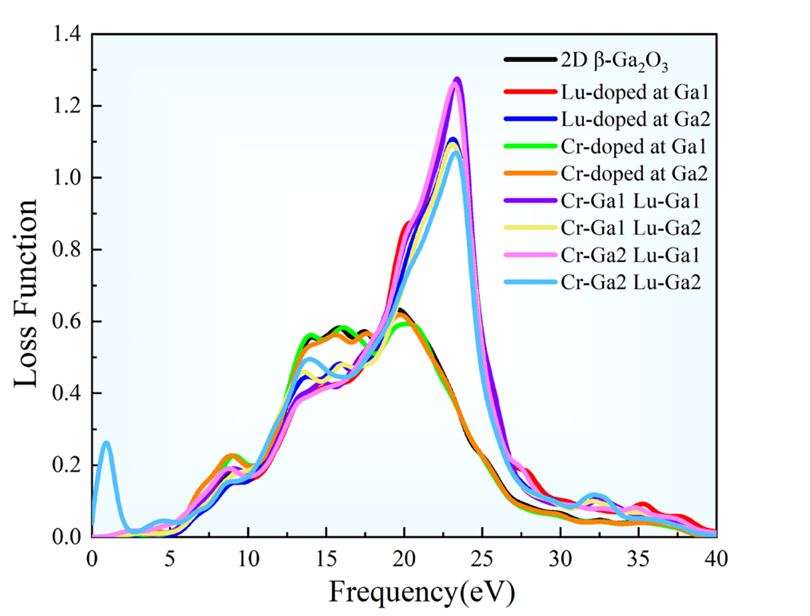
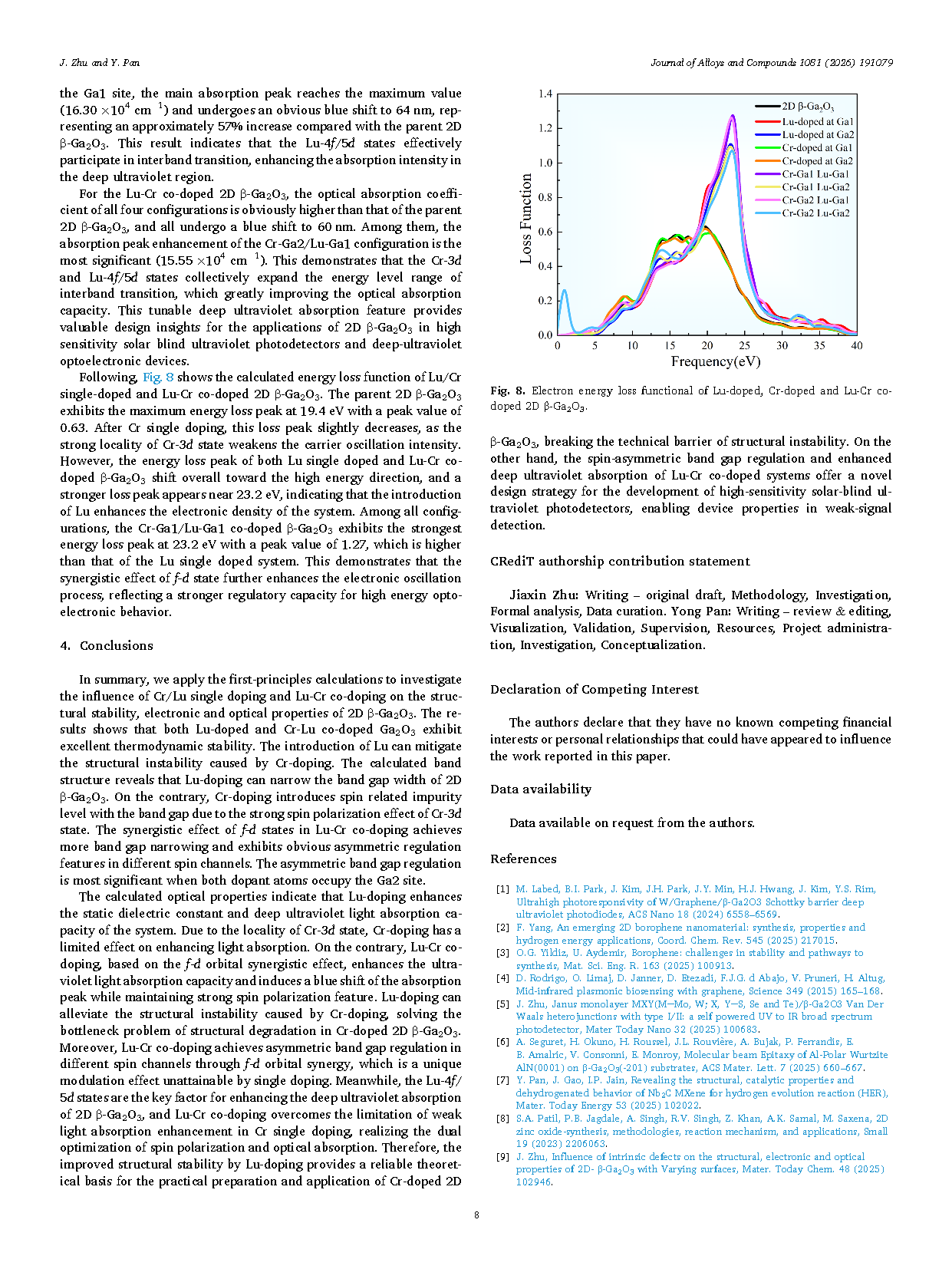
Fig. 8. Electron energy loss functional of Lu-doped, Cr-doped and Lu-Cr co-doped 2D β-Ga₂O₃.
DOI:
doi.org/10.1016/j.jallcom.2026.191079
Instruction
Official Account

Cooperation
Top