


Researchers from Saga University, University of Bristol have published a dissertation titled "Heteroepitaxial growth of Eu-doped Ga₂O₃ films on flexible substrates" in Japanese Journal of Applied Physics.
Background
Rare-earth-doped wide-bandgap oxides are of great value for flexible displays and wearable optoelectronic devices. Eu³⁺ ions can produce characteristic sharp red emission and serve as ideal activators for red-light-emitting functional layers. β-Ga₂O₃ features a wide bandgap and favorable thermochemical stability, making it an excellent host material for rare-earth-ion-doped luminescence. At present, most Eu-doped Ga₂O₃ luminescent films are fabricated on rigid substrates such as sapphire and silicon, which cannot adapt to curved and deformable device applications. Polymer-based flexible substrates have low thermal budgets and cannot support direct high-temperature crystallization of oxide films. The transfer-after-growth method on rigid substrates tends to introduce cracks and interfacial damage, which is unfavorable for large-area fabrication. Hastelloy metallic tapes possess high thermal stability and mechanical flexibility, while bare tapes lack oriented crystalline templates, requiring multi-layer buffers for epitaxy of oriented oxide films. For flexible luminescent devices, controllable fabrication strategies for Eu-doped β-Ga₂O₃ films that simultaneously achieve good crystallinity, strain-tunable luminescence and reliable cyclic-bending performance remain to be explored.
Abstract
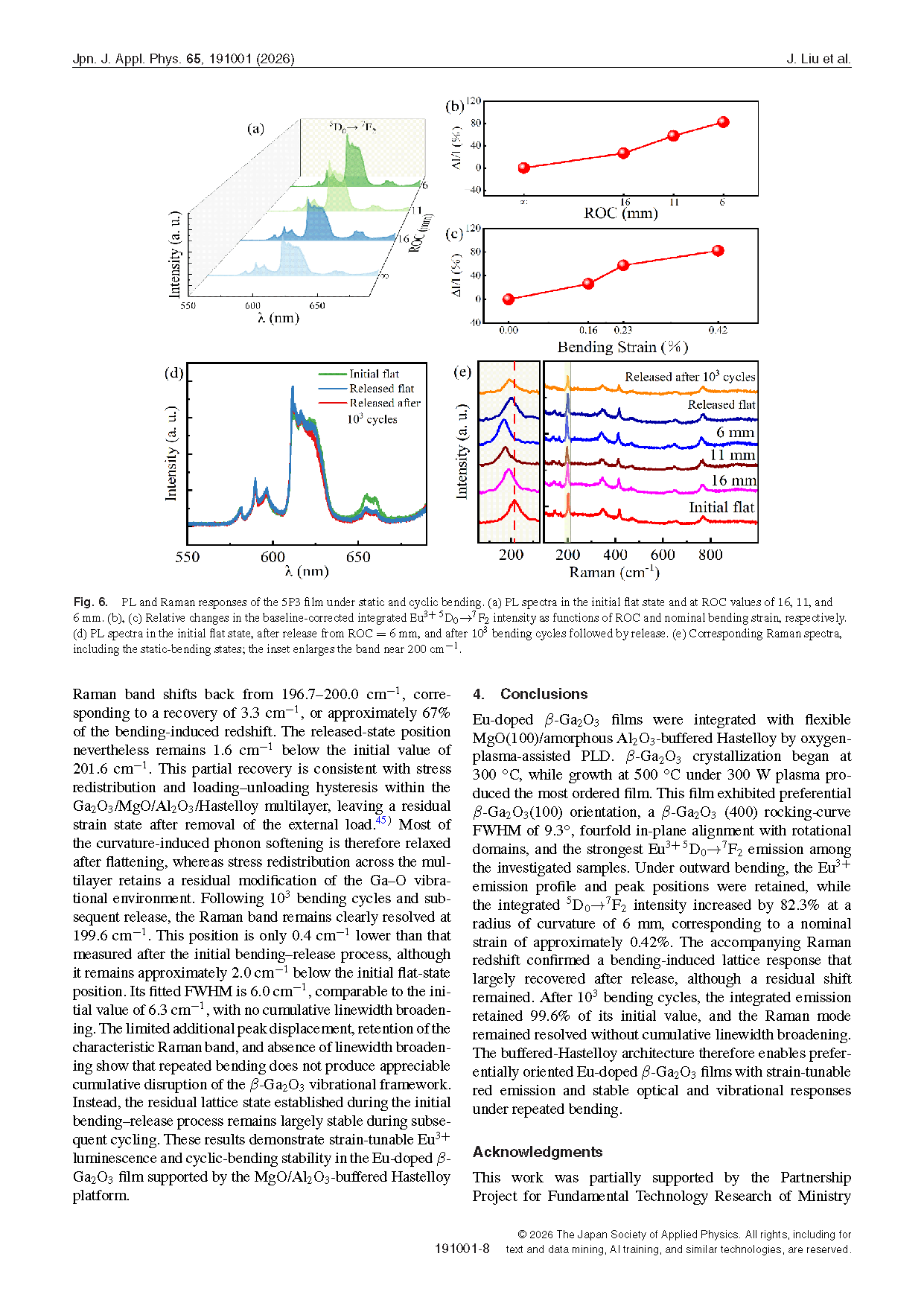
Flexible luminescent oxides require mechanically compliant substrates that also provide crystalline templates for ordered film growth. Eu-doped Ga₂O₃ films were deposited on flexible MgO(100)/amorphous Al₂O₃-buffered Hastelloy by oxygen-plasma-assisted pulsed laser deposition. Growth at 500 °C under 300 W plasma produced the most ordered film, exhibiting a β-Ga₂O₃(400) reflection, a rocking-curve full width at half maximum of 9.3°, and fourfold in-plane ordering with rotational domains. This film also showed the strongest Eu³⁺ red emission, dominated by the ⁵D₀ → ⁷F₂ transition at 613–614 nm. Under outward bending, the characteristic emission profile was retained, while the integrated ⁵D₀ → ⁷F₂ intensity increased by up to 82.3% at a nominal strain of approximately 0.42%. The Raman mode near 201 cm⁻¹ shifted down to 196.7 cm⁻¹ at 6 mm and recovered to 200.0 cm⁻¹ after release. After 10³ bending cycles, the integrated emission retained 99.6% of its initial value, demonstrating strain-tunable luminescence and cyclic-bending stability.
Highlights
Realize heteroepitaxy of Eu-doped β-Ga₂O₃films on flexible buffered Hastelloy tape by oxygen-plasma-assisted pulsed laser deposition.
Optimized sample shows strong Eu³⁺red luminescence originating from ⁵D₀ → ⁷F₂ transition and four-fold in-plane rotational domain structure.
Demonstrate strain-enhanced Eu³⁺luminescence under tensile outward bending with maximum intensity increment of 82.3 %.
The film maintains 99.6 % luminescence intensity after 10³ bending cycles, realizing strain-tunable luminescence with good cyclic mechanical stability.
Conclusion
Eu-doped β-Ga₂O₃ films were integrated with flexible MgO(100)/amorphous Al₂O₃-buffered Hastelloy by oxygen-plasma-assisted PLD. β-Ga₂O₃ crystallization began at 300 °C, while growth at 500 °C under 300 W plasma produced the most ordered film. This film exhibited preferential β-Ga₂O₃(100) orientation, a β-Ga₂O₃ (400) rocking-curve FWHM of 9.3°, fourfold in-plane alignment with rotational domains, and the strongest Eu³⁺ ⁵D₀→⁷F₂ emission among the investigated samples. Under outward bending, the Eu³⁺ emission profile and peak positions were retained, while the integrated ⁵D₀→⁷F₂ intensity increased by 82.3% at a radius of curvature of 6 mm, corresponding to a nominal strain of approximately 0.42%. The accompanying Raman redshift confirmed a bending-induced lattice response that largely recovered after release, although a residual shift remained. After 103 bending cycles, the integrated emission retained 99.6% of its initial value, and the Raman mode remained resolved without cumulative linewidth broadening. The buffered-Hastelloy architecture therefore enables preferentially oriented Eu-doped β-Ga₂O₃ films with strain-tunable red emission and stable optical and vibrational responses under repeated bending.
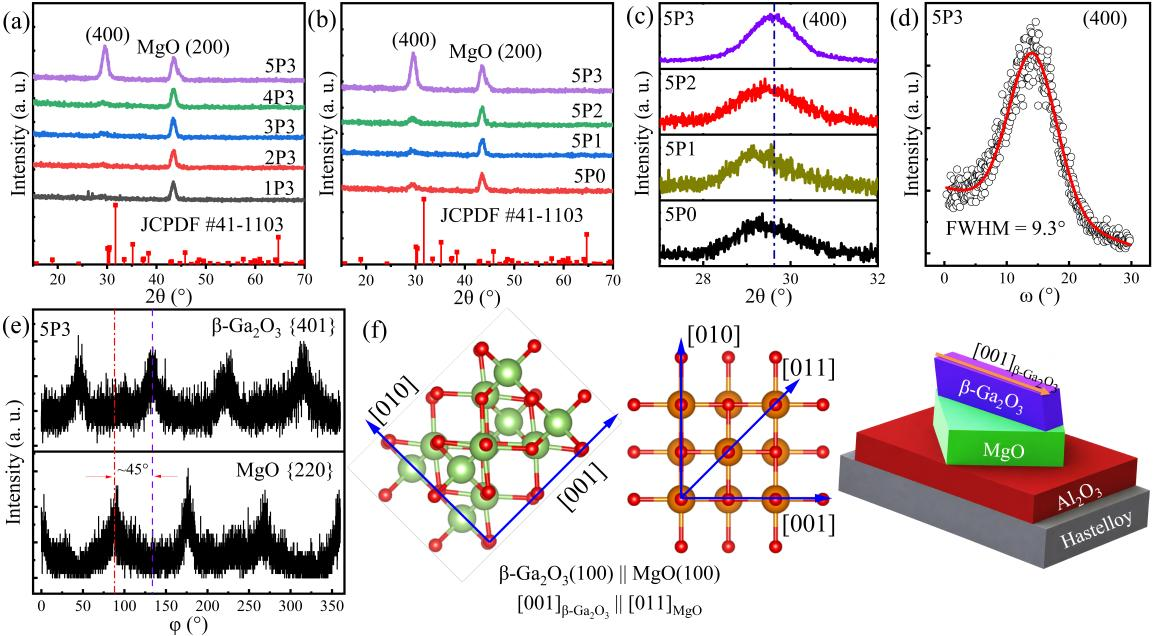
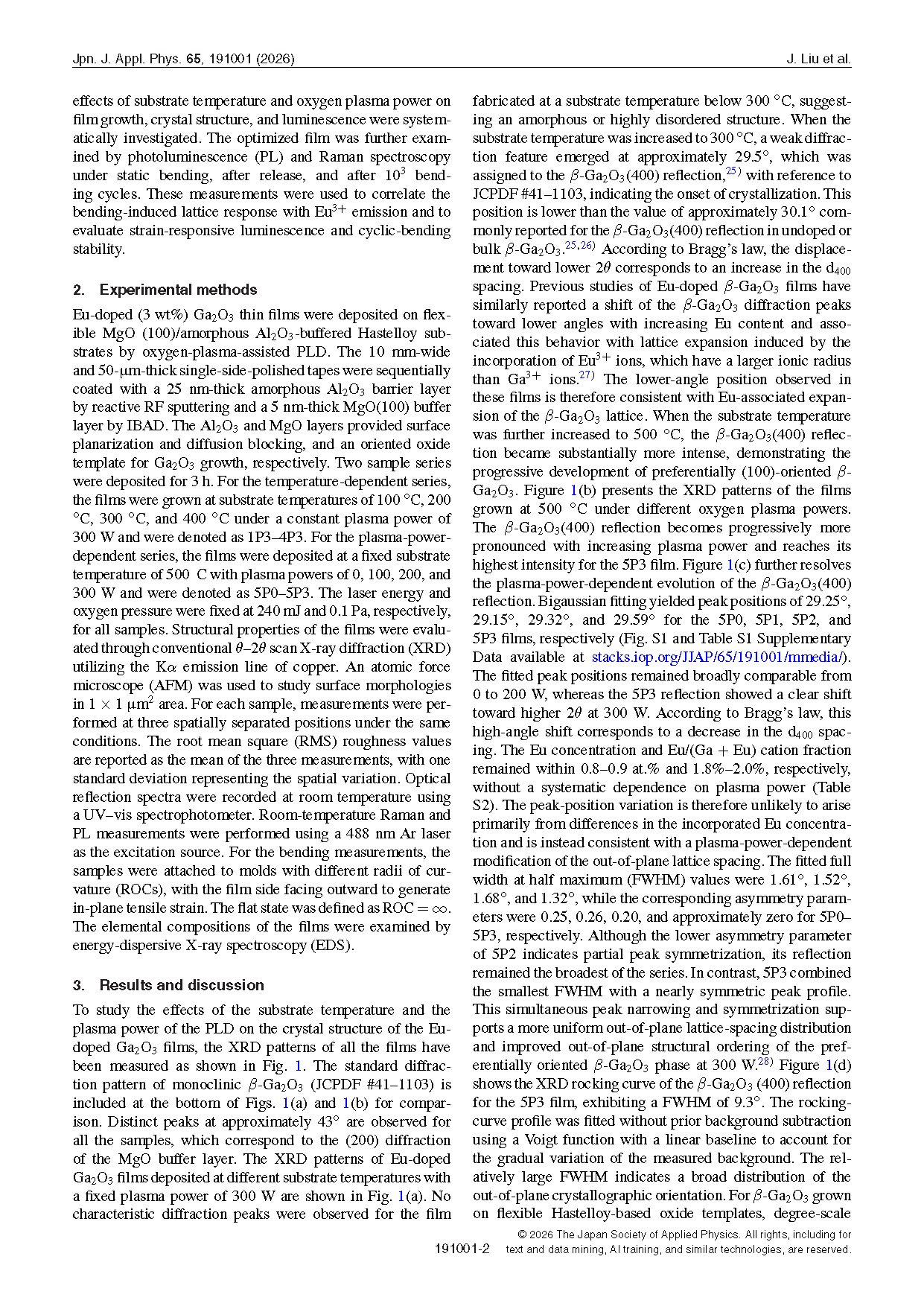
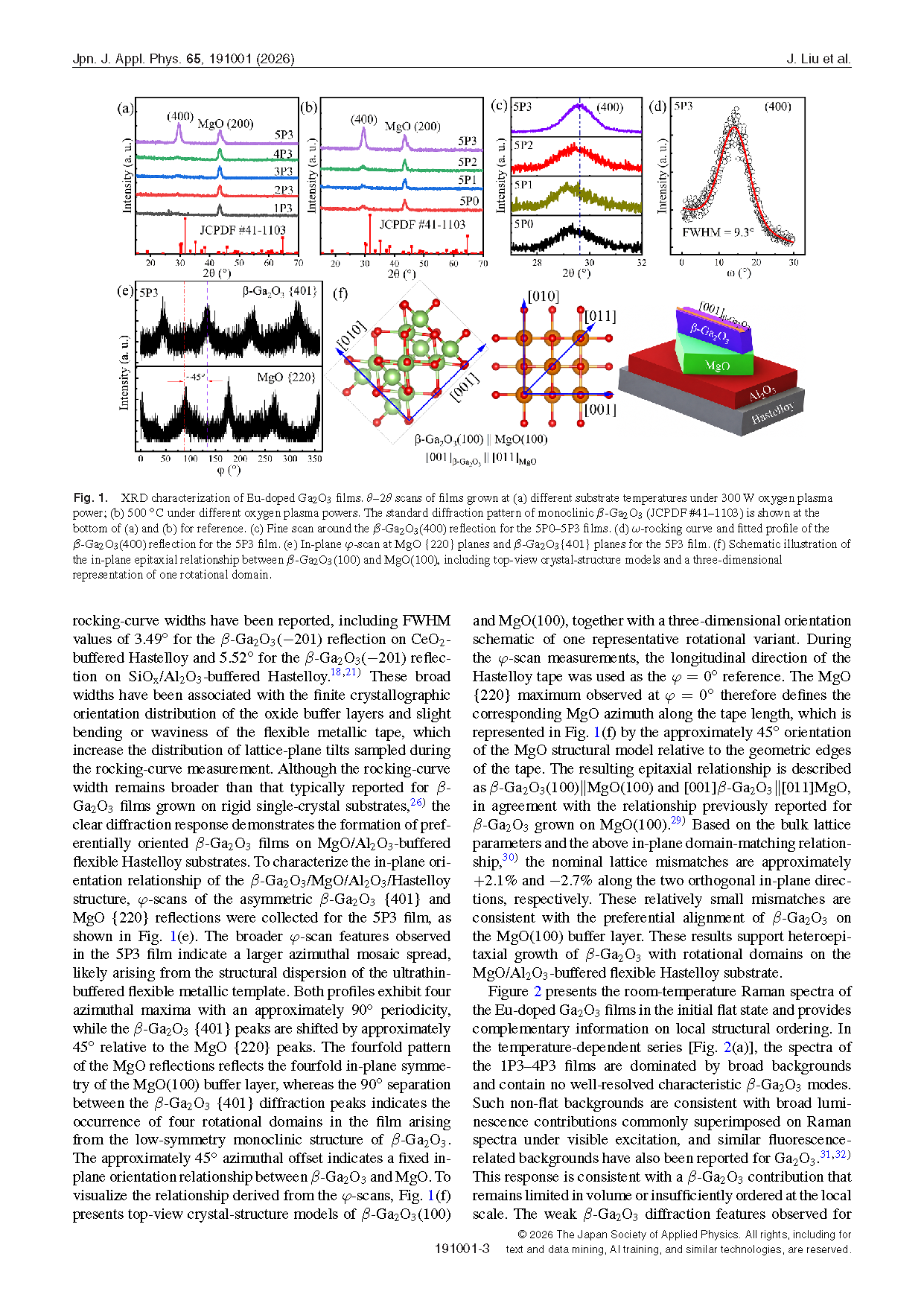
Fig. 1. XRD characterization of Eu-doped Ga₂O₃ films. θ–2θ scans of films grown at (a) different substrate temperatures under 300 W oxygen plasma power; (b) 500 °C under different oxygen plasma powers. The standard diffraction pattern of monoclinic β-Ga₂O₃ (JCPDF #41-1103) is shown at the bottom of (a) and (b) for reference. (c) Fine scan around the β-Ga₂O₃ (400) reflection for the 5P0–5P3 films. (d) ω-rocking curve and fitted profile of the β-Ga₂O₃ (400) reflection for the 5P3 film. (e) In-plane φ-scan at MgO {220} planes and β-Ga₂O₃ {401} planes for the 5P3 film. (f) Schematic illustration of the in-plane epitaxial relationship between β-Ga₂O₃ (100) and MgO (100), including top-view crystal-structure models and a three-dimensional representation of one rotational domain.
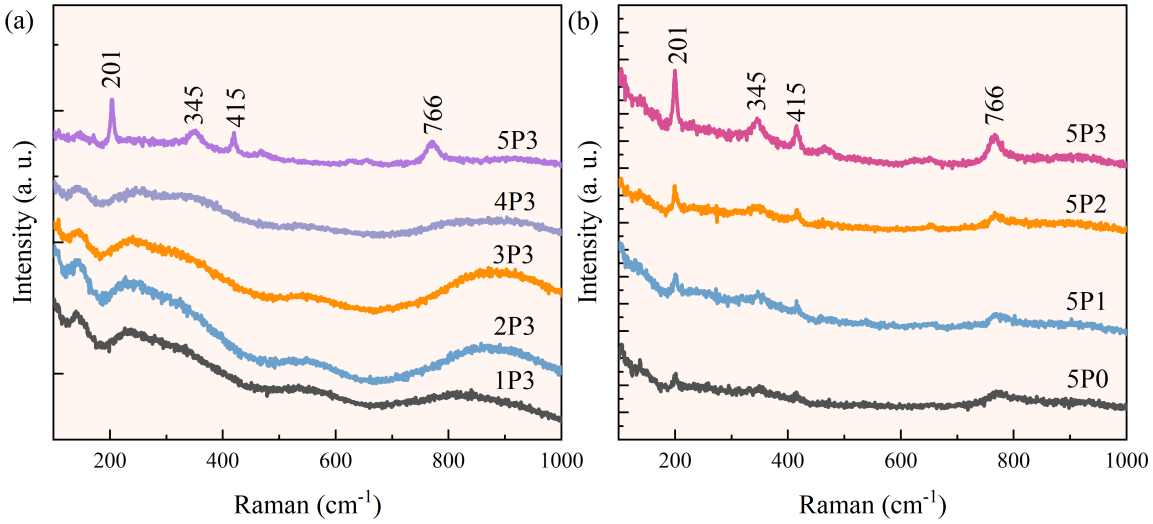
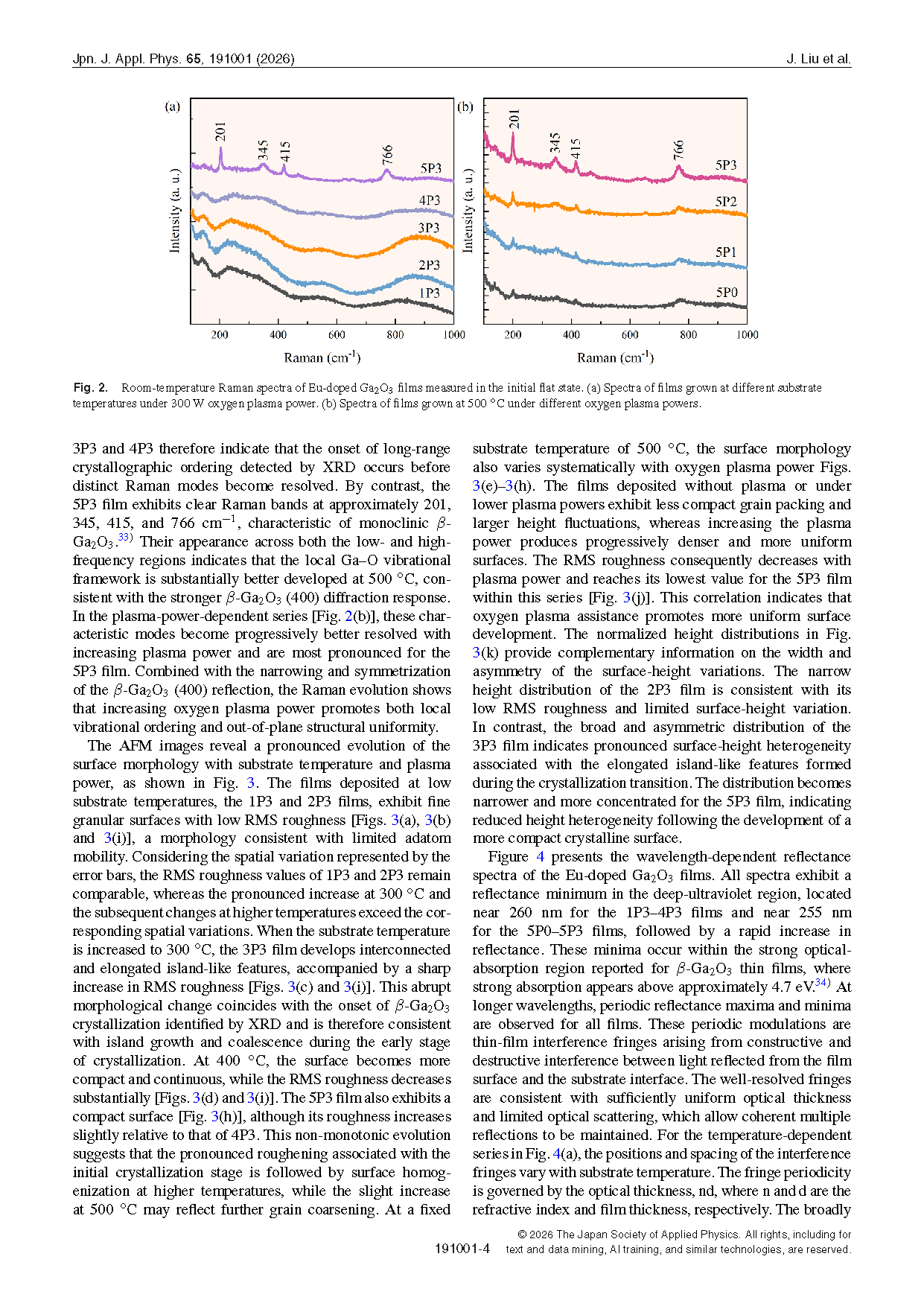
Fig. 2. Room-temperature Raman spectra of Eu-doped Ga₂O₃ films measured in the initial flat state. (a) Spectra of films grown at different substrate temperatures under 300 W oxygen plasma power. (b) Spectra of films grown at 500 °C under different oxygen plasma powers.
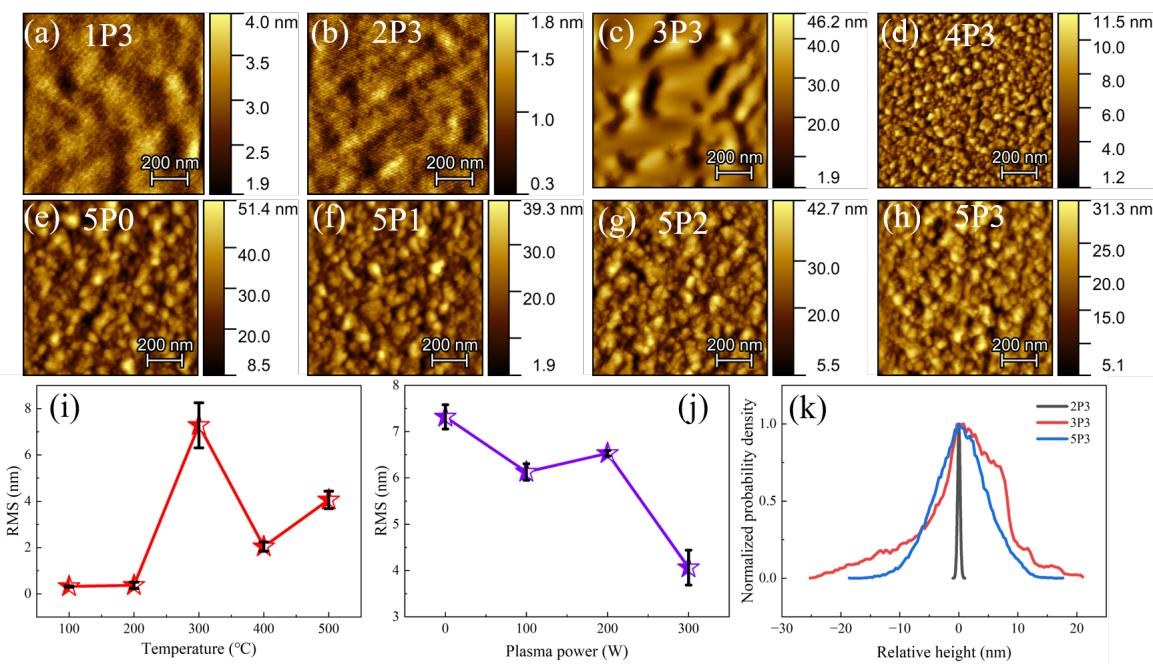
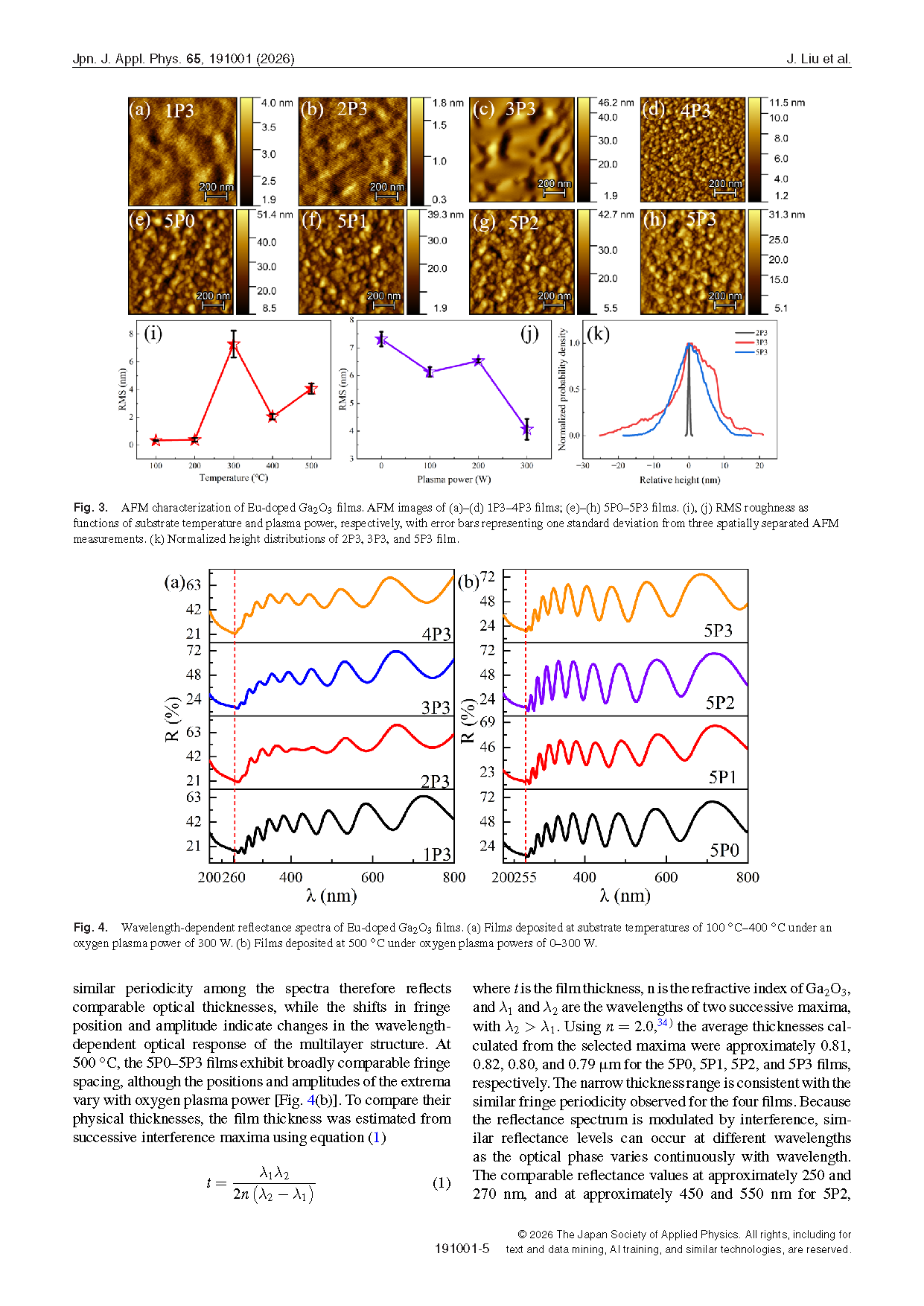
Fig. 3. AFM characterization of Eu-doped Ga₂O₃ films. AFM images of (a–d) 1P3–4P3 films; (e–h) 5P0–5P3 films. (i, j) RMS roughness as functions of substrate temperature and plasma power, respectively, with error bars representing one standard deviation from three spatially separated AFM measurements. (k) Normalized height distributions of 2P3, 3P3, and 5P3 film.
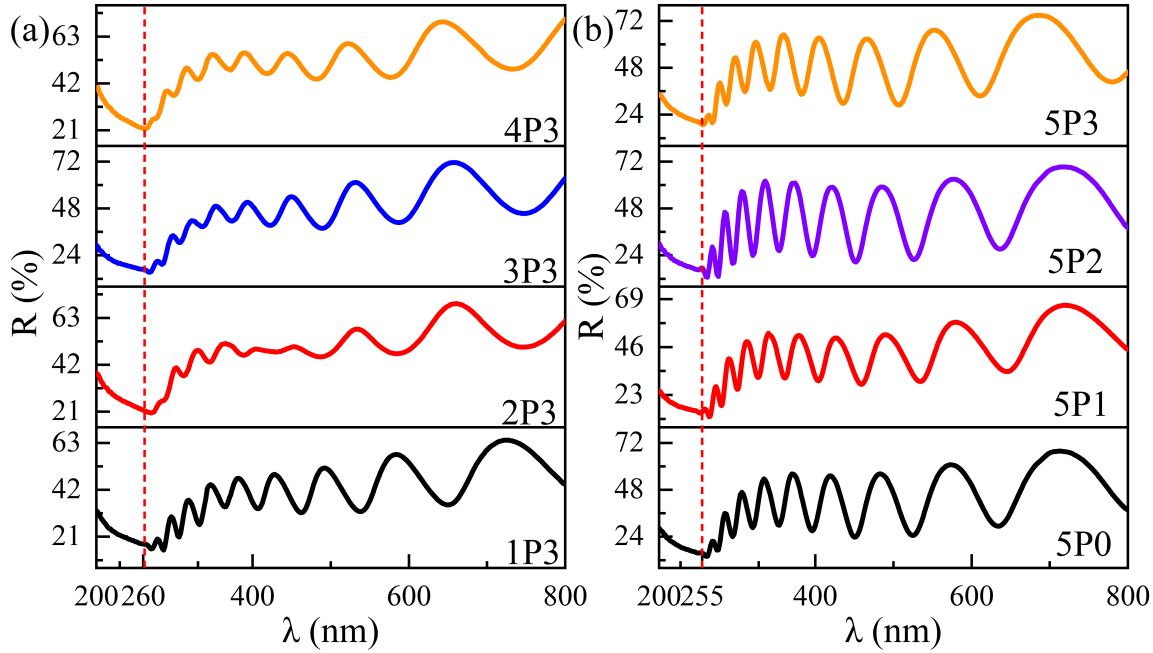
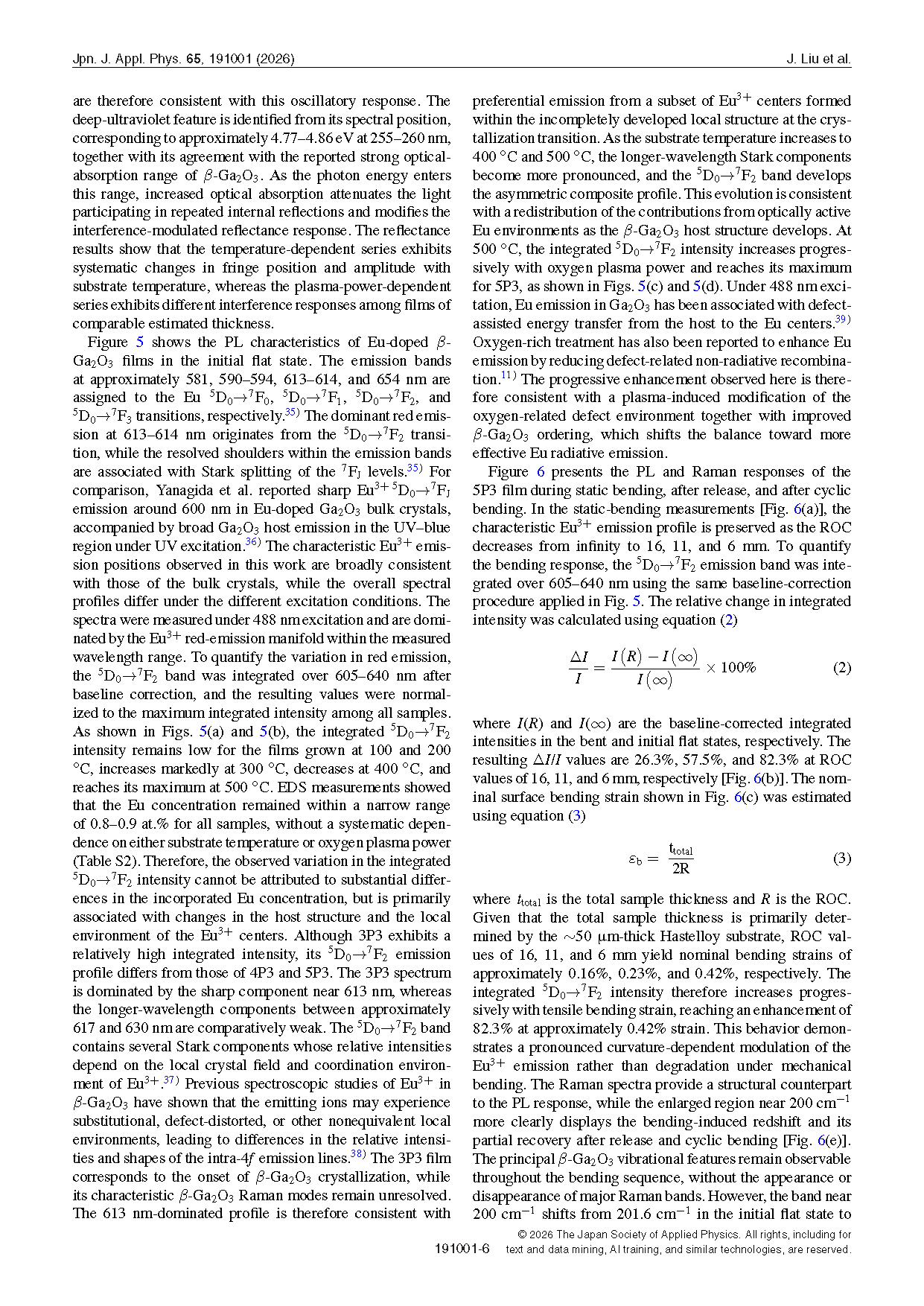
Fig. 4. Wavelength-dependent reflectance spectra of Eu-doped Ga₂O₃ films. (a) Films deposited at substrate temperatures of 100–400 °C under an oxygen plasma power of 300 W. (b) Films deposited at 500 °C under oxygen plasma powers of 0–300 W.
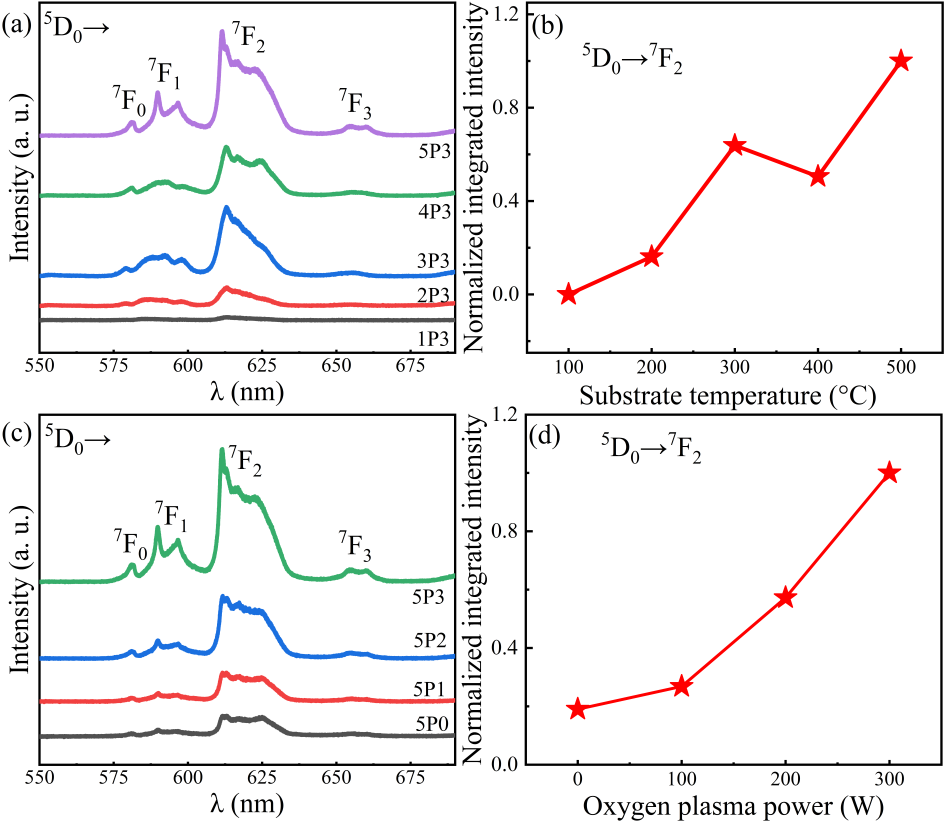
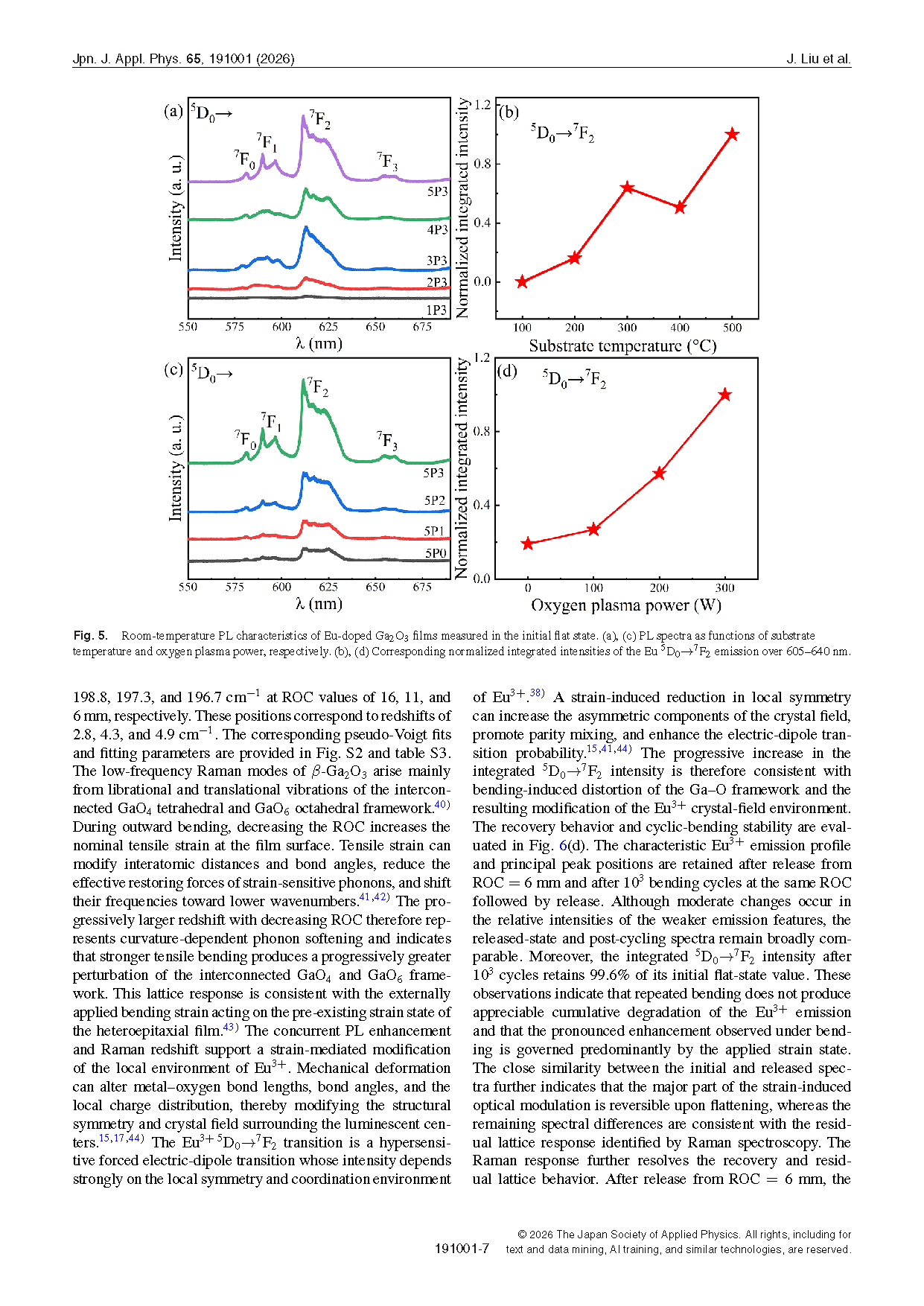
Fig. 5. Room-temperature PL characteristics of Eu-doped Ga₂O₃ films measured in the initial flat state. (a, c) PL spectra as functions of substrate temperature and oxygen plasma power, respectively. (b, d) Corresponding normalized integrated intensities of the Eu ⁵D₀ → ⁷F₂ emission over 605–640 nm.
DOI:
doi.org/10.35848/1347-4065/aea7ee
Instruction
Official Account

Cooperation
Top