


Researchers from the Humboldt-Universitat zu Berlin and Fritz-Haber-Institut der Max-Planck-Gesellschaft have published a paper titled "Structure and thermodynamic stability of β-Ga₂O₃ surfaces" in Physical Review B.
Background
Gallium oxide (β-Ga₂O₃) is a promising ultra-wide-band-gap semiconductor for high-power electronics and gas-sensing applications. The monoclinic β-phase is thermodynamically most stable under ambient conditions and can be grown as large single crystals from the melt. Surface properties directly govern crystal morphology during growth, chemical reactivity, and electronic characteristics at metal-semiconductor and oxide-semiconductor interfaces, which are essential for device fabrication and performance.
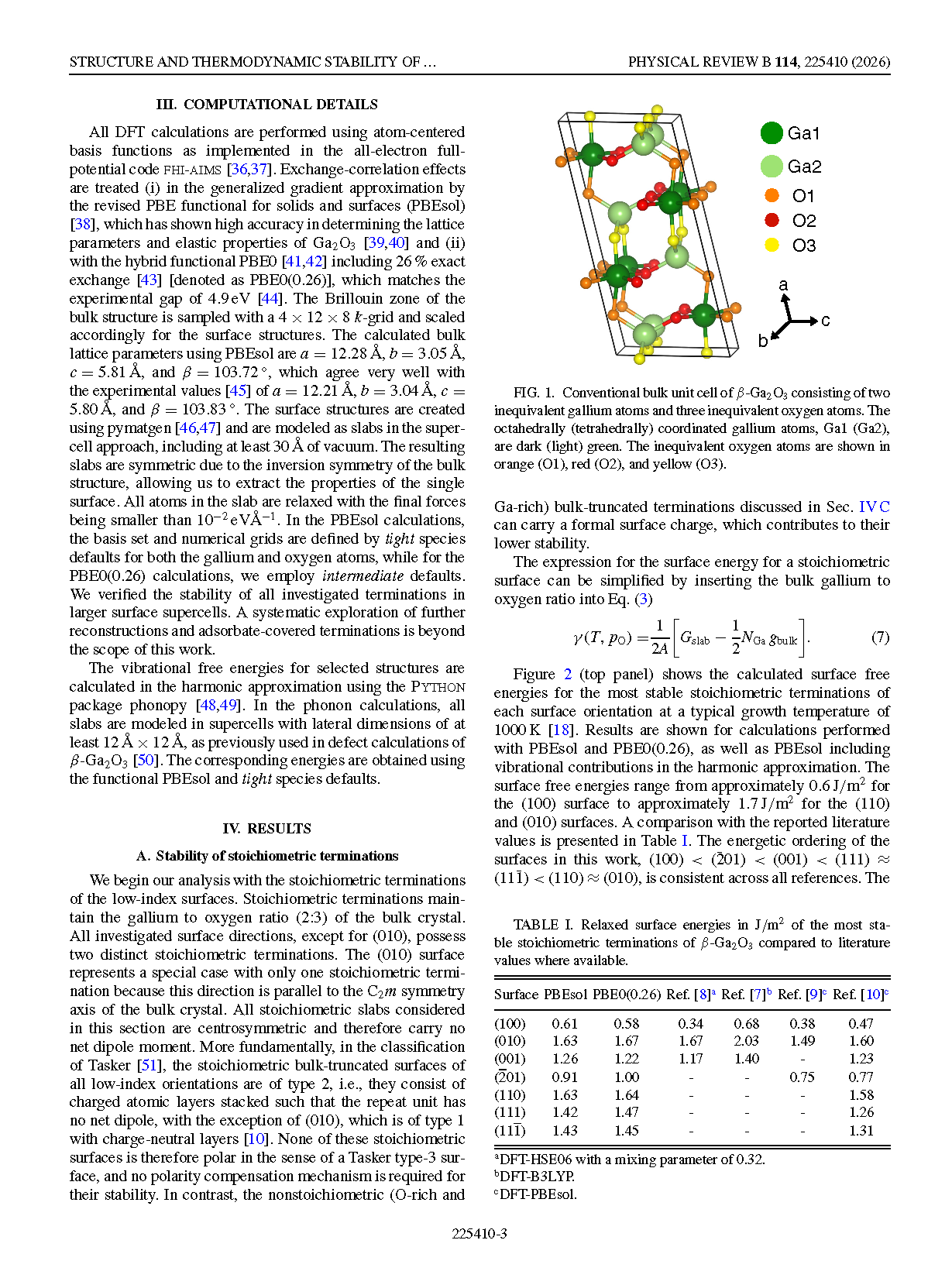
Monoclinic β-Ga₂O₃ possesses complex crystal structure with inequivalent gallium and oxygen atomic sites, giving rise to diverse surface terminations. Previous density-functional-theory investigations mostly focused on individual surfaces, lacking a unified systematic comparison for all symmetrically inequivalent low-index orientations. Existing results were obtained with varying DFT codes and exchange-correlation functionals, and the influences from vibrational contributions and variable oxygen chemical potentials have not been fully assessed. In this work, first-principles calculations employing PBEsol and PBE0(0.26) functionals are performed for all inequivalent low-index surfaces of β-Ga₂O₃. The thermodynamic stability under variable oxygen-chemical-potential conditions and harmonic vibrational contributions are evaluated, and a coordination-based model is built to interpret surface-stability mechanisms.
Abstract
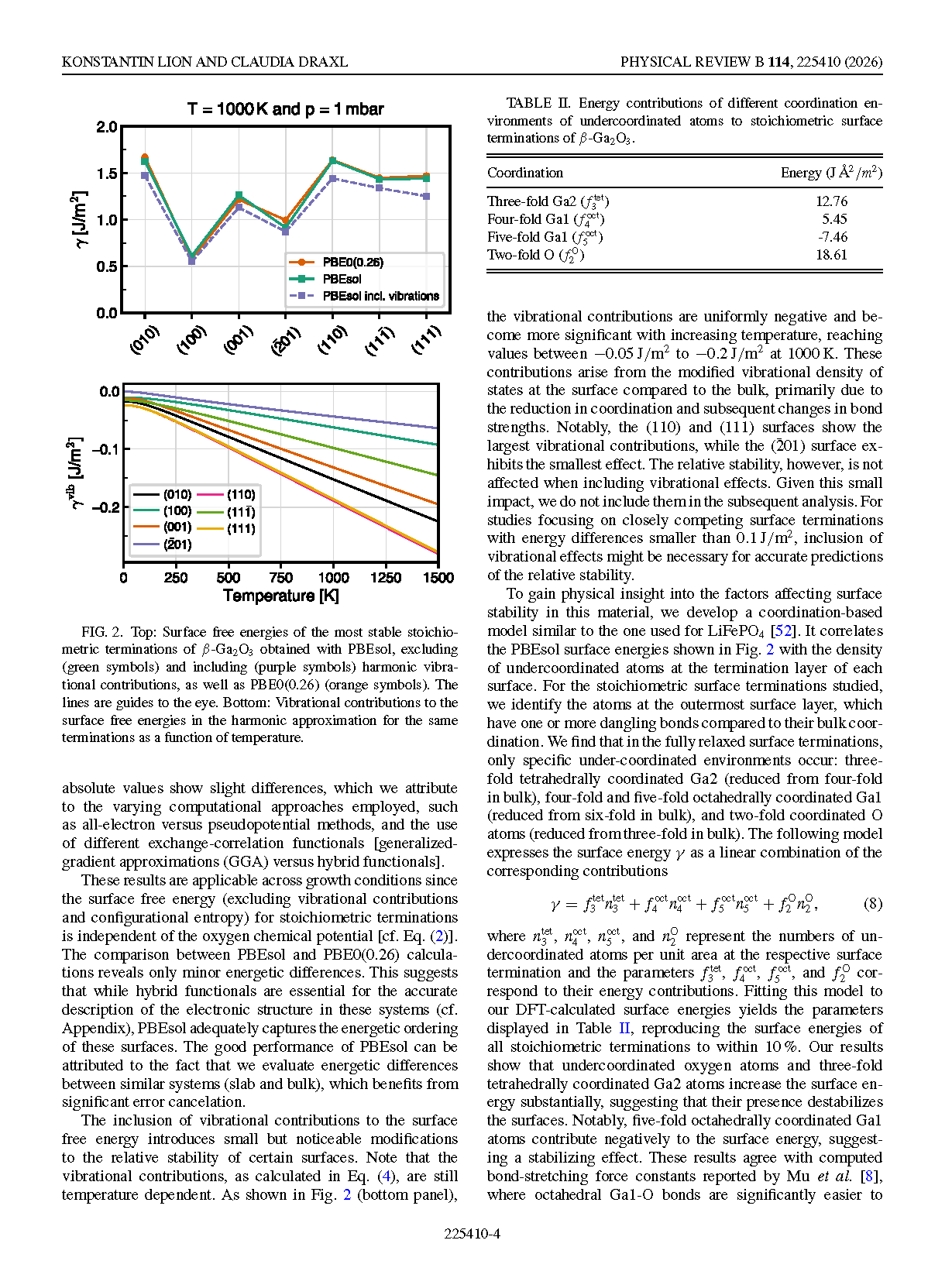
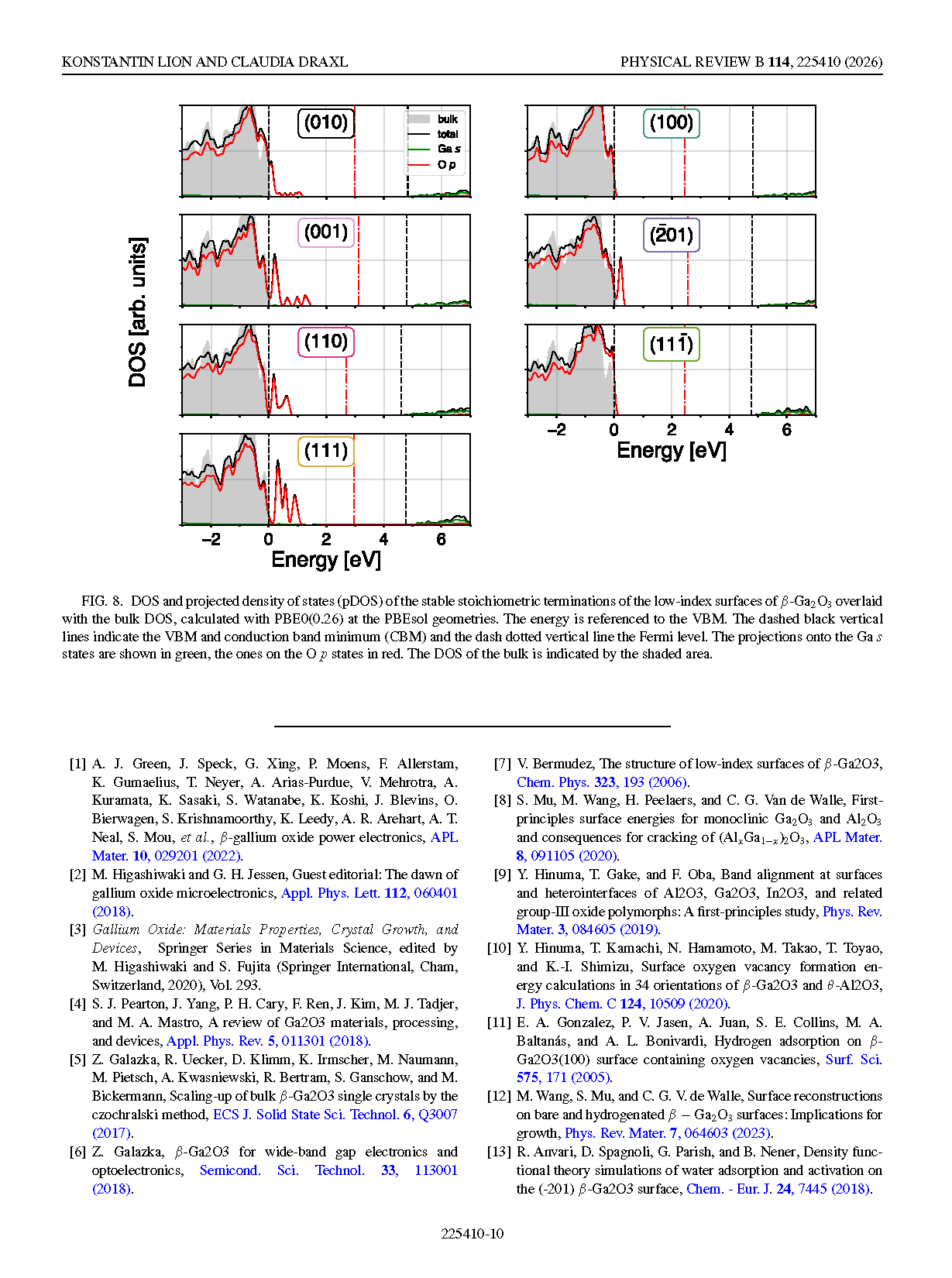
We present a comprehensive first-principles investigation of all symmetrically inequivalent low-index surfaces of β-Ga₂O₃, examining their structural properties and thermodynamic stability across experimentally relevant growth conditions. Using density-functional theory with both the semi-local functional PBEsol and a modified PBE0 hybrid functional with 26 % exact exchange, denoted PBE0(0.26), we calculate surface free energies for the (010), (100), (001), (-201), (110), (111), and (11-1) orientations, including the effects of harmonic vibrational contributions and varying oxygen chemical potentials. We demonstrate that the energetic ordering remains consistent across computational approaches and that the vibrational contributions remain below 0.2 J/m² up to temperatures of 1000 K. A coordination-based model that correlates surface stability with the density of undercoordinated atoms reveals that undercoordinated oxygen atoms and tetrahedral Ga sites substantially destabilize surfaces, while exposed undercoordinated octahedral Ga atoms serve as indicators of surface stability. Our thermodynamic analysis shows that stoichiometric terminations dominate over nearly the entire range of chemical potentials relevant for β-Ga₂O₃ stability, while nonstoichiometric terminations emerge only under extreme reducing or oxidizing conditions. Notably, we predict the formation of stable Ga-rich terminations resembling Ga adlayers for the (100) and (-201) surfaces under highly reducing conditions.
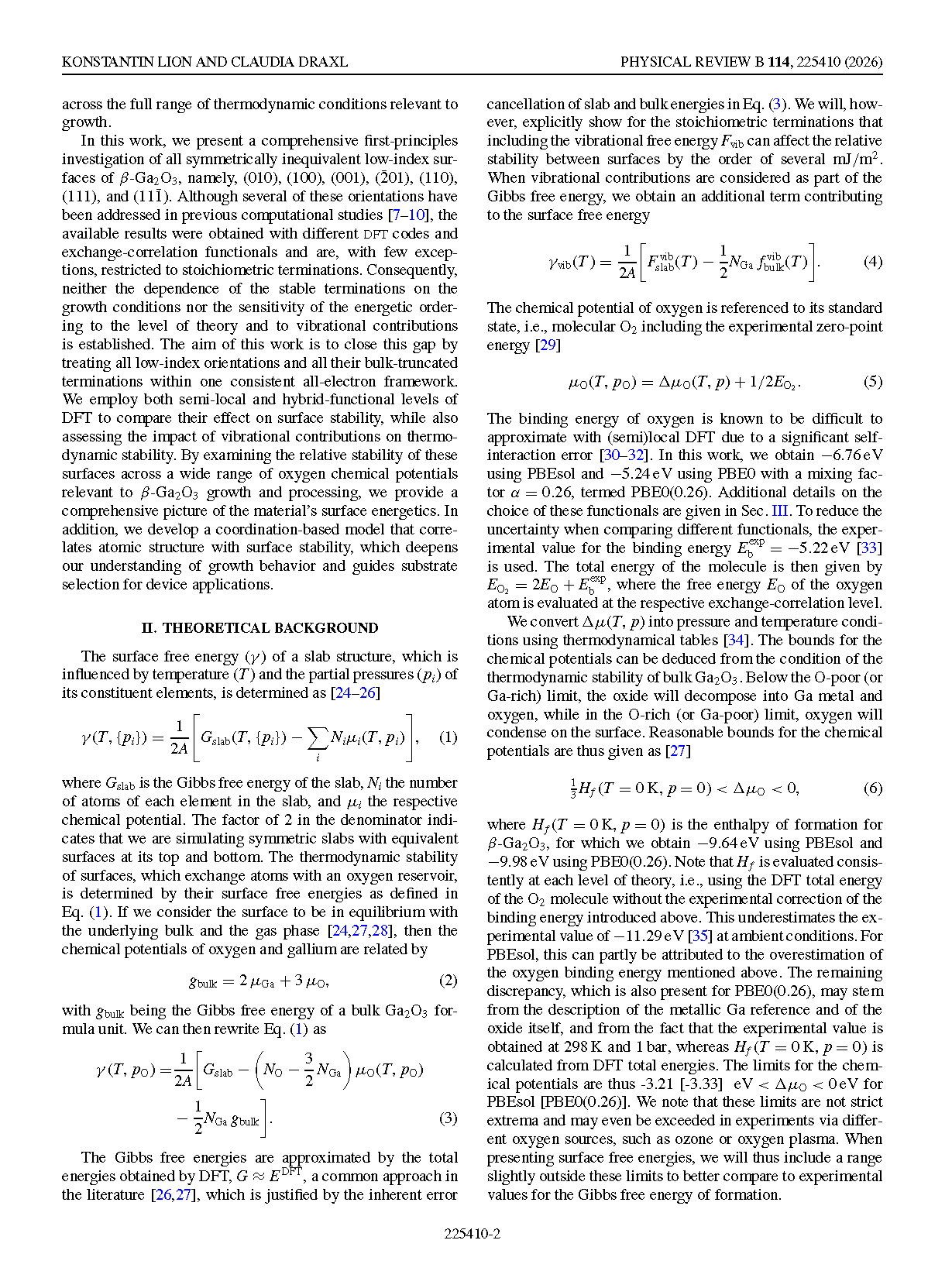
Highlights
Comprehensive first-principles calculations for all symmetrically inequivalent low-index surfaces of β-Ga₂O₃ are performed using PBEsol and PBE0(0.26) functionals, yielding surface-energy ordering within a unified computational framework.
The harmonic vibrational contributions to surface free energies are quantitatively evaluated, showing values below 0.2 J/m² at 1000 K without altering relative energetic ordering among surfaces.
A coordination-based physical model is established, revealing that undercoordinated oxygen and tetrahedral-Ga sites destabilize surfaces, whereas undercoordinated octahedral-Ga atoms favor surface stability.
Thermodynamic phase diagrams demonstrate that stoichiometric terminations dominate most growth-condition windows; Ga-rich and O-rich nonstoichiometric terminations only occur under extreme reducing or oxidizing environments.
Wulff-construction predicts equilibrium crystal morphologies under variable oxygen chemical potentials; the (100) facet always occupies the largest area fraction, providing theoretical guidance for β-Ga₂O₃ substrate selection and growth-process optimization.
Conclusion
We presented a comprehensive first-principles investigation of all symmetrically inequivalent low-index surfaces of β-Ga₂O₃, examining their structural properties and thermodynamic stability across experimentally relevant growth conditions. The (010), (100), (001), (-201), (110), (111), and (11-1) orientations were systematically studied based on density-functional theory with semi-local and hybrid functionals. Our calculations revealed that the stoichiometric surface energies span a wide range from approximately 0.6 J/m² for the (100) surface to 1.7 J/m² for the (110) and (010) surface. The energetic ordering remains consistent across computational approaches, demonstrating that PBEsol adequately captures the relative stability of these surfaces. The inclusion of harmonic vibrational contributions introduces modifications below 0.2 J/m² up to temperatures of 1000 K but do not alter the ordering among the investigated surfaces in terms of stability.
We developed a coordination-based model that provided physical insight into the factors governing surface stability. Our analysis revealed that undercoordinated oxygen atoms and three-fold tetrahedrally coordinated gallium atoms substantially destabilize surfaces, while five-fold octahedrally coordinated gallium atoms contribute to surface stabilization. This model reproduces the surface energies of all stoichiometric terminations to within 10 % and could serve as a qualitatively predictive tool for higher-order surface orientations.
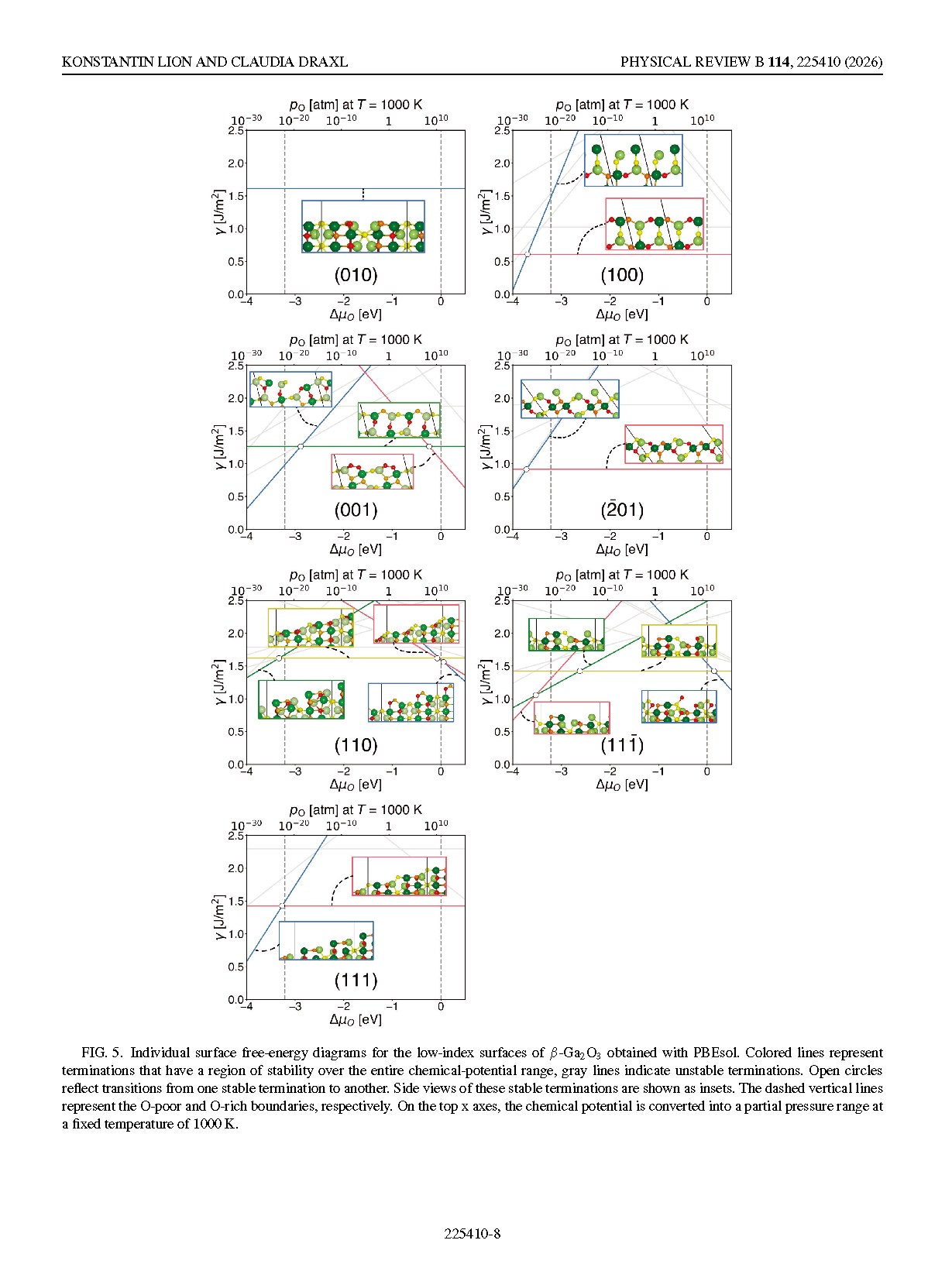
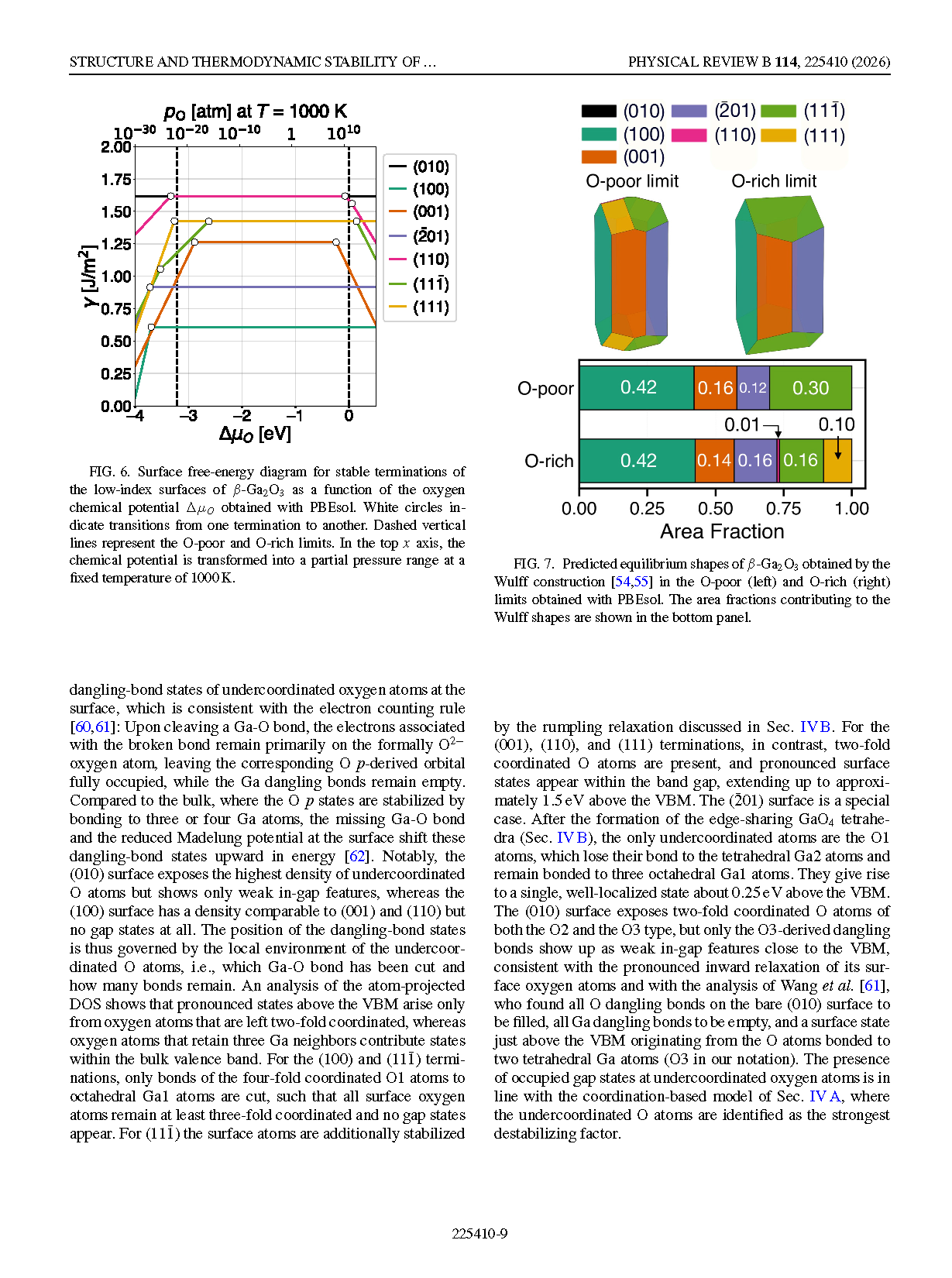
The thermodynamic analysis shows that stoichiometric terminations dominate over nearly the entire range of chemical potentials relevant for β-Ga₂O₃ stability. Nonstoichiometric terminations emerge only under extreme conditions: Ga-rich terminations resembling Ga adlayers form under highly reducing conditions (ΔμO < -2.5 eV), while O-rich terminations appear under strongly oxidizing conditions (ΔμO > -0.5 eV). The prediction of stable Ga adlayer formation on (100) and (-201) surfaces supports recent experimental observations during MOVPE growth under reducing conditions.
The Wulff construction based on the calculated surface energies indicates that the (100) facet dominates the equilibrium crystal morphology, accounting for approximately 42% of the total surface area, regardless of the oxygen chemical potential. The remaining surface area is distributed among the (11-1), (001), (-201) facets. Under O-rich conditions, the (111) facet is included. High-energy surfaces such as (010) and (110) are absent from the equilibrium shape.
While our analysis is restricted to bulk-truncated terminations, a systematic study of further reconstructions with enlarged periodicities and of adsorbate-covered structures (e.g., hydrogen or water) is a natural extension of this work, as we recently demonstrated for the (001) surface, where a 1 × 2 reconstruction of paired GaO₄ tetrahedra was found to be stable over a wide range of growth conditions. Overall, our results provide a foundation for understanding and controlling surface properties during crystal growth and device fabrication of β-Ga₂O₃. The systematic comparison across growth conditions offers guidance for selecting appropriate surface orientations and processing parameters for specific applications in power electronics and optoelectronics.
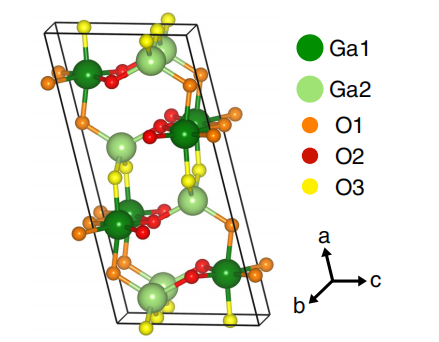
Figure 1. Conventional bulk unit cell of β-Ga₂O₃ consisting of two inequivalent gallium atoms and three inequivalent oxygen atoms. The octahedrally (tetrahedrally) coordinated gallium atoms, Ga1 (Ga2), are dark (light) green. The inequivalent oxygen atoms are shown in orange (O1), red (O2), and yellow (O3).
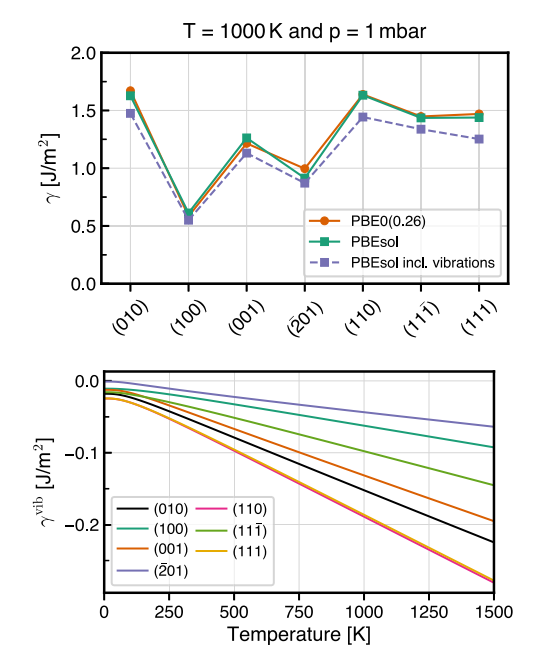
Figure 2. Top: Surface free energies of the most stable stoichiometric terminations of β-Ga₂O₃ obtained with PBEsol, excluding (green symbols) and including (purple symbols) harmonic vibrational contributions, as well as PBE0(0.26) (orange symbols). The lines are guides to the eye. Bottom: Vibrational contributions to the surface free energies in the harmonic approximation for the same terminations as a function of temperature.
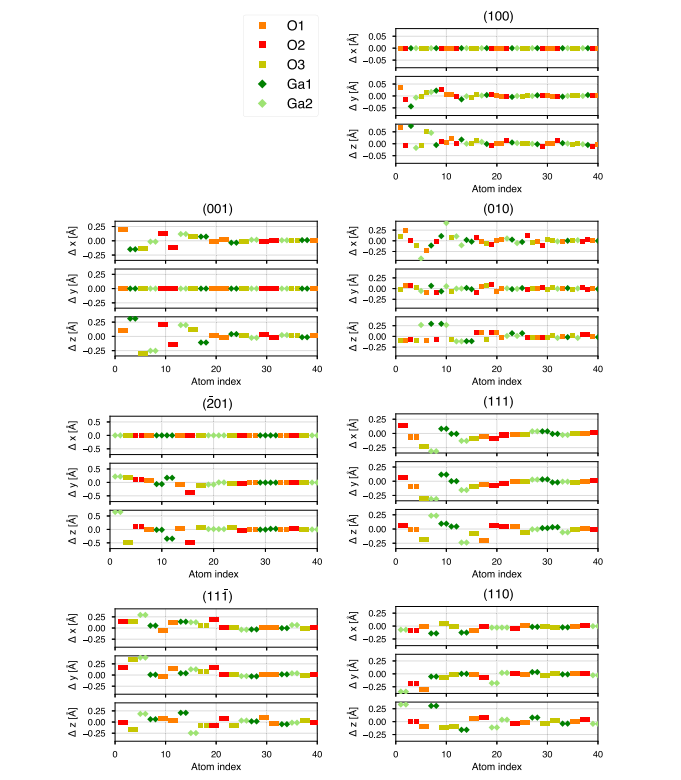
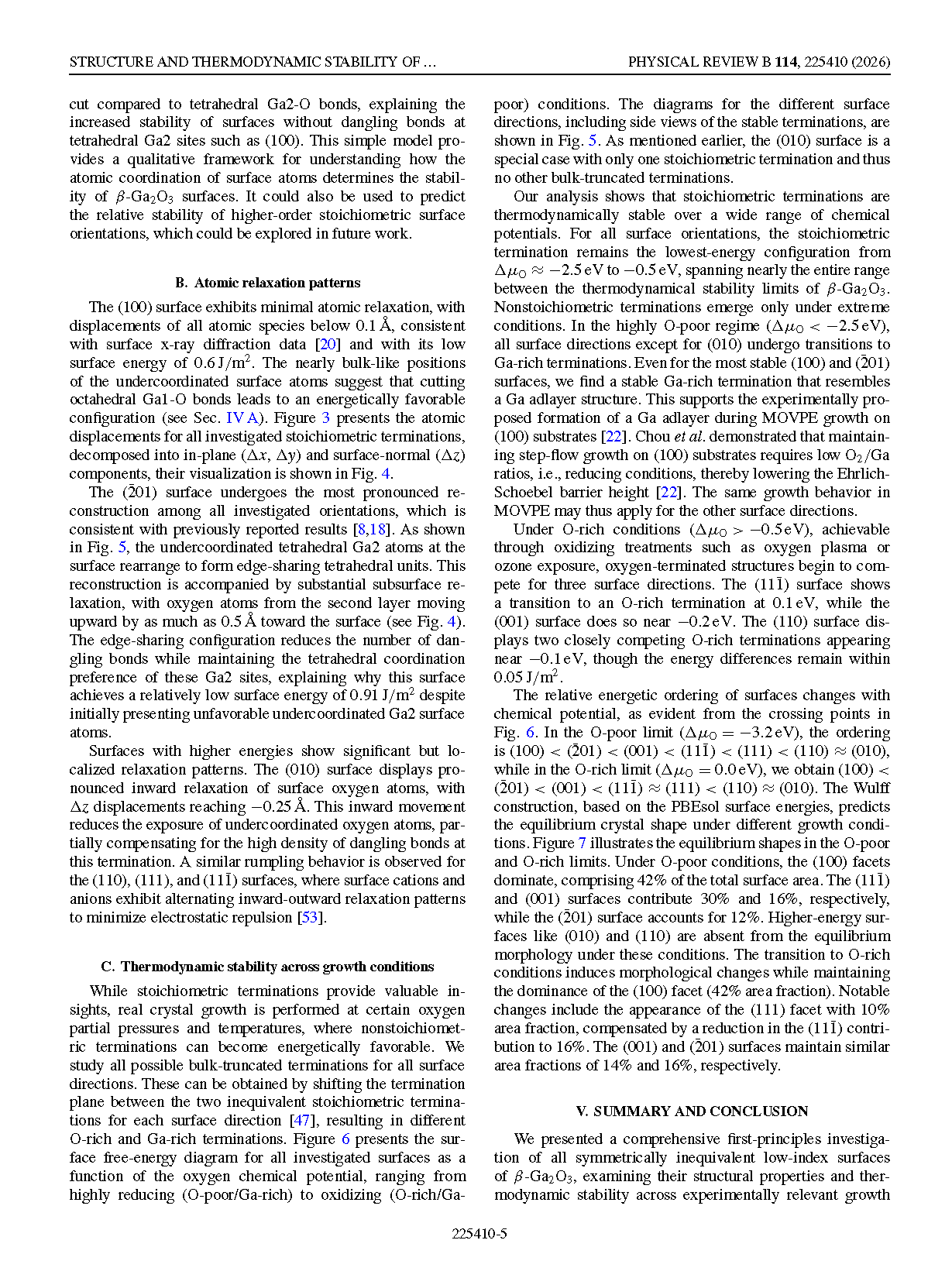
Figure 3. Atomic displacements along (Δz) and perpendicular (Δx and Δy) the surface normal for the stable stoichiometric terminations of the low-index surfaces upon relaxation. Shown are the displacements of the first 40 atoms, starting from the top of the slab structure.
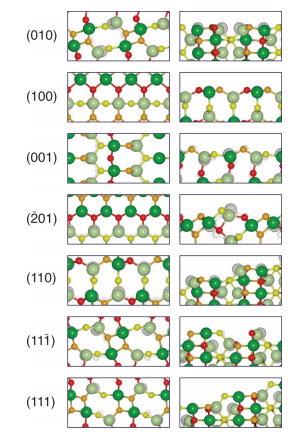
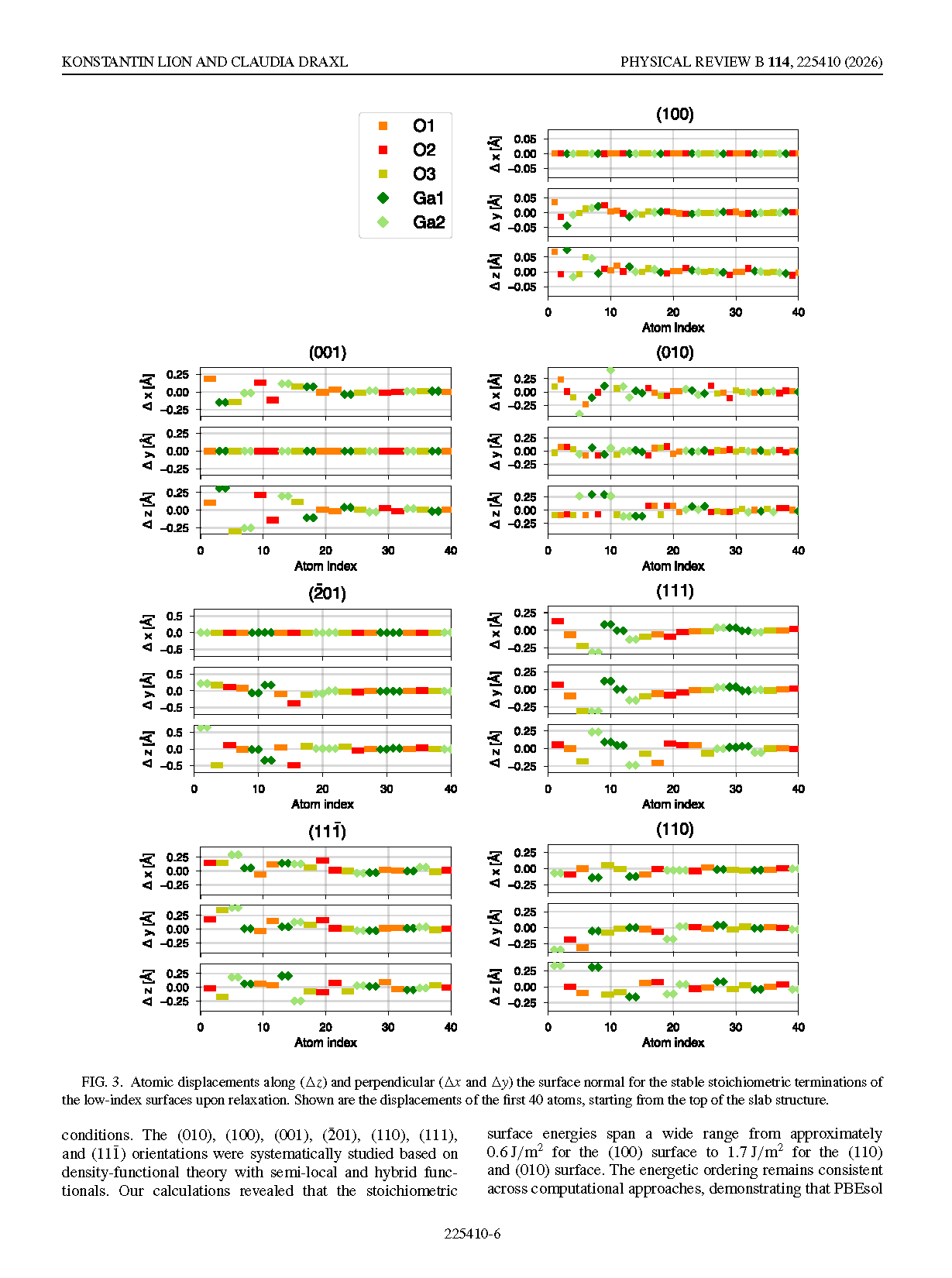
Figure 4. Top (left) and side (right) views of the stable stoichiometric terminations of the low-index surfaces. Only the topmost surface layers are shown in the top views. The relaxed (unrelaxed) positions are shown in color (gray).
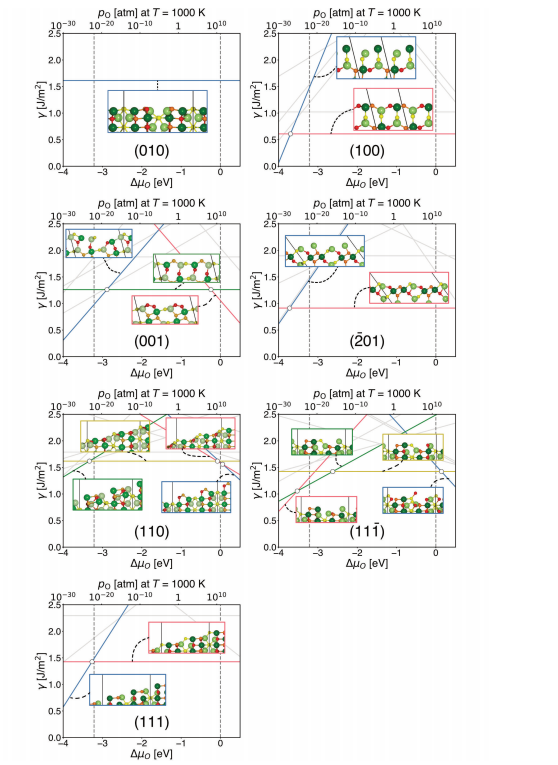
Figure 5. Individual surface free-energy diagrams for the low-index surfaces of β-Ga₂O₃ obtained with PBEsol. Colored lines represent terminations that have a region of stability over the entire chemical-potential range, gray lines indicate unstable terminations. Open circles reflect transitions from one stable termination to another. Side views of these stable terminations are shown as insets. The dashed vertical lines represent the O-poor and O-rich boundaries, respectively. On the top x axes, the chemical potential is converted into a partial pressure range at a fixed temperature of 1000 K.
DOI:
10.1103/PhysRevB.114.225410
Instruction
Official Account

Cooperation
Top