


Researchers from Helmholtz-Zentrum Berlin für Materialien und Energie GmbH have published a dissertation titled "Monatomic nitrogen diffusion in β-Ga₂O₃" in Applied Physics Letters.
Background
β-Ga₂O₃ is an excellent wide-bandgap semiconductor with a bandgap of about 4.9 eV, high breakdown voltage and a high Baliga's figure of merit, making it suitable for low-frequency power switching devices. In recent years it has been applied to deep UV photodetectors, gas sensors and Schottky diodes. However, as with many oxide semiconductors, the majority carriers in β-Ga₂O₃ are electrons and p-type doping is difficult; its n-type conductivity is attributed to shallow donors formed by hydrogen atoms. To achieve p-type doping, potential acceptors such as magnesium and nitrogen have been tested, but these dopants give rise to deep acceptor levels located about 1.3 eV above the valence band. Nitrogen is usually introduced by ion implantation, and after implantation the dopants must be activated by high-temperature annealing, which causes nitrogen atoms to migrate in the lattice. Previously, considerable diffusion of N atoms was observed only at very high temperatures (T ≈ 1200 ℃), and ab initio calculations suggested a vacancy-mediated migration process. A defect-mediated diffusion mechanism can be used to control interfaces and engineer doping profiles for specific applications, particularly for the interface formation between GaN and β-Ga₂O₃, charge compensation and current blocking layers in devices. However, both methods of introducing nitrogen are accompanied by localized defect generation, and whether nitrogen diffusion is governed by molecular or monatomic diffusion remains unclear. Clarifying this issue is of great value for understanding p-type doping and defect engineering.
Abstract
The migration of nitrogen is examined in β-Ga₂O₃ to determine if diffusion is governed by molecular or monatomic diffusion. Special samples are grown by pulsed laser deposition where the isotopes ¹⁴N and ¹⁵N are spatially separated. This is verified by secondary-ion-mass spectrometry measurements. Insight into the migration process is obtained from gas effusion. The experimental data provide clear evidence for monatomic nitrogen diffusion in β-Ga₂O₃.
Highlights
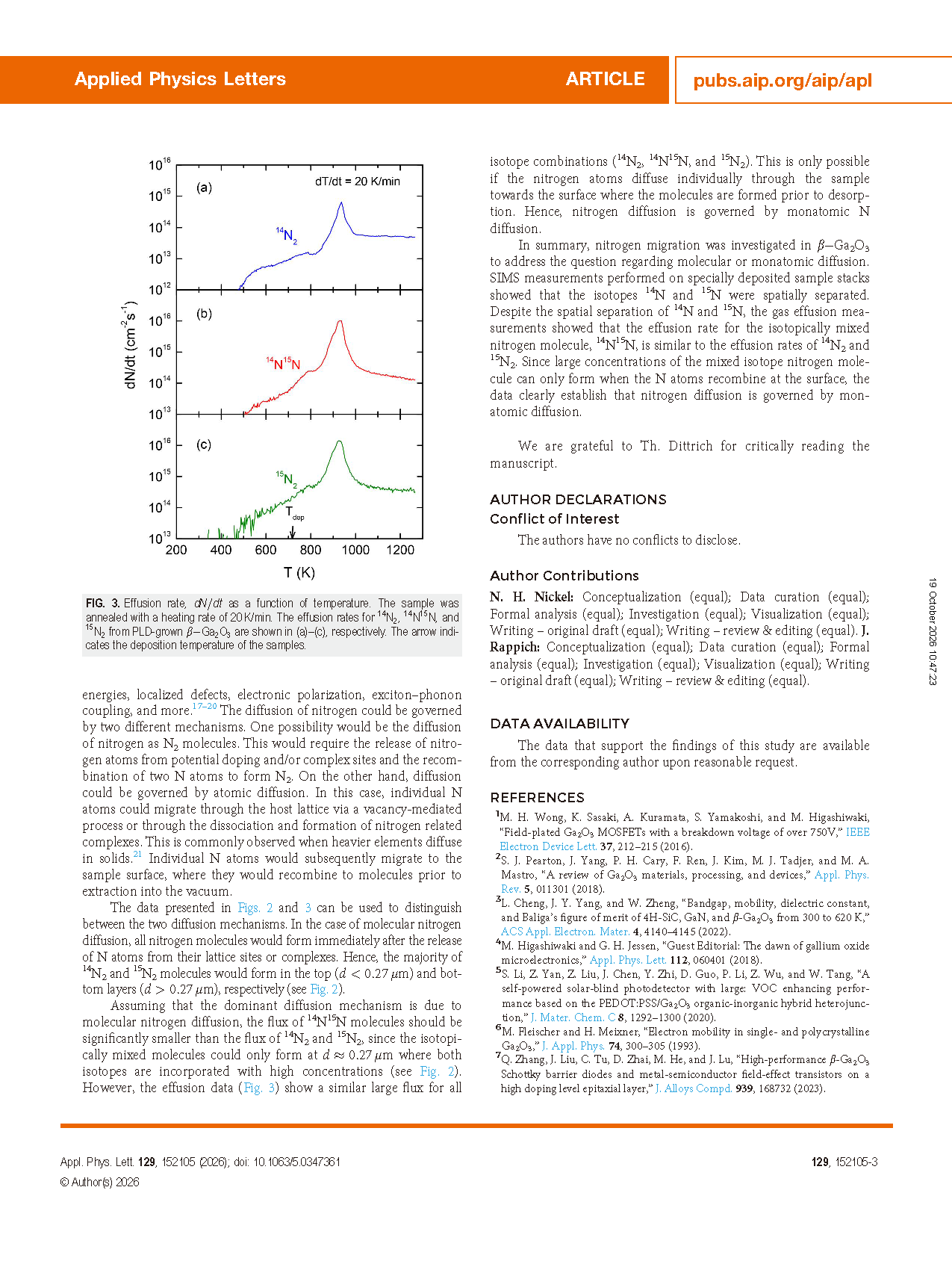
Prepare isotopically separated samples by pulsed laser deposition where ¹⁴N and ¹⁵N are spatially separated, verified by SIMS measurements.
Combine SIMS with gas effusion measurements to distinguish molecular from monatomic nitrogen diffusion.
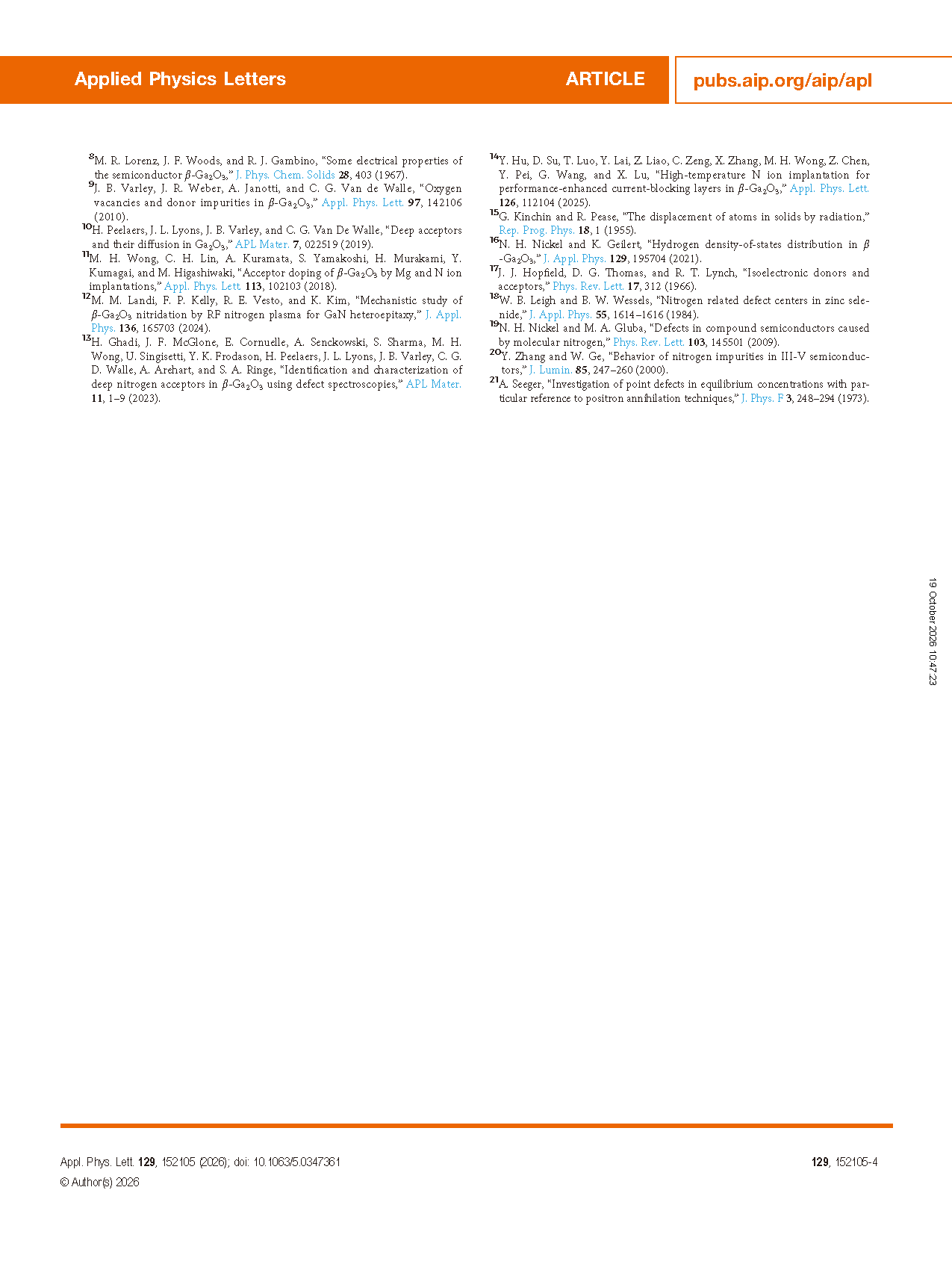
Reveal that the effusion rate of the isotopically mixed molecule ¹⁴N¹⁵N is comparable to those of ¹⁴N₂and ¹⁵N₂.
Provide clear experimental evidence that nitrogen diffusion in β-Ga₂O₃ is governed by monatomic diffusion.
Conclusion
In summary, nitrogen migration was investigated in β-Ga₂O₃ to address the question regarding molecular or monatomic diffusion. SIMS measurements performed on isotopically doped samples showed that the isotopes ¹⁴N and ¹⁵N were spatially separated. Despite the spatial separation of ¹⁴N and ¹⁵N, the gas effusion measurements showed that the effusion rate for the isotopically mixed nitrogen molecule, ¹⁴N¹⁵N, is similar to the effusion rates of ¹⁴N₂ and ¹⁵N₂. Since large concentrations of the mixed isotope nitrogen molecule can only form when the N atoms recombine at the surface, the data clearly establish that nitrogen diffusion is governed by monatomic diffusion.
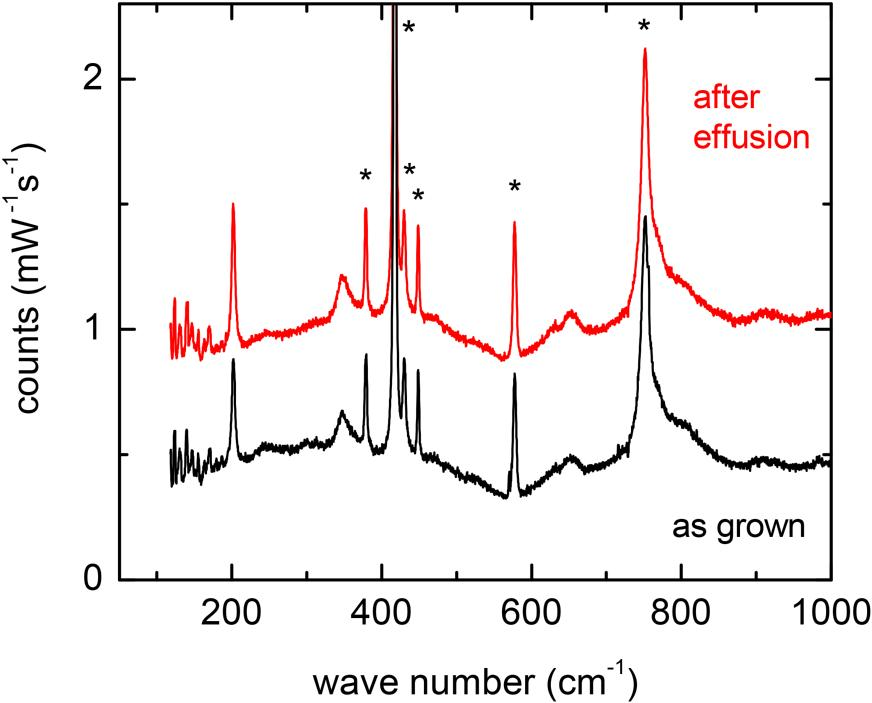
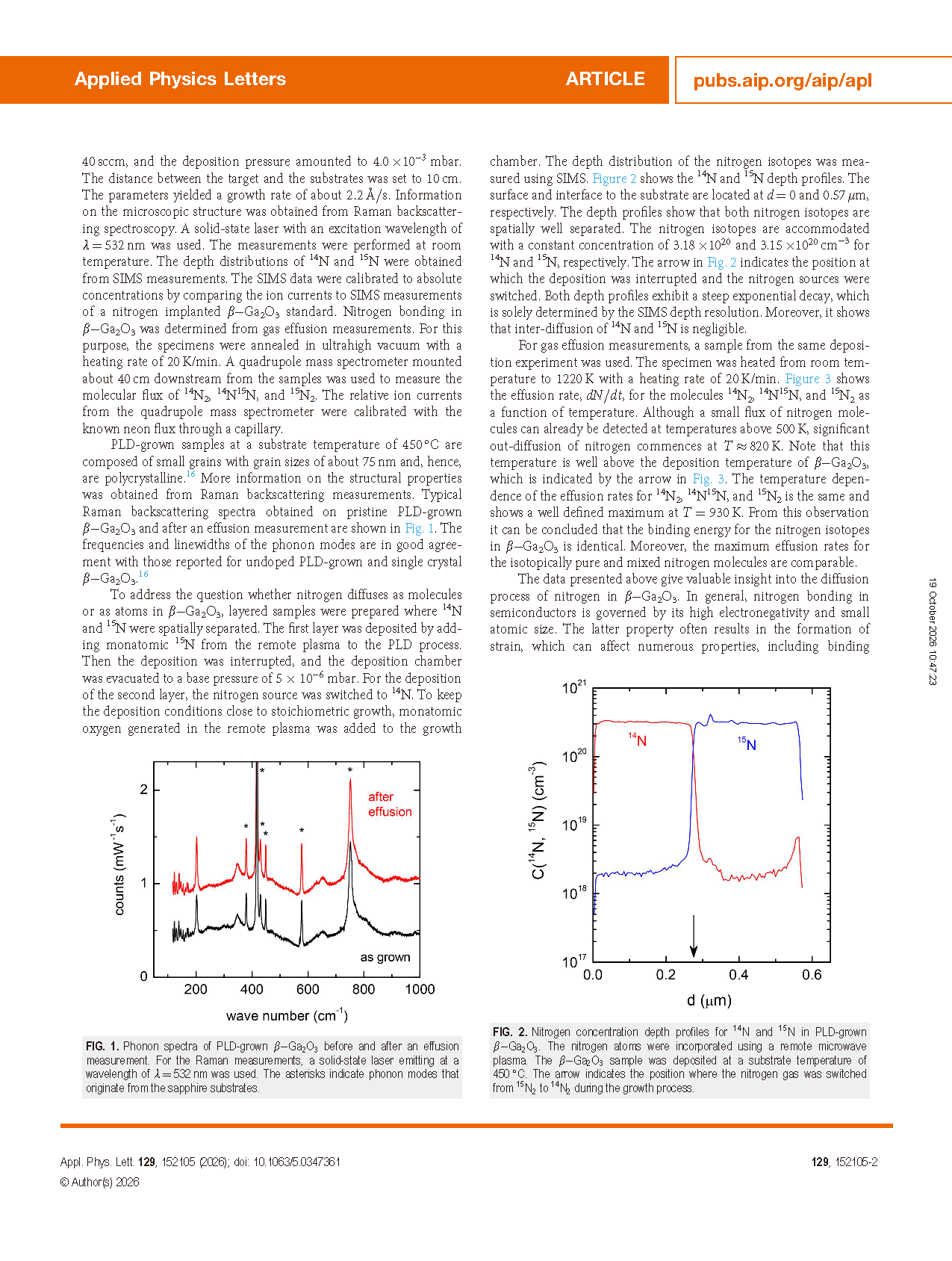
FIG. 1. Phonon spectra of PLD-grown β-Ga₂O₃ before and after an effusion measurement. For the Raman measurements, a solid-state laser emitting at a wavelength of λ = 532 nm was used. The asterisks indicate phonon modes that originate from the sapphire substrates.
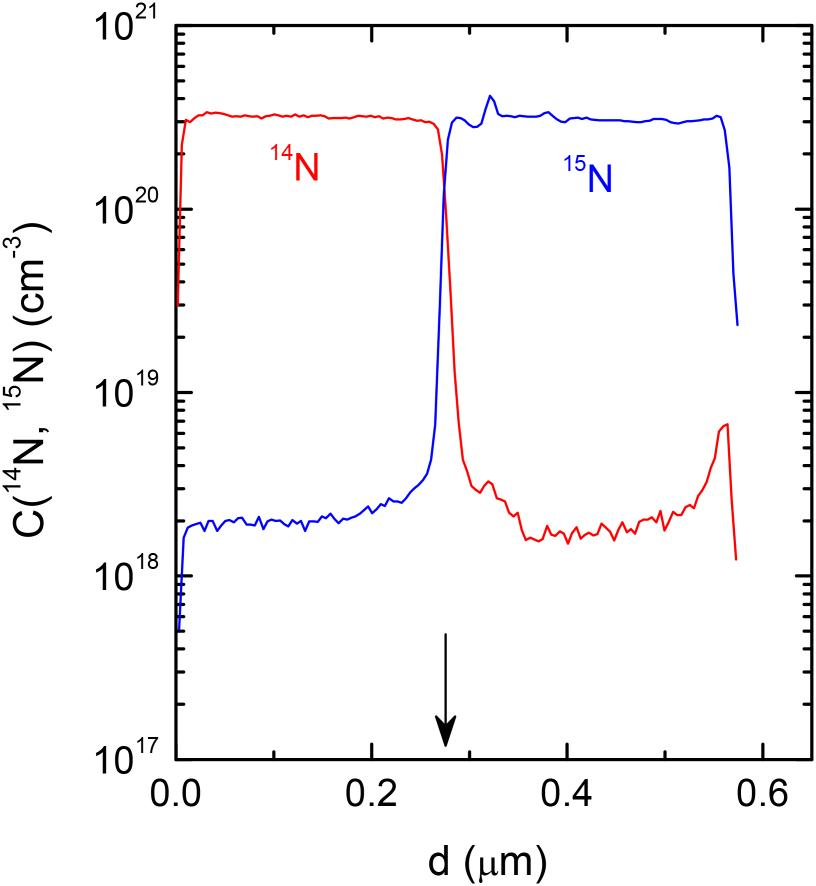
FIG. 2. Nitrogen concentration depth profiles for ¹⁴N and ¹⁵N in PLD-grown β-Ga₂O₃. The nitrogen atoms were incorporated using a remote microwave plasma. The β-Ga₂O₃ sample was deposited at a substrate temperature of 450 °C. The arrow indicates the position where the nitrogen gas was switched from ¹⁵N₂ to ¹⁴N₂ during the growth process.
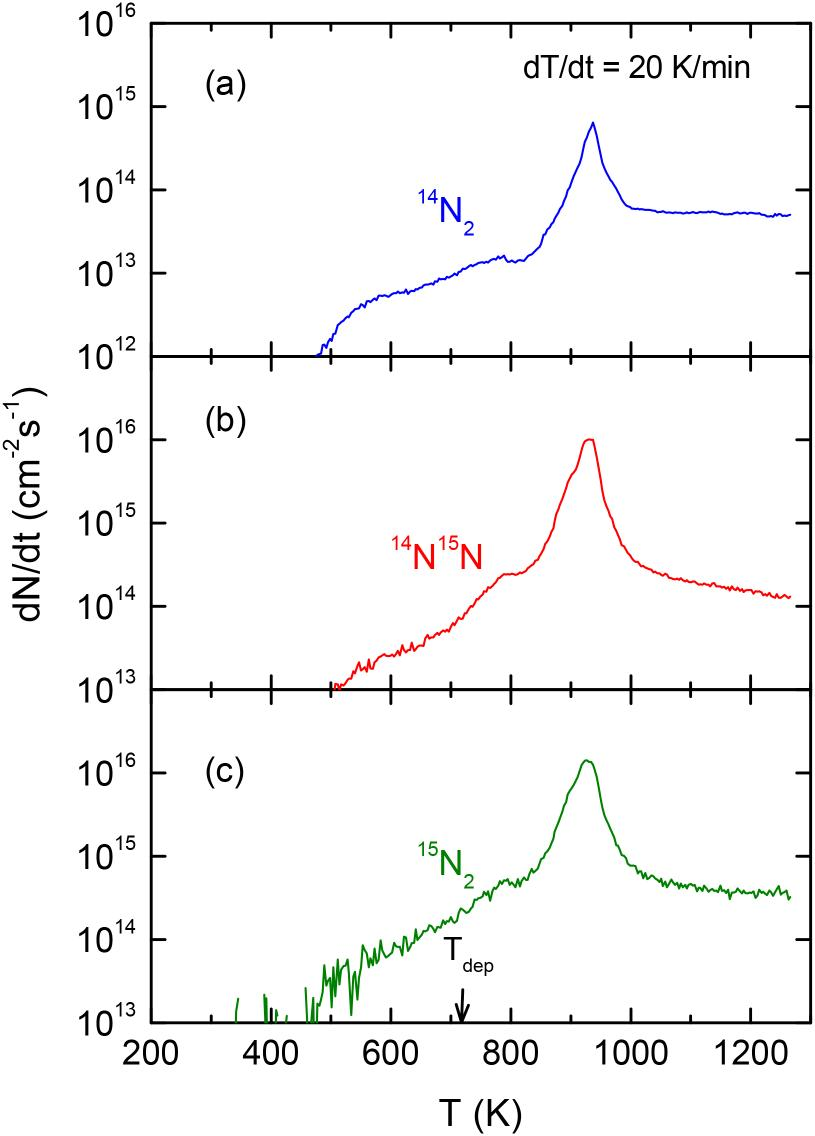
FIG. 3. Effusion rate, dN/dt as a function of temperature. The sample was annealed with a heating rate of 20 K/min. The effusion rates for ¹⁴N₂, ¹⁴N¹⁵N, and ¹⁵N₂ from PLD-grown β-Ga₂O₃ are shown in (a)–(c), respectively. The arrow indicates the deposition temperature of the samples.
DOI:
doi.org/10.1063/5.0347361
Instruction
Official Account

Cooperation
Top