

At the Shandong Provincial Symposium on Private Enterprises, Huaxin CrysElec, a company based in Qingdao High-tech Zone, took the stage as a representative of Qingdao's private enterprises. Although it is a specialized and sophisticated enterprise with relatively modest revenue and no direct involvement in end-consumer markets, the company has secured a place in this provincial-level industrial dialogue through its work in semiconductor substrates, a critical upstream material. Its participation also reflects the growing momentum behind the integration and development of Qingdao's integrated circuit industry.
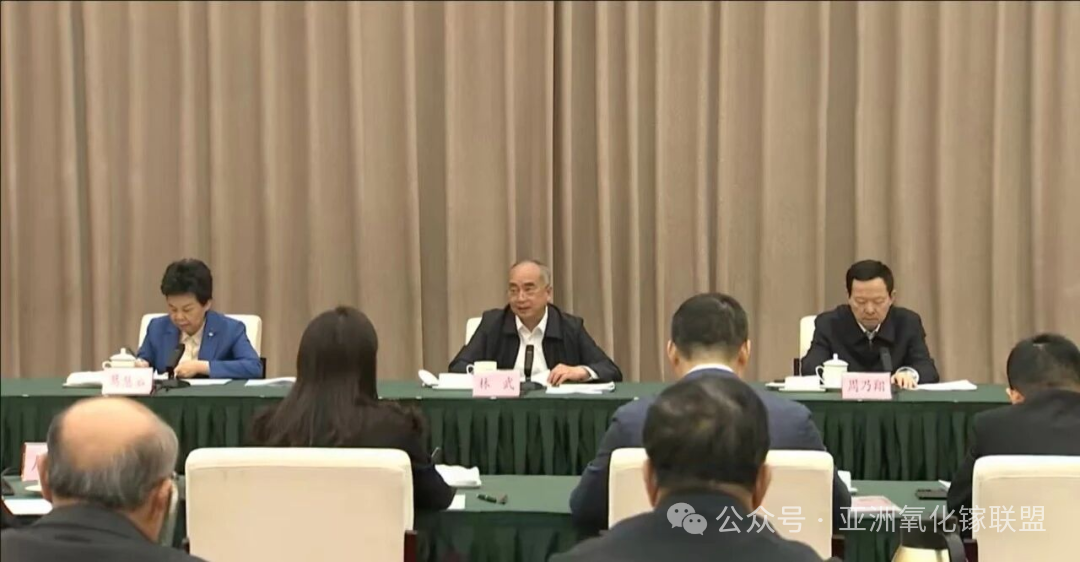
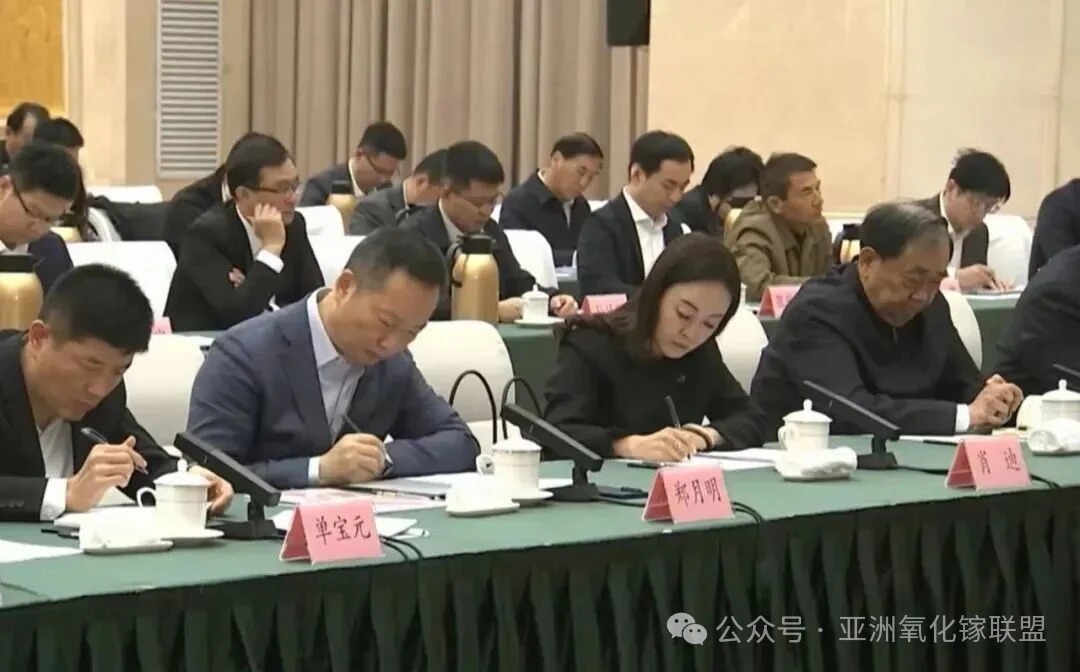
On October 22, Shandong Province held a symposium on private enterprises, where leading provincial officials from the CPC Shandong Provincial Committee and the Shandong Provincial Government met face-to-face with more than 70 private entrepreneurs. Representatives from eight enterprises delivered speeches at the event. Among them was Qingdao Huaxin CrysElec Technology Co., Ltd., which attended and spoke as a representative of Qingdao's private enterprises.
Within Shandong's industrial landscape, Huaxin CrysElec is not a widely recognized name among the general public. It does not manufacture consumer-facing end products, nor does it operate in one of the most prominent sectors of Qingdao's "10+1" industrial system. Nevertheless, the company secured a valuable speaking opportunity at this high-level symposium.
Building the Foundation for Chips,Tackling Critical Bottlenecks in the Upstream Supply Chain
Huaxin CrysElec, established in 2011, is based in Qingdao High-tech Zone. If chip manufacturing is compared to constructing a building, semiconductor substrate wafers are the foundation upon which the entire structure rests.
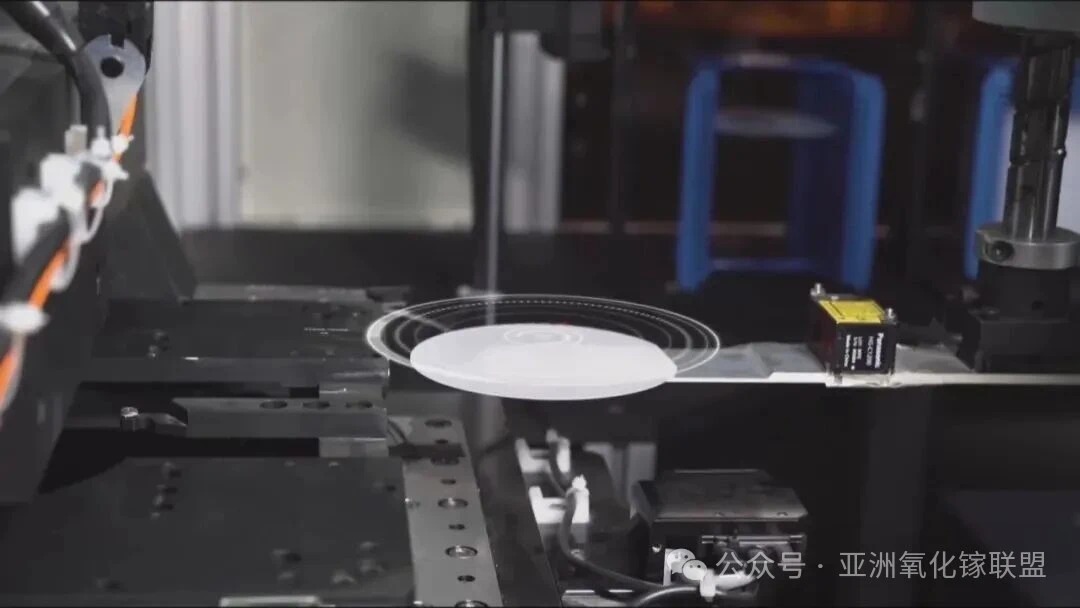
The company focuses on three major semiconductor substrate materials: sapphire, indium phosphide (InP), and gallium oxide, with an annual production capacity of up to 12 million wafers. It is an important domestic R&D and manufacturing base for semiconductor substrate wafers. Xiao Yanqing, Deputy General Manager of the company, once described the wafers, which are as thin as a cicada's wing, as follows: "These are the very foundations that support the entire structure."
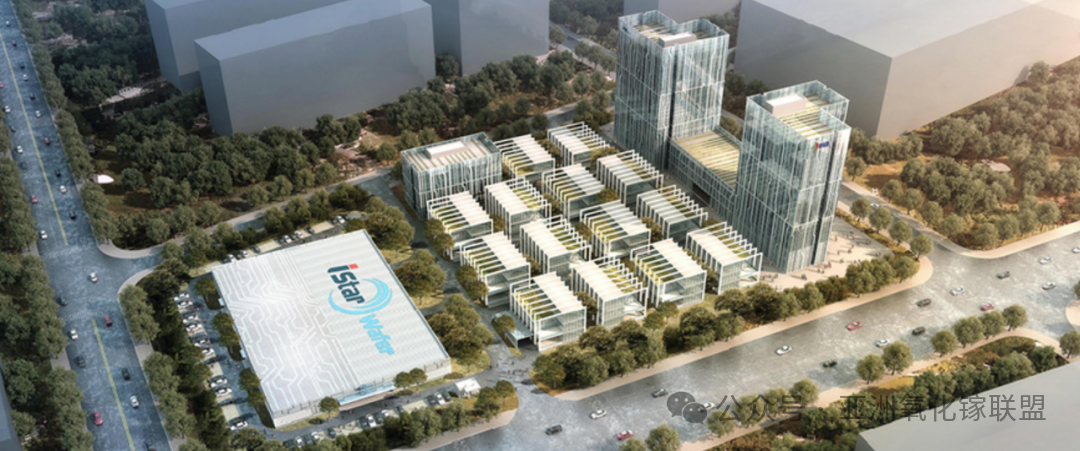
The company's value lies not in its revenue scale, but in its efforts to break through critical material bottlenecks long dominated by overseas suppliers.
In the sapphire substrate sector, Huaxin CrysElec has grown into a major domestic supplier. In the InP substrate sector, it has overcome a series of technical challenges, including crystal growth and high dislocation density. In the fourth-generation semiconductor field of gallium oxide, the company has completed small-scale trials and is steadily advancing industrialization.
The company has been recognized as a National-Level Specialized and Sophisticated "Little Giant" Enterprise and a Shandong Provincial Manufacturing Single Champion. Its project, Key Technologies and Applications for Large-Size Sapphire Crystal Growth and Substrate Preparation, which it led in tackling key technical challenges, won the First Prize of the 2025 Qingdao Science and Technology Progress Award.
Among the enterprises represented at the symposium were listed companies with substantial revenues and leading petrochemical enterprises. Yet Huaxin CrysElec occupies an irreplaceable position in the industrial landscape: it operates at the upstream materials end of Shandong's integrated circuit industry chain. Without substrate materials, chip design, wafer fabrication, packaging, and testing would all be built on an unstable foundation. Its selection as a speaking representative at the symposium reflects not the scale of its business, but its strategically indispensable position in the industrial chain.
From Chip Shortages to Industrial Clusters: Qingdao Is Building an Integrated Semiconductor Industry Chain
Huaxin CrysElec’s appearance at the provincial-level symposium reflects the remarkable transformation of Qingdao’s semiconductor industry over the past three years. Once known for its strong home appliance industry but heavily reliant on external chip supplies, Qingdao is now moving toward a more integrated and interconnected semiconductor industry chain.
In the first half of 2026, Qingdao’s integrated circuit wafer output increased by 60.7% year on year, while the industry’s revenue has maintained annual growth of 30% over the past three years. These figures reflect the sector’s rapid progress. An integrated industry chain spanning materials, manufacturing, packaging, and testing is taking shape:
Wafer Manufacturing:SiEn has established production capabilities for both 8-inch and 12-inch wafers and obtained international automotive-grade chip certification, addressing a gap in Shandong’s large-diameter wafer manufacturing capacity.
Advanced Packaging and Testing:Wuyuan Semiconductor has built one of China’s largest high-volume hybrid bonding production lines. By the end of the year, it plans to achieve 12-layer 3D stacking of HBM memory chips, advancing toward key technologies for the post-Moore era.
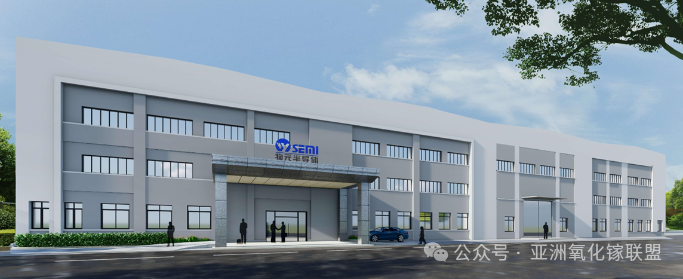
Upstream Materials:Huaxin CrysElec has achieved a leading position in China in sapphire, indium phosphide, and gallium oxide substrates, strengthening the upstream supply base for local semiconductor manufacturing.
Qingdao has been selected for three consecutive years as one of the world's top 100 cities in the Global Integrated Circuit Industry Competitiveness Ranking. It has also largely established a comprehensive integrated circuit industry system encompassing design, manufacturing, packaging and testing, materials, and equipment.
From traditional manufacturing leaders such as TGOOD and Sailun Group, to digital economy enterprises such as Energy Chain Holdings and Mengdou Network, and now Huaxin CrysElec representing upstream semiconductor materials enterprises at the symposium, the changing profile of Qingdao’s private-sector representatives reflects the city’s broader industrial transformation: traditional industries are upgrading and improving efficiency, emerging industries are expanding rapidly, and artificial intelligence and next-generation information technology are laying the foundations for the city’s future development.
Jinan–Qingdao Dual-Core Synergy: Qingdao Takes the Lead in Manufacturing and End-Use Applications
Looking across Shandong Province, the symposium on private enterprises sent a clear signal about the province’s industrial priorities.
Shandong’s Action Plan for the Next-Generation Information Technology Industry during the 15th Five-Year Plan period outlines a dual-core development structure centered on Jinan and Qingdao:
Jinan will focus on high-end software, specialized semiconductors, and high-performance computers.
Qingdao will concentrate on integrated circuits, intelligent terminals, and virtual reality, with the goal of bringing the province’s integrated circuit industry to a scale of approximately RMB 200 billion by 2030.
SiEn’s wafer manufacturing, Wuyuan Semiconductor’s advanced packaging, and Huaxin CrysElec’s substrate materials together form the manufacturing foundation of Qingdao’s integrated circuit industry.
Shandong is developing a complementary division of labor, with Jinan emphasizing design and specialized materials, while Qingdao focuses on manufacturing and end-market applications. Jinan is home to materials companies such as Shandong Tianyue, which specializes in silicon carbide, and Jingzheng Electronics, which works on lithium niobate-on-insulator (LNOI) thin films. Qingdao, meanwhile, is advancing wafer manufacturing, advanced packaging and testing, and the deployment of real-world applications. The two cities are leveraging their respective strengths to jointly build Shandong’s semiconductor industry cluster.
The symposium called on private enterprises in Shandong to pursue higher levels of development and embrace innovation, moving beyond scale-driven competition in traditional sectors and breaking through in high-value-added segments such as critical materials, chips, and devices. Among the participating companies, Shengquan Group’s expansion into photoresist resins and Fuhai Holdings’ move toward advanced polyester materials offer examples of traditional industries extending further up the value chain. Huaxin CrysElec, by contrast, has been rooted in the high-value upstream materials sector since its establishment. Its decade-plus commitment to substrate technology represents the strategic positioning of Qingdao’s private technology enterprises.
Huaxin CrysElec’s experience also illustrates a broader industrial principle: a company’s value should be measured not only by its revenue, but also by how indispensable it is to the industrial chain.
This is also a reflection of Shandong’s broader innovation landscape. The province’s semiconductor industry needs Jinan to contribute through chip design and specialized materials, while Qingdao takes on manufacturing, terminal products, and application deployment. Combined with its strengths in smart home appliances, VR terminals, offshore wind power, and hydrogen energy equipment, Qingdao has already established a presence at key points across several emerging industries.
As more key enterprises like Huaxin CrysElec become interconnected, Qingdao is evolving from a major regional economic center into a solid foundation for Shandong’s innovation-driven industries.
Instruction
Official Account

Cooperation
Top